Villa-Roel Nicolas, Park Christian, Andueza Aitor, Baek Kyung In, Su Ally, Blaser Mark C, Leshnower Bradley G, Yoganathan Ajit, Aikawa Elena, Jo Hanjoong
Wallace H. Coulter Department of Biomedical Engineering, Emory University and Georgia Institute of Technology, 1760 Haygood Drive, Health Sciences Research Bldg E170, Atlanta, GA 30322, USA.
Center for Interdisciplinary Cardiovascular Sciences, Cardiovascular Division, Department of Medicine, Brigham and Women's Hospital, Harvard Medical School, Boston, MA 02115, USA.
Genes (Basel). 2024 Dec 19;15(12):1623. doi: 10.3390/genes15121623.
Calcific aortic valve disease (CAVD) is a highly prevalent disease, especially in the elderly population, but there are no effective drug therapies other than aortic valve repair or replacement. CAVD develops preferentially on the fibrosa side, while the ventricularis side remains relatively spared through unknown mechanisms. We hypothesized that the fibrosa is prone to the disease due to side-dependent differences in transcriptomic patterns and cell phenotypes.
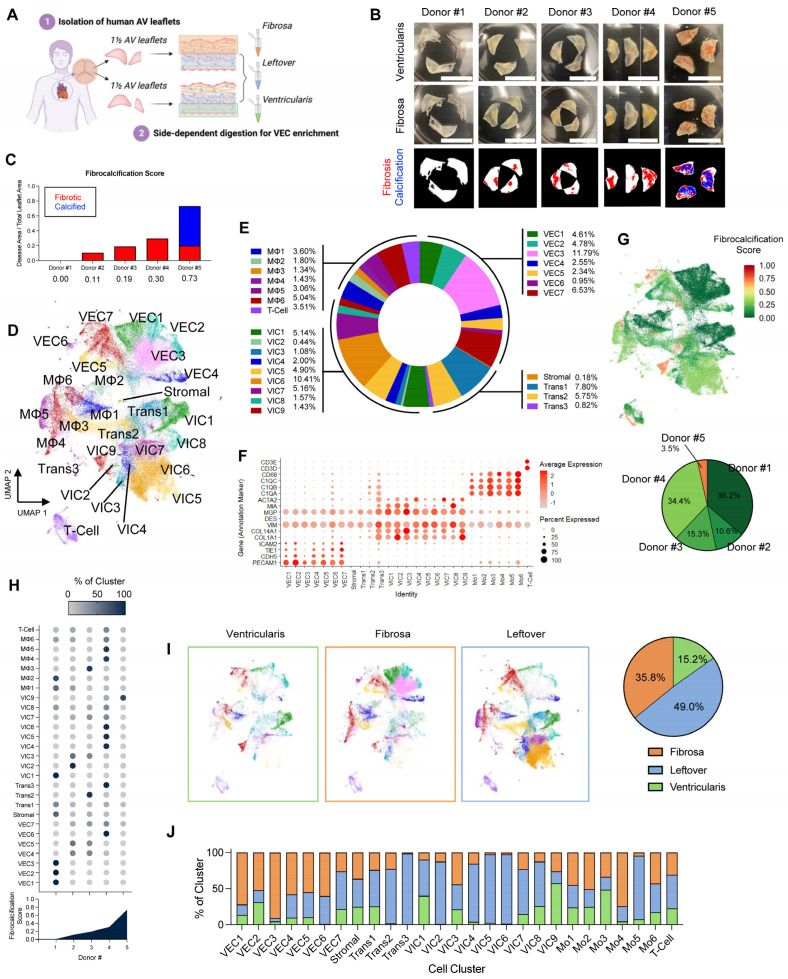
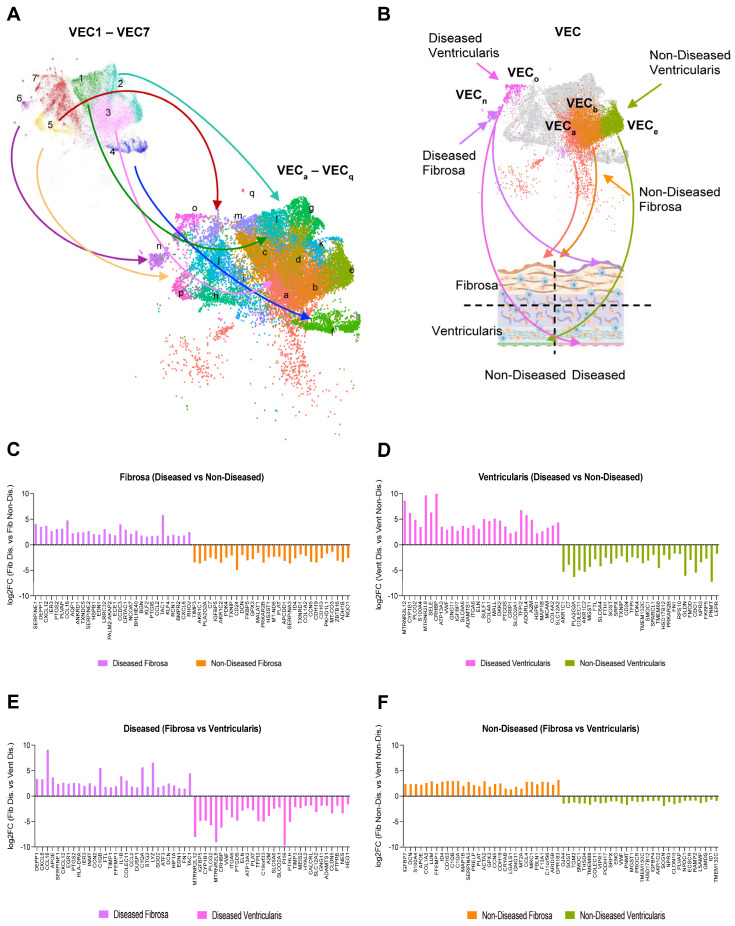
To test this hypothesis, we performed single-cell RNA sequencing using a new method to collect endothelial-enriched samples independently from the fibrosa and ventricularis sides of freshly obtained human aortic valve leaflets from five donors, ranging from non-diseased to fibrocalcific stages.
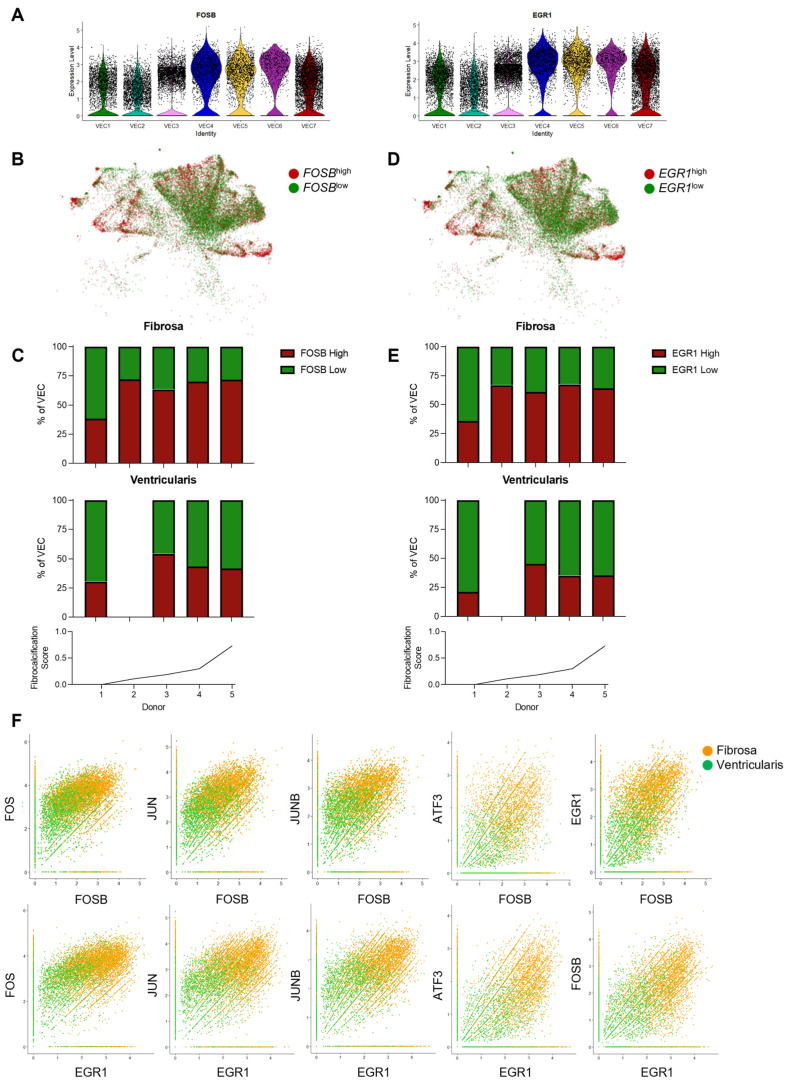
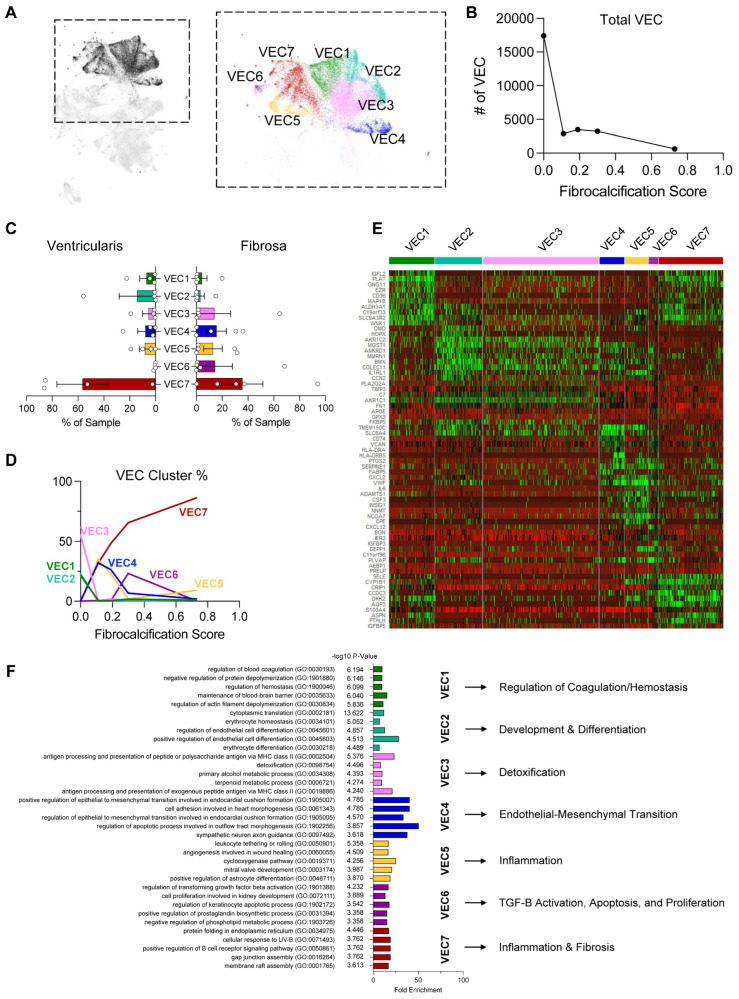
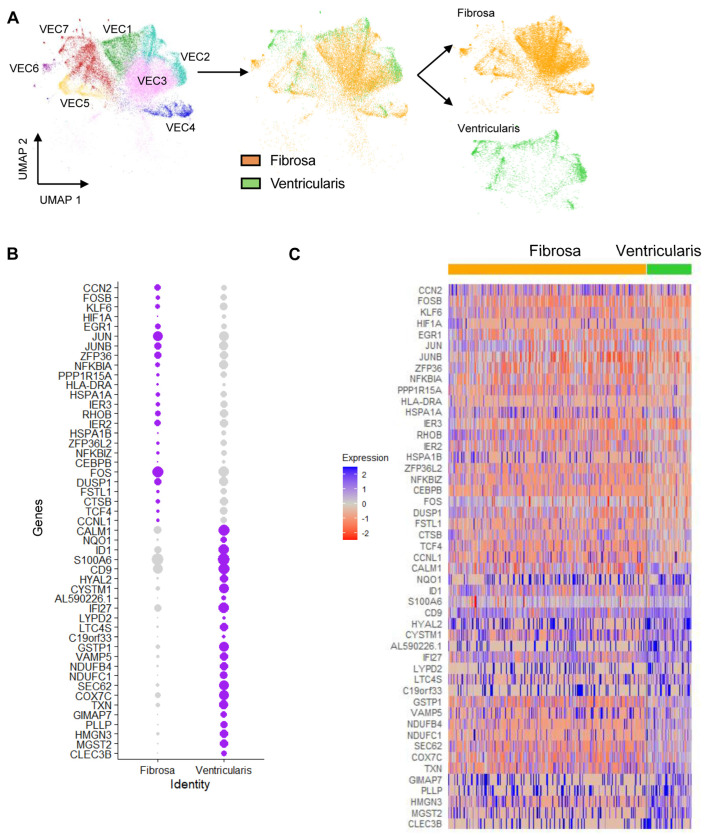
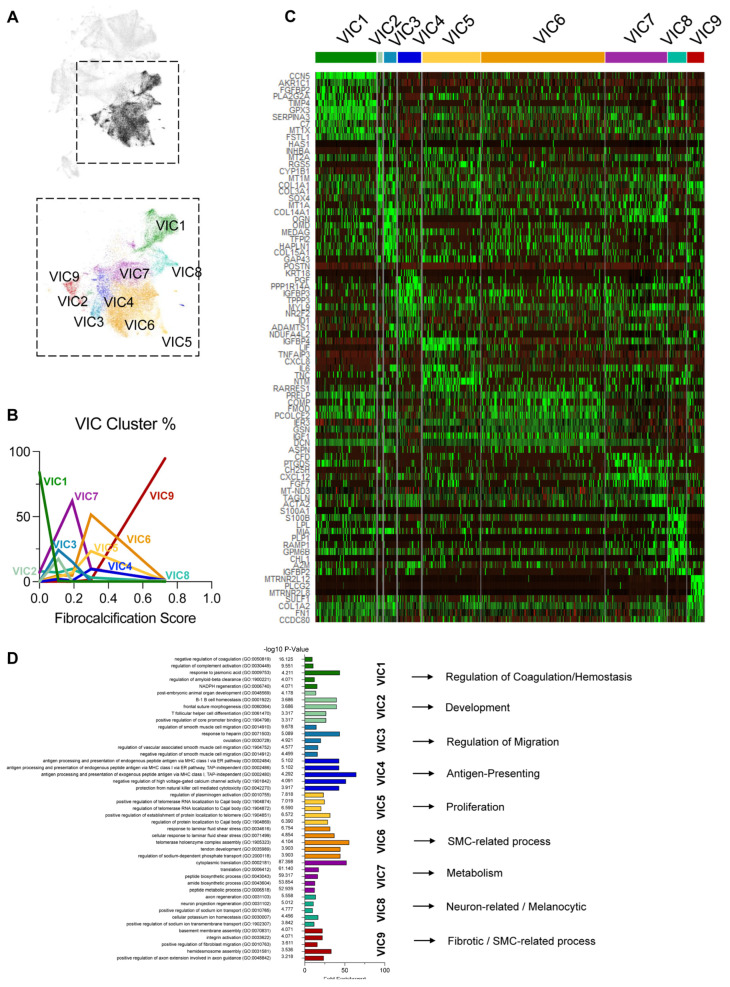
From the 82,356 aortic valve cells analyzed, we found 27 cell clusters, including seven valvular endothelial cell (VEC), nine valvular interstitial cell (VIC), and seven immune, three transitional, and one stromal cell population. We identified several side-dependent VEC subtypes with unique gene expression patterns. Homeostatic VIC clusters were abundant in non-diseased tissues, while VICs enriched with fibrocalcific genes and pathways were more prevalent in diseased leaflets. Furthermore, homeostatic macrophage (MΦ) clusters decreased while inflammatory MΦ and T-cell clusters increased with disease progression. A foamy MΦ cluster was increased in the fibrosa of mildly diseased tissues. Some side-dependent VEC clusters represented non-diseased, protective phenotypes, while others were CAVD-associated and were characterized by genes enriched in pathways of inflammation, endothelial-mesenchymal transition, apoptosis, proliferation, and fibrosis. Interestingly, we found several activator protein-1 (AP-1)-related transcription factors (, , , ) and to be upregulated in the fibrosa and diseased aortic valve leaflets.
Our results showed that VECs are highly heterogeneous in a side- and CAVD-dependent manner. Unique VEC clusters and their differentially regulated genes and pathways found in the fibrosa of diseased tissues may represent novel pathogenic mechanisms and potential therapeutic targets.
钙化性主动脉瓣疾病(CAVD)是一种高度流行的疾病,尤其在老年人群中,但除了主动脉瓣修复或置换外,尚无有效的药物治疗方法。CAVD优先在纤维层一侧发展,而心室层一侧通过未知机制相对未受影响。我们假设纤维层由于转录组模式和细胞表型的侧依赖性差异而易于发生该疾病。
为了验证这一假设,我们使用一种新方法进行单细胞RNA测序,该方法从五名供体新鲜获取的人主动脉瓣叶的纤维层和心室层独立收集富含内皮细胞的样本,样本范围从非病变到纤维钙化阶段。
在分析的82356个主动脉瓣细胞中,我们发现了27个细胞簇,包括7个瓣膜内皮细胞(VEC)、9个瓣膜间质细胞(VIC)以及7个免疫细胞、3个过渡细胞和1个基质细胞群体。我们鉴定出了几种具有独特基因表达模式的侧依赖性VEC亚型。稳态VIC簇在非病变组织中丰富,而富含纤维钙化基因和通路的VIC在病变瓣叶中更为普遍。此外,随着疾病进展,稳态巨噬细胞(MΦ)簇减少,而炎症性MΦ和T细胞簇增加。在轻度病变组织的纤维层中,泡沫状MΦ簇增加。一些侧依赖性VEC簇代表非病变的保护表型,而其他簇与CAVD相关,其特征是富含炎症、内皮-间充质转化、凋亡、增殖和纤维化通路的基因。有趣的是,我们发现几种激活蛋白-1(AP-1)相关转录因子(、、、)以及在纤维层和病变主动脉瓣叶中上调。
我们的结果表明,VEC以侧依赖性和CAVD依赖性方式高度异质性。在病变组织纤维层中发现的独特VEC簇及其差异调节的基因和通路可能代表新的致病机制和潜在治疗靶点。