Shin A-Ran, Gu Tae-Hun, Shin Yun-Ji, Jeong Seong-Min, Lee Heesoo, Bae Si-Young
Semiconductor Materials Center, Korea Institute of Ceramic Engineering and Technology, Jinju 52851, Republic of Korea.
School of Materials Science and Engineering, Pusan National University, Busan 46241, Republic of Korea.
Nanomaterials (Basel). 2024 Dec 25;15(1):7. doi: 10.3390/nano15010007.
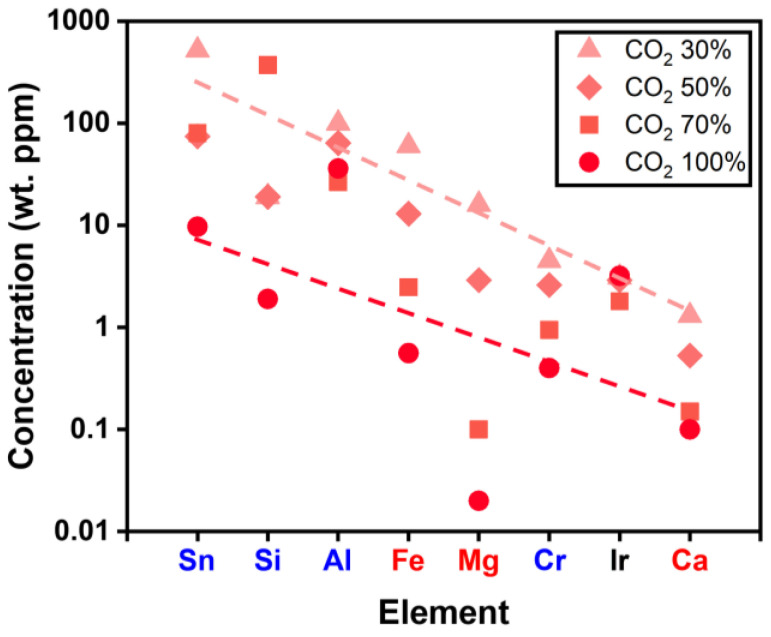
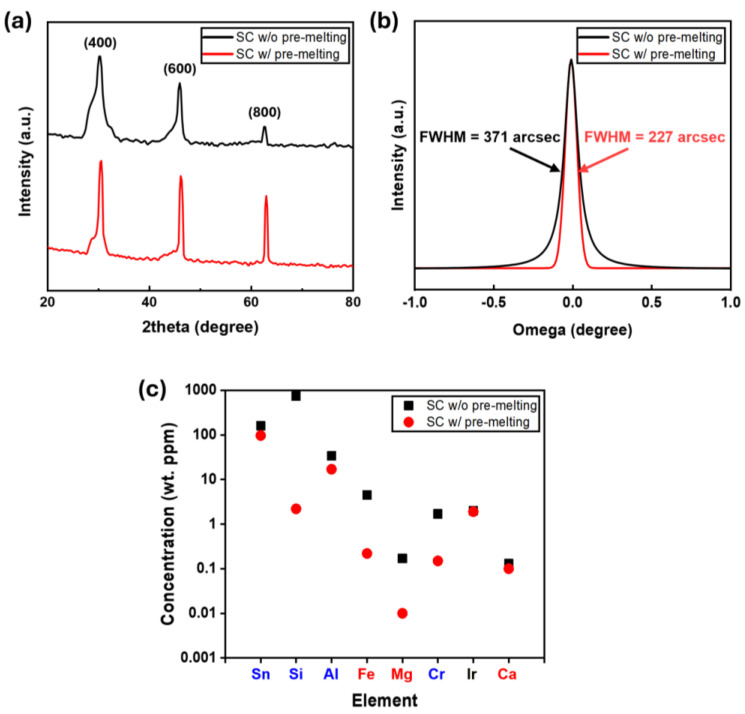
This study reveals the significant role of the pre-melting process in growing high-quality (100) β-GaO single crystals from 4N powder (99.995% purity) using the edge-defined film-fed growth (EFG) method. Among various bulk melt growth methods, the EFG method boasts a fast growth rate and the capability of growing multiple crystals simultaneously, thus offering high productivity. The pre-melting process notably enhanced the structural, optical, and electrical properties of the crystals by effectively eliminating impurities such as Si and Fe. Specifically, employing a 100% CO atmosphere during pre-melting proved to be highly effective, reducing impurity concentrations and carrier scattering, which resulted in a decreased carrier concentration and an increased electron mobility in the grown GaO single crystals. These results demonstrate that pre-melting is a crucial technique for substantially improving crystal quality, thereby promising better performance in β-GaO-based device applications.
本研究揭示了预熔过程在使用边缘限定膜进给生长(EFG)方法从4N粉末(纯度99.995%)生长高质量(100)β-GaO单晶中的重要作用。在各种体熔体生长方法中,EFG方法具有生长速度快和能够同时生长多个晶体的能力,因此具有高生产率。预熔过程通过有效去除Si和Fe等杂质,显著提高了晶体的结构、光学和电学性能。具体而言,在预熔过程中采用100%的CO气氛被证明是非常有效的,降低了杂质浓度和载流子散射,这导致生长的GaO单晶中的载流子浓度降低和电子迁移率增加。这些结果表明,预熔是大幅提高晶体质量的关键技术,从而有望在基于β-GaO的器件应用中实现更好的性能。