
推进神经科学与治疗:对基因和非基因神经调节方法的见解。
Advancing Neuroscience and Therapy: Insights into Genetic and Non-Genetic Neuromodulation Approaches.
作者信息
Zhi Weijia, Li Ying, Wang Lifeng, Hu Xiangjun
机构信息
Beijing Institute of Radiation Medicine, Beijing 100850, China.
School of Life Science and Technology, Xi'an Jiaotong University, Xi'an 710049, China.
出版信息
Cells. 2025 Jan 15;14(2):122. doi: 10.3390/cells14020122.
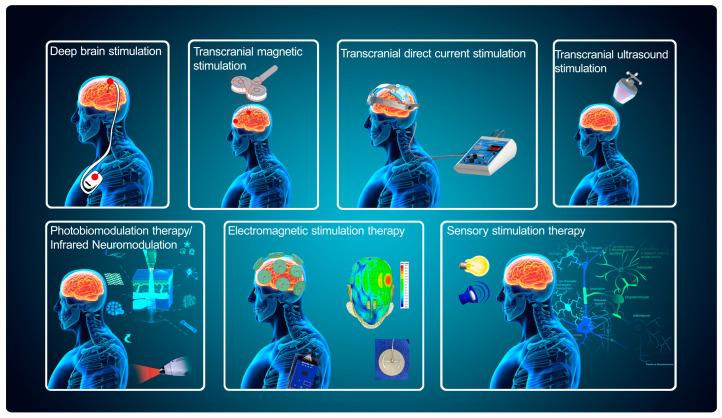
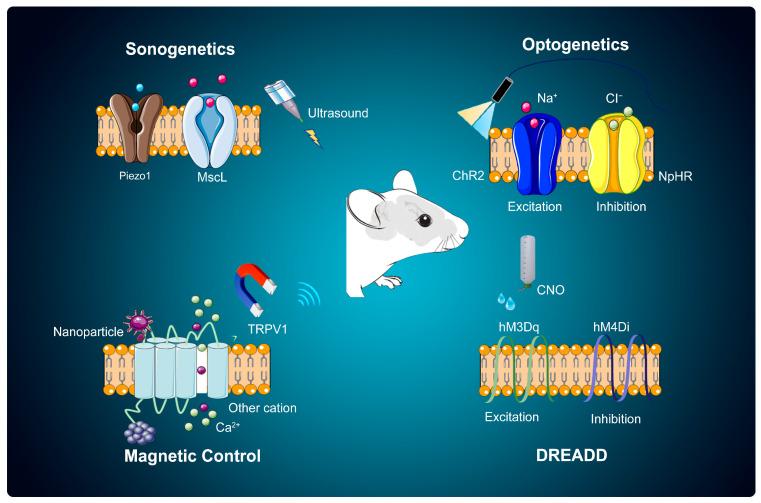
Neuromodulation stands as a cutting-edge approach in the fields of neuroscience and therapeutic intervention typically involving the regulation of neural activity through physical and chemical stimuli. The purpose of this review is to provide an overview and evaluation of different neuromodulation techniques, anticipating a clearer understanding of the future developmental trajectories and the challenges faced within the domain of neuromodulation that can be achieved. This review categorizes neuromodulation techniques into genetic neuromodulation methods (including optogenetics, chemogenetics, sonogenetics, and magnetogenetics) and non-genetic neuromodulation methods (including deep brain stimulation, transcranial magnetic stimulation, transcranial direct current stimulation, transcranial ultrasound stimulation, photobiomodulation therapy, infrared neuromodulation, electromagnetic stimulation, sensory stimulation therapy, and multi-physical-factor stimulation techniques). By systematically evaluating the principles, mechanisms, advantages, limitations, and efficacy in modulating neuronal activity and the potential applications in interventions of neurological disorders of these neuromodulation techniques, a comprehensive picture is gradually emerging regarding the advantages and challenges of neuromodulation techniques, their developmental trajectory, and their potential clinical applications. This review highlights significant advancements in applying these techniques to treat neurological and psychiatric disorders. Genetic methods, such as sonogenetics and magnetogenetics, have demonstrated high specificity and temporal precision in targeting neuronal populations, while non-genetic methods, such as transcranial magnetic stimulation and photobiomodulation therapy, offer noninvasive and versatile clinical intervention options. The transformative potential of these neuromodulation techniques in neuroscience research and clinical practice is underscored, emphasizing the need for integration and innovation in technologies, the optimization of delivery methods, the improvement of mediums, and the evaluation of toxicity to fully harness their therapeutic potential.
神经调节是神经科学和治疗干预领域的一种前沿方法,通常涉及通过物理和化学刺激来调节神经活动。本综述的目的是对不同的神经调节技术进行概述和评估,以期更清晰地了解神经调节领域未来的发展轨迹以及可能面临的挑战。本综述将神经调节技术分为基因神经调节方法(包括光遗传学、化学遗传学、声遗传学和磁遗传学)和非基因神经调节方法(包括深部脑刺激、经颅磁刺激、经颅直流电刺激、经颅超声刺激、光生物调节疗法、红外神经调节、电磁刺激、感觉刺激疗法和多物理因子刺激技术)。通过系统评估这些神经调节技术在调节神经元活动方面的原理、机制、优势、局限性和疗效,以及它们在神经系统疾病干预中的潜在应用,关于神经调节技术的优势和挑战、其发展轨迹及其潜在临床应用的全面图景正逐渐显现。本综述强调了将这些技术应用于治疗神经和精神疾病方面的重大进展。基因方法,如声遗传学和磁遗传学,在靶向神经元群体方面已显示出高特异性和时间精度,而非基因方法,如经颅磁刺激和光生物调节疗法,则提供了非侵入性且通用的临床干预选择。强调了这些神经调节技术在神经科学研究和临床实践中的变革潜力,强调需要在技术整合与创新、给药方法优化、介质改进以及毒性评估方面做出努力,以充分发挥其治疗潜力。
 Zotero 插件