Molina Ramirez Sergio Roberto, Samiseresht Nafiseh, Martínez-Roque Mateo Alejandro, Catania Ferdinando, Graef Kevin, Rabe Martin, Offenhäusser Andreas, Mayer Dirk, Figueroa-Miranda Gabriela
Institute of Biological Information Processing, Bioelectronics (IBI-3), Forschungszentrum Jülich GmbH, 52428 Jülich, Germany.
Department of Interface Chemistry and Surface Engineering, Max Planck Institute for Sustainable Materials GmbH, 40237 Düsseldorf, Germany.
Biosensors (Basel). 2025 Jan 6;15(1):24. doi: 10.3390/bios15010024.
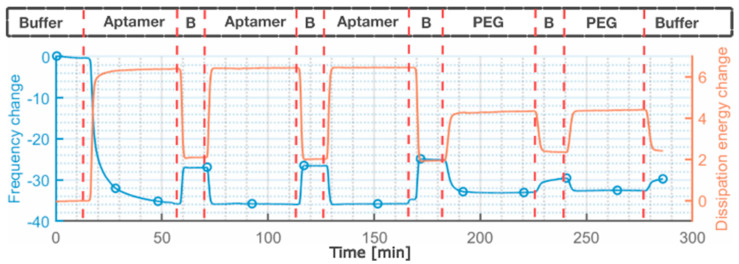
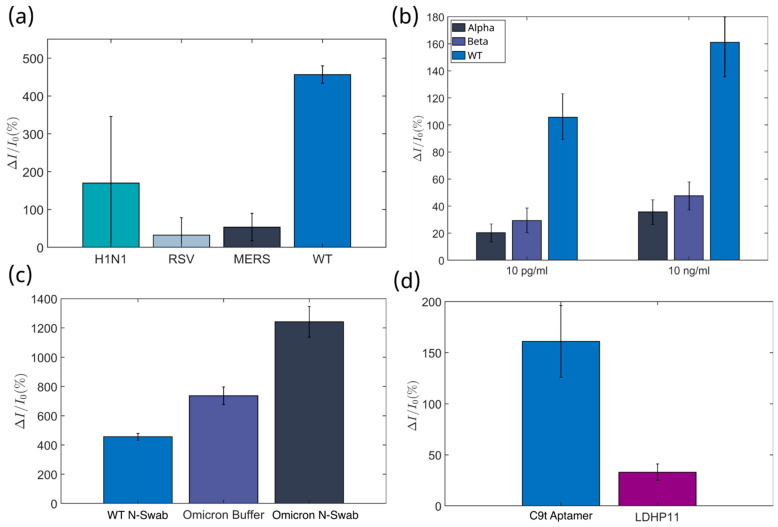
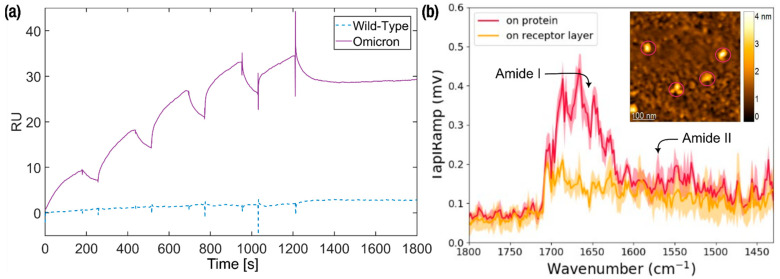
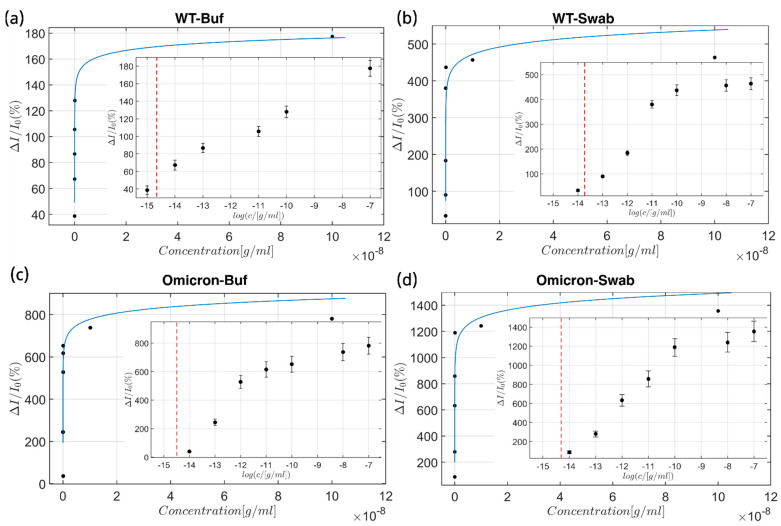
With the goal of fast and accurate diagnosis of infectious diseases, this study presents a novel electrochemical biosensor that employs a refined aptamer (C9t) for the detection of spike (S) protein SARS-CoV-2 variants in a flexible multielectrode aptasensor array with PoC capabilities. Two aptamer modifications were employed: removing the primer binding sites and including two dithiol phosphoramidite anchor molecules. Thus, reducing fabrication time from 24 to 3 h and increasing the stability and sparseness for multi-thiol aptasensors compared to a standard aptasensor using single thiols, without a reduction in aptamer density. The biosensor fabrication, optimization, and detection were verified in detail by electrochemistry, QCM-D, SPR, and XPS. The analyte-receptor binding was further confirmed spectroscopically at the level of individual molecules by AFM-IR. The aptasensor possesses a low limit of detection (8.0 fg/mL), the highest sensitivity reported for S protein (209.5 signal per concentration decade), and a wide dynamic detection range (8.0 fg/mL-38 ng/mL) in nasopharyngeal samples, covering the clinically relevant range. Furthermore, the C9t aptasensor showed high selectivity for SARS-CoV-2 S proteins over biomarkers for MERS-CoV, RSV, and Influenza. Even more, it showed a three times higher sensitivity for the Omicron in comparison to the Wuhan strain (wild type), alpha, and beta variants of the SARS-CoV-2 virus. Those results demonstrate the creation of an affordable and variant-selective refined C9t aptasensor that outperformed current rapid diagnosis tests.
为实现快速准确诊断传染病的目标,本研究提出了一种新型电化学生物传感器,该传感器采用精制适体(C9t),用于在具有即时检测(PoC)功能的柔性多电极适体传感器阵列中检测严重急性呼吸综合征冠状病毒2(SARS-CoV-2)变体的刺突(S)蛋白。采用了两种适体修饰方法:去除引物结合位点并包含两个二硫醇亚磷酰胺锚定分子。因此,与使用单硫醇的标准适体传感器相比,将制造时间从24小时缩短至3小时,并提高了多硫醇适体传感器的稳定性和稀疏性,同时不降低适体密度。通过电化学、石英晶体微天平耗散监测技术(QCM-D)、表面等离子体共振(SPR)和X射线光电子能谱(XPS)对生物传感器的制造、优化和检测进行了详细验证。通过原子力显微镜红外光谱(AFM-IR)在单个分子水平上进一步通过光谱法确认了分析物与受体的结合。该适体传感器具有低检测限(8.0 fg/mL),是报道的S蛋白最高灵敏度(每浓度十年209.5信号),并且在鼻咽样品中具有宽动态检测范围(8.0 fg/mL - 38 ng/mL),涵盖临床相关范围。此外,C9t适体传感器对SARS-CoV-2 S蛋白的选择性高于中东呼吸综合征冠状病毒(MERS-CoV)、呼吸道合胞病毒(RSV)和流感的生物标志物。甚至,与SARS-CoV-2病毒的武汉株(野生型)、α和β变体相比,它对奥密克戎的灵敏度高出三倍。这些结果表明,创建了一种经济实惠且具有变体选择性的精制C9t适体传感器,其性能优于当前的快速诊断测试。