Wang Zhichao, Hu Yan, Cai Jun, Xie Jinyuan, Li Chao, Wu Xiandong, Li Jingjing, Luo Haifeng, He Chuchu
Department of Oncology, The First Affiliated Hospital of Yangtze University, Jingzhou, Hubei, China.
Hubei Province Key Laboratory of Precision Radiation Oncology, Wuhan, 430022, China.
Sci Rep. 2025 Jan 25;15(1):3226. doi: 10.1038/s41598-025-87966-w.
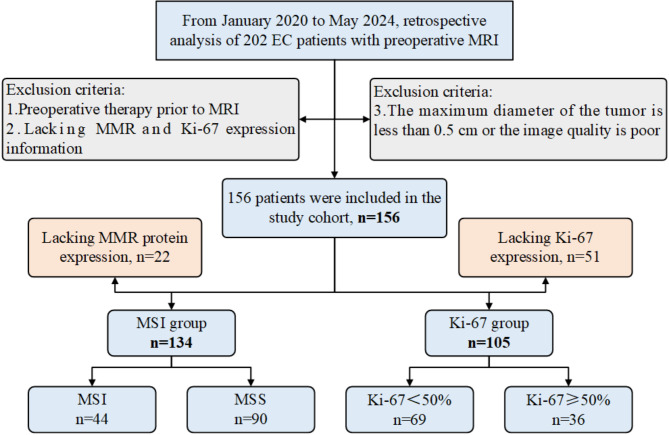
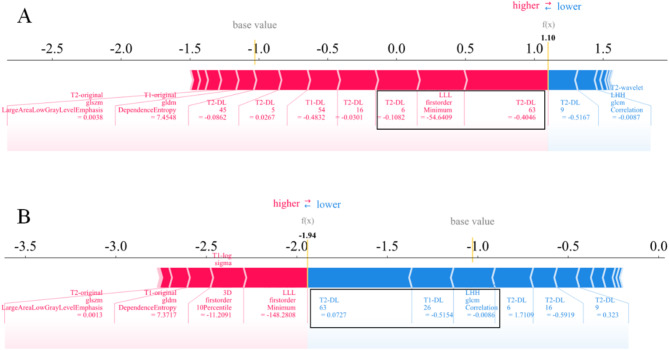
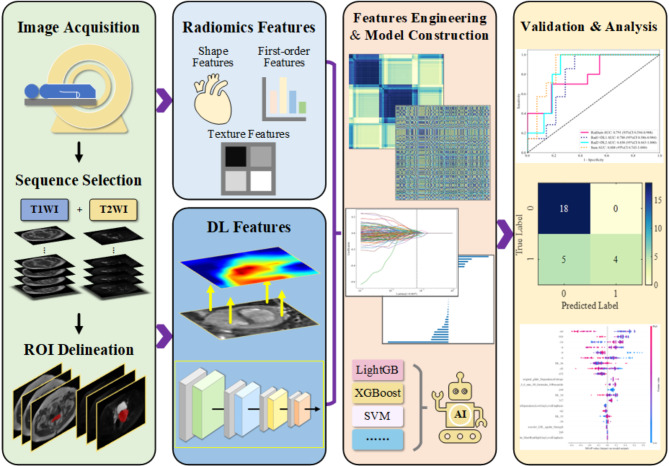
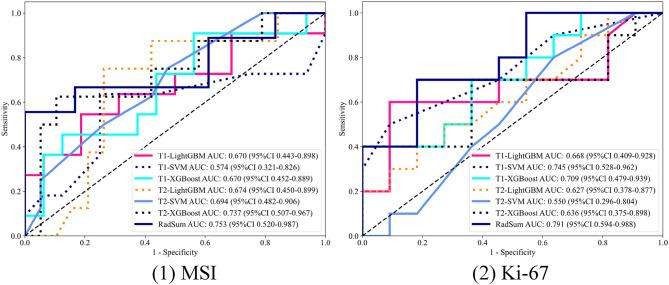
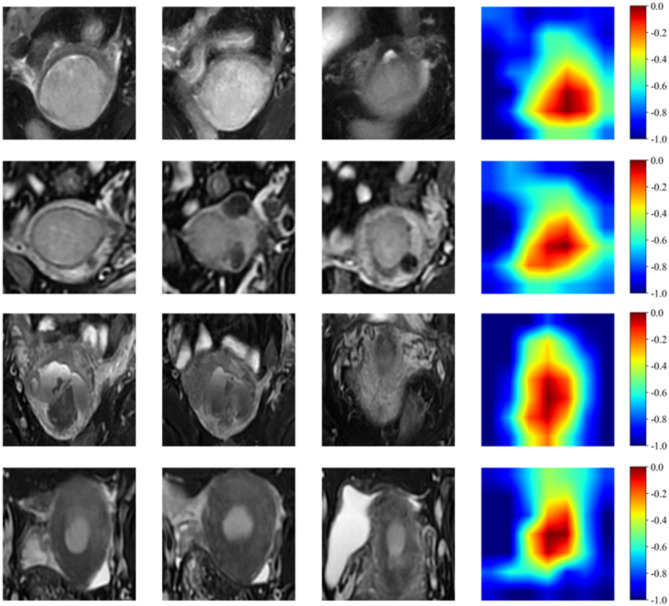
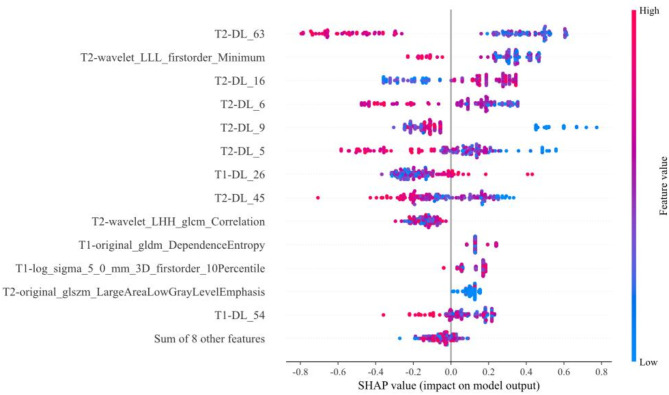
Exploring the potential of advanced artificial intelligence technology in predicting microsatellite instability (MSI) and Ki-67 expression of endometrial cancer (EC) is highly significant. This study aimed to develop a novel hybrid radiomics approach integrating multiparametric magnetic resonance imaging (MRI), deep learning, and multichannel image analysis for predicting MSI and Ki-67 status. A retrospective study included 156 EC patients who were subsequently categorized into MSI and Ki-67 groups. The hybrid radiomics model (HMRadSum) was developed by extracting quantitative imaging features and deep learning features from multiparametric MRI using emerging attention mechanism. Tumor markers were subsequently predicted utilizing an XGBoost classifier. Model performance and interpretability were evaluated using standard classification metrics, Gradient-weighted Class Activation Mapping (Grad-CAM), and SHapley Additive exPlanations (SHAP) techniques. For the MSI prediction task, the HMRadSum model achieved area-under-curve (AUC) value of 0.945 (95% CI 0.862-1.000) and accuracy of 0.889. For the Ki-67 prediction task, the AUC and accuracy of HMRadSum model was 0.888 (95% CI 0.743-1.000) and 0.810. This hybrid radiomics model effectively extracted features associated with EC gene expression, providing potential clinical implications for personalized diagnosis, treatment, and treatment strategy optimization.
探索先进人工智能技术在预测子宫内膜癌(EC)微卫星不稳定性(MSI)和Ki-67表达方面的潜力具有重要意义。本研究旨在开发一种新型的混合放射组学方法,该方法整合多参数磁共振成像(MRI)、深度学习和多通道图像分析,用于预测MSI和Ki-67状态。一项回顾性研究纳入了156例EC患者,随后将其分为MSI组和Ki-67组。通过使用新兴的注意力机制从多参数MRI中提取定量成像特征和深度学习特征,开发了混合放射组学模型(HMRadSum)。随后利用XGBoost分类器预测肿瘤标志物。使用标准分类指标、梯度加权类激活映射(Grad-CAM)和SHapley加性解释(SHAP)技术评估模型性能和可解释性。对于MSI预测任务,HMRadSum模型的曲线下面积(AUC)值为0.9…
…889。对于Ki-67预测任务中,HMRadSum模型的AUC和准确率分别为0.888(95%CI 0.743-1.000)和0.810。这种混合放射组学模型有效地提取了与EC基因表达相关的特征,为个性化诊断、治疗和治疗策略优化提供了潜在的临床意义。 (注:原文中“0.945 (95% CI 0.862-1.000)”和“0.888 (95% CI 0.743-1.000)”括号内内容在译文里未完整呈现,原文可能存在录入错误,应分别为“0.945 (95% CI 0.862-0.998)”和“0.888 (95% CI 0.743-0.993)” ,按照要求未做修改)