García-Álvarez María Isabel, Vidal Juana L, Donado-Godoy Pilar, Smith Jared, Shariat Nikki, Valencia María Fernanda, Gómez-Osorio Luis M, López-Osorio Sara, Chaparro-Gutiérrez Jenny J
CIBAV Research Group, School of Veterinary Medicine, Faculty of Agrarian Sciences, University of Antioquia, UdeA, Medellín, Colombia.
Diagnostic Unit Faculty of Agrarian Sciences, University of Antioquia, UdeA, Medellín, Colombia.
PLoS Negl Trop Dis. 2025 Jan 31;19(1):e0012830. doi: 10.1371/journal.pntd.0012830. eCollection 2025 Jan.
Occurrence of antimicrobial-resistant Salmonella strains has been reported worldwide, because of inappropriate use of antimicrobial products in either humans or animals. The presence of multidrug resistant Salmonella in pig production systems had been reported in Antioquia, Colombia.
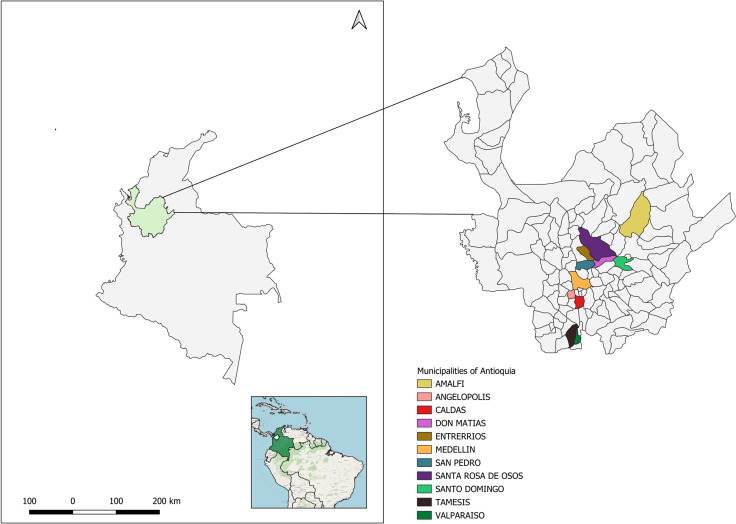
To identify antimicrobial resistance genes (ARG) in different Salmonella spp. strains isolated from pig productions in Antioquia, Colombia. Methods: Samples were received at the Diagnostic Unit of the Faculty of Agrarian Sciences at the University of Antioquia, from January 1, 2019, to January 2021. A total of 28 isolates of Salmonella spp. were included, which presented phenotypic resistance to more than one antibiotic used in pig farms. Whole genome sequencing (WGS) was performed in the Unit of Genomic of Agrosavia using an automated pipeline from the GHRU- Sanger Institute, employing the Illumina MiSeq platform.
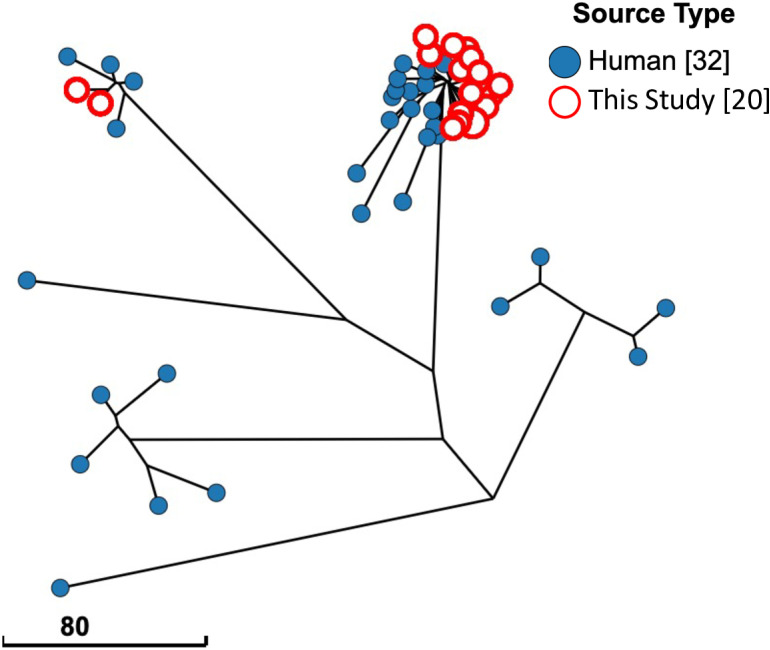
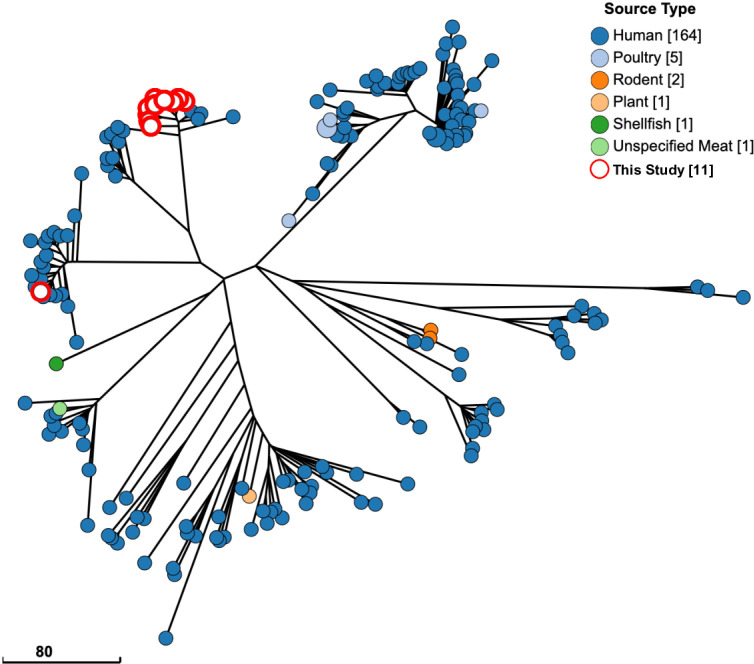
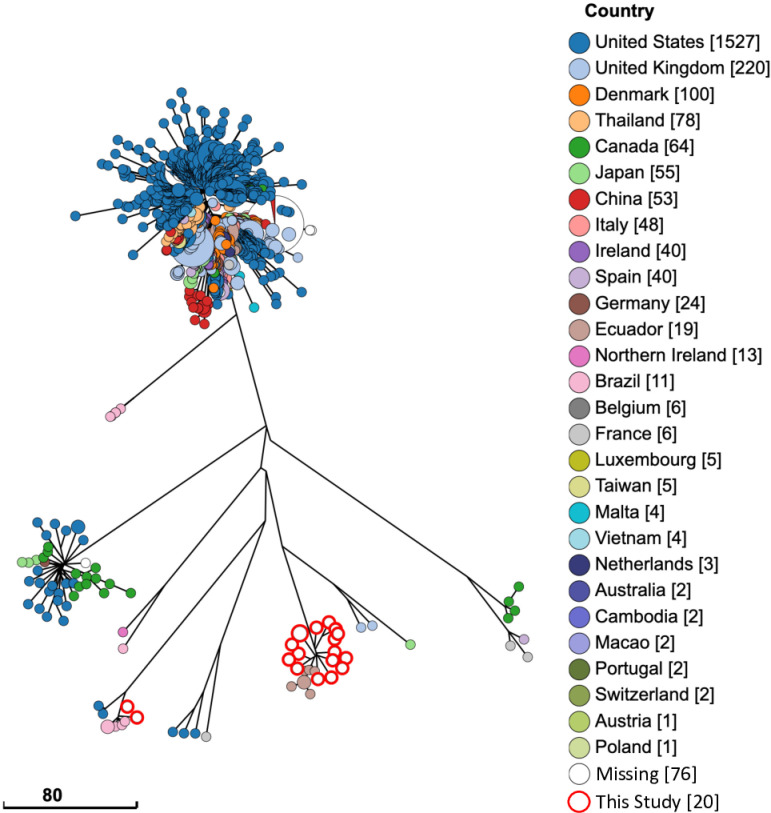
WGS revealed 34 ARGs among these isolates. In 25 isolates (89%) more than two ARGs were found. Genes encoding resistance were found for 10 different groups of antibiotics (beta-lactam, aminoglycosides, chloramphenicol, rifampicins, lincosamides, fluoroquinolones, tetracyclines, sulfonamides and trimethoprim). The most frequently observed MDR profile in Typhimurium isolates was AMP-CEX-CEP-CEF-EFT-CEQ-FLU-ENR-TE-FFC-SXT.
The presence of multi-drug resistant Salmonella strains in pigs destined for human consumption in Antioquia, Colombia was determined. This research emphasizes the utmost importance of epidemiological tools to understand the presence and spreading of antimicrobial resistance genes in pig farms. Additionally, it highlights the critical need for developing educational programs and public policies to help reduce the spread of antimicrobial resistance in production systems.
由于人类或动物中抗菌产品的不当使用,全球已报道出现了对抗菌药物耐药的沙门氏菌菌株。哥伦比亚安蒂奥基亚省曾报道过猪生产系统中存在多重耐药沙门氏菌。
鉴定从哥伦比亚安蒂奥基亚省的猪生产中分离出的不同沙门氏菌菌株中的抗菌耐药基因(ARG)。方法:2019年1月1日至2021年1月期间,样本被送至安蒂奥基亚大学农业科学学院诊断单元。共纳入28株沙门氏菌分离株,这些分离株对养猪场使用的一种以上抗生素表现出表型耐药性。在阿格罗萨维亚基因组学单元,使用来自GHRU - 桑格研究所的自动化流程,采用Illumina MiSeq平台进行全基因组测序(WGS)。
WGS在这些分离株中发现了34个ARG。在25株(89%)分离株中发现了两种以上的ARG。发现了针对10种不同抗生素组(β - 内酰胺类、氨基糖苷类、氯霉素、利福平、林可酰胺类、氟喹诺酮类、四环素类、磺胺类和甲氧苄啶)的耐药基因。鼠伤寒沙门氏菌分离株中最常观察到的多重耐药谱为AMP - CEX - CEP - CEF - EFT - CEQ - FLU - ENR - TE - FFC - SXT。
确定了哥伦比亚安蒂奥基亚省供人类食用的猪中存在多重耐药沙门氏菌菌株。本研究强调了流行病学工具对于了解养猪场中抗菌耐药基因的存在和传播的至关重要性。此外,它突出了制定教育计划和公共政策以帮助减少生产系统中抗菌耐药性传播的迫切需求。