Dare Chengetai, Boachie Micheal Kofi, Goldstein Susan, Thsehla Evelyn
SAMR/Wits Centre for Health Economics and Decision Science - PRICELESS SA, School of Public Health, Faculty of Health Sciences, University of the Witwatersrand, Johannesburg, 2193, South Africa.
BMC Nutr. 2025 Jan 31;11(1):28. doi: 10.1186/s40795-025-01012-6.
The production and consumption of sugar-sweetened beverages (SSBs) have been increasing over the past years, globally. However, there is overwhelming evidence linking SSBs to the rising prevalence in obesity and its comorbidities. In South Africa, the prevalence of overweight and obesity is high and is among the highest in Sub-Saharan Africa. In response to rising prevalence in obesity and its comorbidities, on 1 April 2018 the South African government introduced an SSB tax, known as the Health Promotion Levy (HPL). However, the levy has been opposed by the sugar industry, claiming that it leads to jobs losses. Against this backdrop, this study seeks to investigate the association between the HPL and employment in the sugar industry.
We employed single-group interrupted time series analyses using the Quarterly Labour Force Survey data from Statistics South Africa.
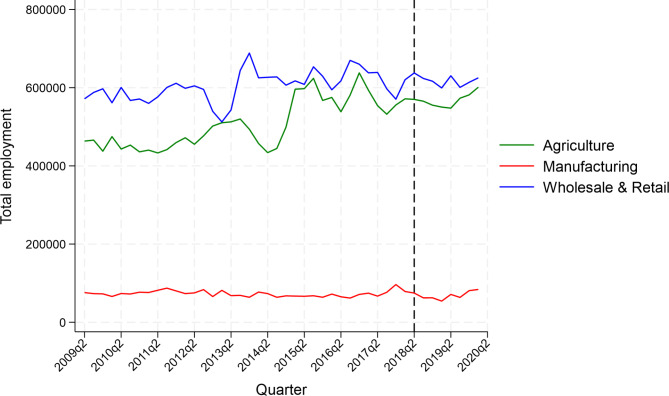
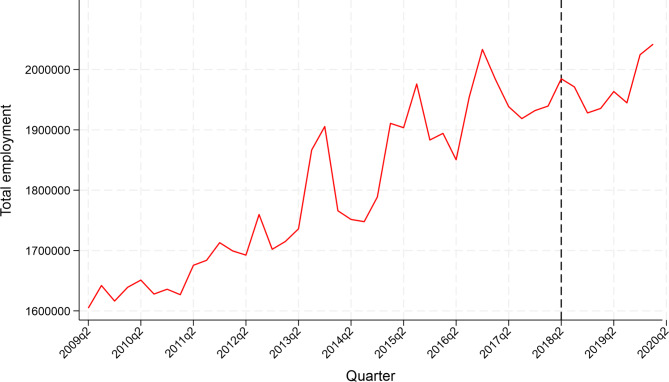
Our results show that the HPL has not been associated with job losses (or generation) in the sugar-related industries in South Africa. These findings are consistent with the findings on the effects of SSB taxes on employment in other jurisdictions.
Considering that the HPL does not impede employment, and the overwhelming evidence on the effectiveness of SSB taxes, together with the relatively low tax burden, it is imperative that the government raises the HPL from the current 8% of the retail price to the WHO-recommended 20% threshold. The government should also consider expanding the HPL to fruit juices. Such strategies are important in encouraging people to reduce the intake of SSBs, while enabling the government to raise additional revenue for the fiscus.
在过去几年中,全球含糖饮料(SSB)的生产和消费一直在增加。然而,有大量证据表明含糖饮料与肥胖症及其合并症患病率的上升有关。在南非,超重和肥胖的患病率很高,是撒哈拉以南非洲地区最高的之一。为应对肥胖症及其合并症患病率的上升,2018年4月1日,南非政府引入了一项含糖饮料税,即健康促进税(HPL)。然而,该税受到了制糖业的反对,称其会导致失业。在此背景下,本研究旨在调查健康促进税与制糖业就业之间的关联。
我们使用南非统计局的季度劳动力调查数据进行单组中断时间序列分析。
我们的结果表明,健康促进税与南非制糖相关行业的失业(或就业创造)没有关联。这些发现与其他司法管辖区关于含糖饮料税对就业影响的研究结果一致。
鉴于健康促进税不妨碍就业,且有大量证据表明含糖饮料税有效,再加上相对较低的税负,政府必须将健康促进税从目前零售价的8%提高到世界卫生组织建议的20%门槛。政府还应考虑将健康促进税扩大到果汁。这些策略对于鼓励人们减少含糖饮料的摄入量很重要,同时使政府能够为财政增加额外收入。