Rimbara Emiko, Aoki Sae, Suzuki Masato, Kobayashi Hirotaka, Nakagawa Taisuke, Goto-Koshino Yuko, Nomura Sachiyo, Du Wan-Ying, Matsui Hidenori, Mori Shigetarou, Shibayama Keigo, Kenri Tsuyoshi, Ohno Koichi
Department of Bacteriology II, National Institute of Infectious Diseases, Tokyo, Japan.
Antimicrobial Resistance Research Center, National Institute of Infectious Diseases, Tokyo, Japan.
Front Microbiol. 2025 Jan 17;15:1459401. doi: 10.3389/fmicb.2024.1459401. eCollection 2024.
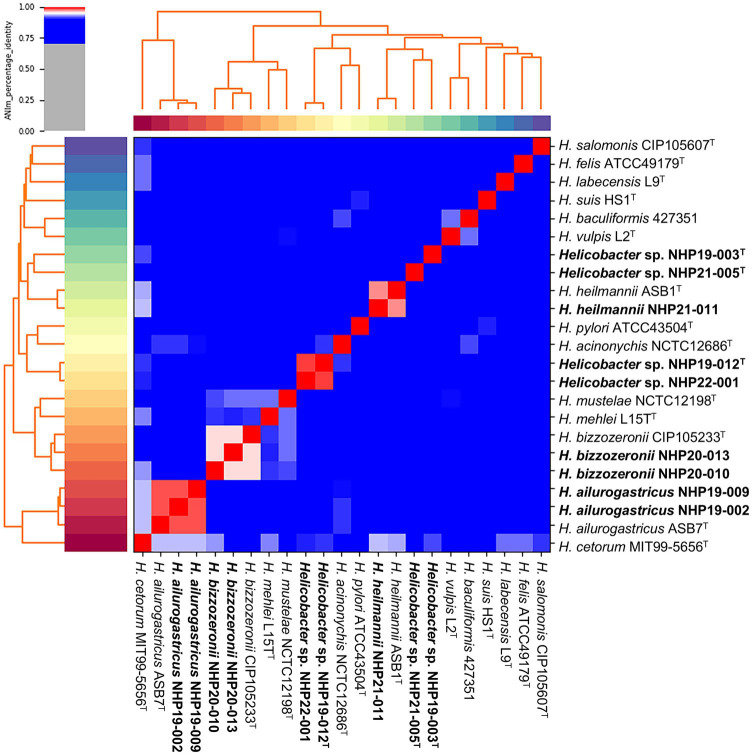
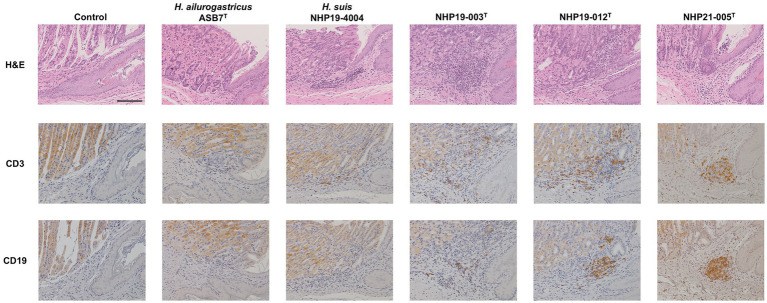
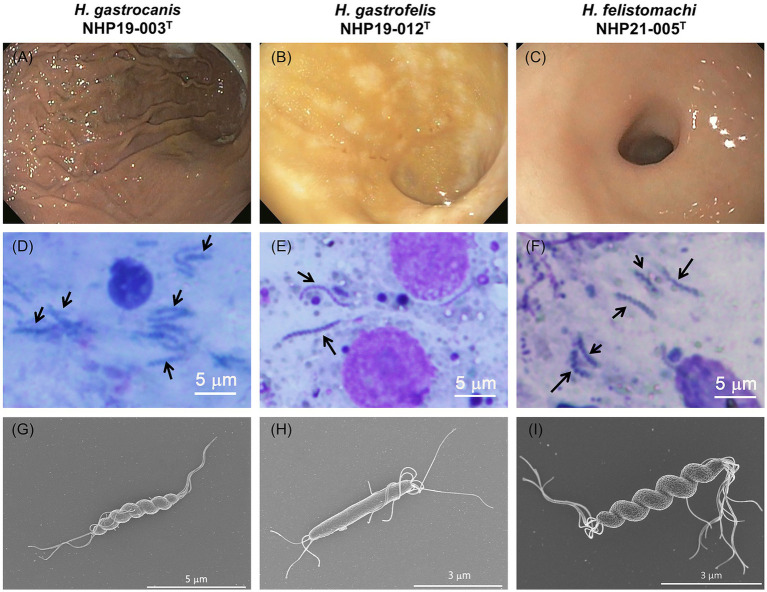
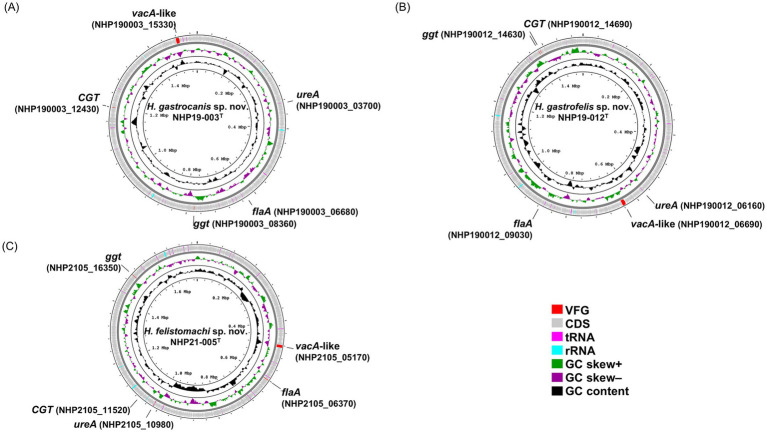
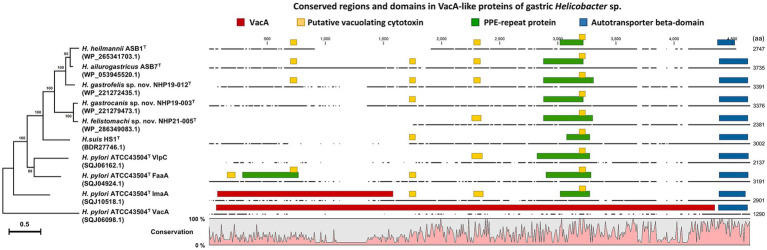
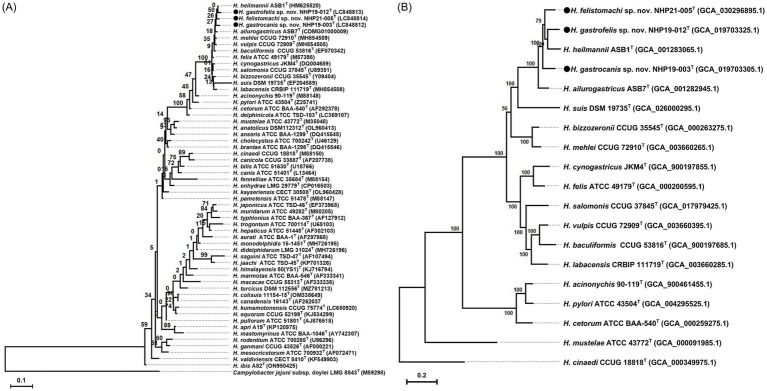
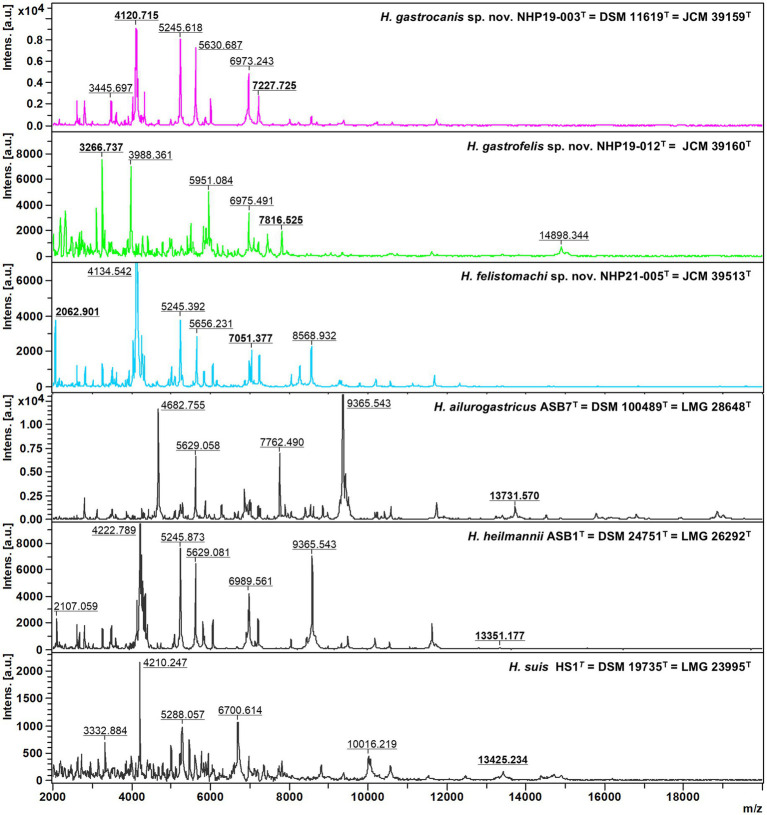
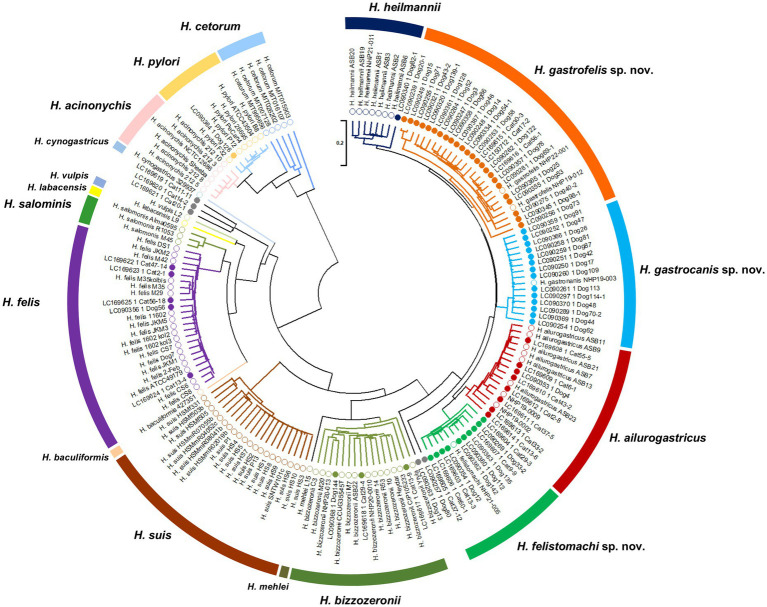
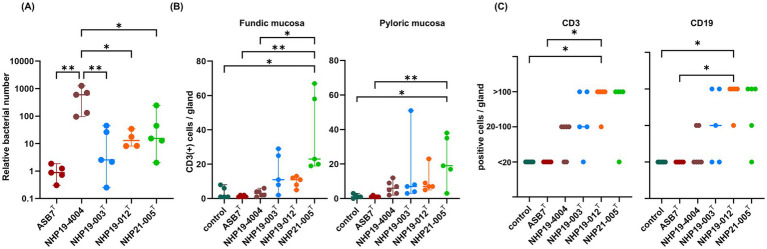
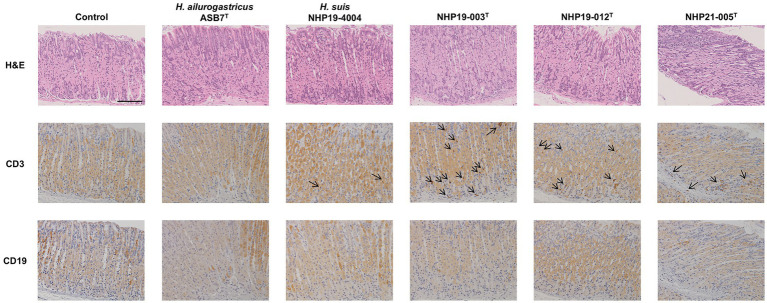
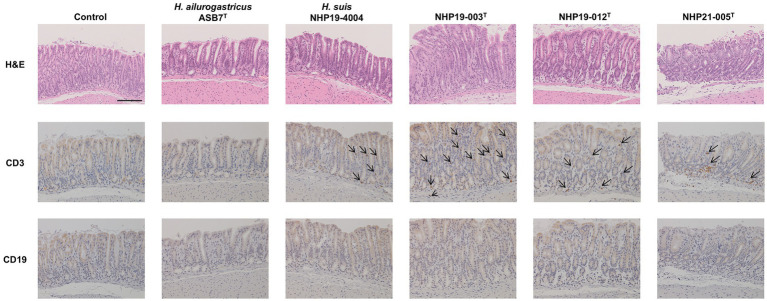
species infecting the stomachs of dogs and cats are potentially pathogenic and have been isolated from patients with gastric diseases. In the present study conducted in Japan, among the nine strains that we isolated from dogs and cats, NHP19-003 from a dog, and strains NHP19-012 and NHP21-005 from cats were identified to be the strains most closely related to ASB1 based on a 16S rRNA comparison (98.7-99.2% similarity with ASB1). However, none of their whole genomes showed more than average nucleotide identity (ANI) threshold value (95-96%) to any species (85.1, 86.7, and 86.6% ANI, respectively, with ASB1), including when compared to each other. Furthermore, NHP19-003, NHP19-012, and NHP21-005 exhibited protein profiles different from known gastric species, as revealed by MALDI-TOF MS, indicating that they are novel species. We, thus, propose these novel species as follows: sp. nov. (type strain NHP19-003 [=JCM 39159 = DSM 111619]), sp. nov. (type strain NHP19-012 [=JCM 39160]) and sp. nov. (type strain NHP21-005 [=JCM 39513]). These novel strains have respective GC content values of 48.3, 46.9, and 47.1%. Phylogenetic analysis based on gene sequences obtained from gastric specimens from 47 dogs and 24 cats in Japan revealed that 29.8% of dogs were infected with , while infected 44.7% of dogs and 12.5% of cats. Additionally, 10.6% of dogs and 20.8% of cats were infected with . Animal experiments have confirmed that these three novel species elicit gastric inflammatory responses. This study findings reveal the prevalence of novel gastric species in dogs and cats in Japan and their pathogenicity.
感染狗和猫胃部的物种具有潜在致病性,并且已从胃病患者中分离出来。在日本进行的本研究中,在我们从狗和猫中分离出的9株菌株中,基于16S rRNA比较(与ASB1的相似性为98.7 - 99.2%),来自一只狗的NHP19 - 003菌株以及来自猫的NHP19 - 012和NHP21 - 005菌株被鉴定为与ASB1关系最密切的菌株。然而,它们的全基因组与任何物种(包括相互比较时)的平均核苷酸同一性(ANI)均未超过阈值(95 - 96%)(与ASB1的ANI分别为85.1%、86.7%和86.6%)。此外,基质辅助激光解吸电离飞行时间质谱(MALDI - TOF MS)显示,NHP19 - 003、NHP19 - 012和NHP21 - 005呈现出与已知胃部物种不同的蛋白质谱,表明它们是新物种。因此,我们将这些新物种命名如下:[新物种名称1] sp. nov.(模式菌株NHP19 - 003 [=JCM 39159 = DSM 111619]),[新物种名称2] sp. nov.(模式菌株NHP19 - 012 [=JCM 39160])和[新物种名称3] sp. nov.(模式菌株NHP21 - 005 [=JCM 39513])。这些新菌株的GC含量分别为48.3%、46.9%和47.1%。基于从日本47只狗和24只猫的胃部标本获得的[基因名称]基因序列进行的系统发育分析表明,29.8%的狗感染了[物种名称1],而[物种名称2]感染了44.7%的狗和12.5%的猫。此外,10.6%的狗和20.8%的猫感染了[物种名称3]。动物实验证实这三个新物种会引发胃部炎症反应。本研究结果揭示了日本狗和猫中新的胃部物种的流行情况及其致病性。