
一种用于加强冠状动脉疾病基因-疾病关联研究的网络驱动框架。
A Network-Driven Framework for Enhancing Gene-Disease Association Studies in Coronary Artery Disease.
作者信息
Mohammad Gutama Ibrahim, Björkegren Johan Lm, Michoel Tom
机构信息
Computational Biology Unit, Department of Informarics, University of Bergen, Norway.
Department of Medicine, Karolinska Institutet, Karolinska Universitetssjukhuset, Huddinge, Sweden.
出版信息
ArXiv. 2025 Jan 31:arXiv:2501.19030v1.
MOTIVATION
Over the last decade, genome-wide association studies (GWAS) have successfully identified numerous genetic variants associated with complex diseases. These associations have the potential to reveal the molecular mechanisms underlying complex diseases and lead to the identification of novel drug targets. Despite these advancements, the biological pathways and mechanisms linking genetic variants to complex diseases are still not fully understood. Most trait-associated variants reside in non-coding regions and are presumed to influence phenotypes through regulatory effects on gene expression. Yet, it is often unclear which genes they regulate and in which cell types this regulation occurs. Transcriptome-wide association studies (TWAS) aim to bridge this gap by detecting trait-associated tissue gene expression regulated by GWAS variants. However, traditional TWAS approaches frequently overlook the critical contributions of trans-regulatory effects and fail to integrate comprehensive regulatory networks. Here, we present a novel framework that leverages tissue-specific gene regulatory networks (GRNs) to integrate cis- and trans-genetic regulatory effects into the TWAS framework for complex diseases.
RESULTS
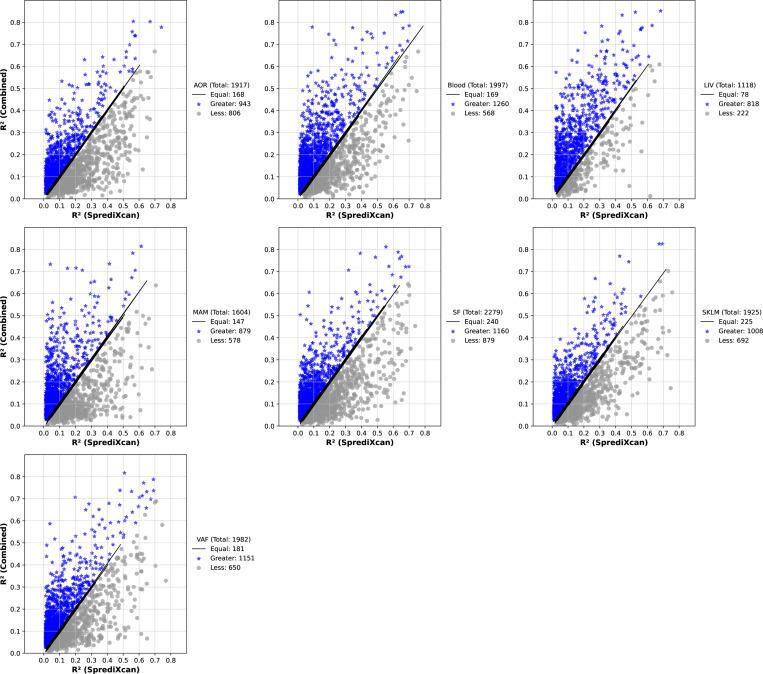
We validate our approach using coronary artery disease (CAD), utilizing data from the STARNET project, which provides multi-tissue gene expression and genetic data from around 600 living patients with cardiovascular disease. Preliminary results demonstrate the potential of our GRN-driven framework to uncover more genes and pathways that may underlie CAD. This framework extends traditional TWAS methodologies by utilizing tissue-specific regulatory insights and advancing the understanding of complex disease genetic architecture.
AVAILABILITY
动机
在过去十年中,全基因组关联研究(GWAS)已成功鉴定出众多与复杂疾病相关的遗传变异。这些关联有可能揭示复杂疾病背后的分子机制,并有助于鉴定新的药物靶点。尽管取得了这些进展,但将遗传变异与复杂疾病联系起来的生物学途径和机制仍未完全了解。大多数与性状相关的变异位于非编码区域,推测它们通过对基因表达的调控作用来影响表型。然而,通常不清楚它们调控哪些基因以及这种调控发生在哪些细胞类型中。全转录组关联研究(TWAS)旨在通过检测由GWAS变异调控的与性状相关的组织基因表达来弥合这一差距。然而,传统的TWAS方法常常忽略了反式调控效应的关键作用,并且未能整合全面的调控网络。在此,我们提出了一个新的框架,该框架利用组织特异性基因调控网络(GRN)将顺式和反式遗传调控效应整合到复杂疾病的TWAS框架中。
结果
我们使用冠状动脉疾病(CAD)验证了我们的方法,利用了来自STARNET项目的数据,该项目提供了约600名心血管疾病在世患者的多组织基因表达和遗传数据。初步结果表明,我们的GRN驱动框架有潜力揭示更多可能是CAD潜在病因的基因和途径。该框架通过利用组织特异性调控见解并推进对复杂疾病遗传结构的理解,扩展了传统的TWAS方法。
可用性



 Zotero 插件