Chenchen Xu, Zhihao Zhang, Lizhu Wang, Xin Ji, Yue Yue, Xurui Liang, Yufei Han, Jiqin Hou, Tao Zhang
The Fourth School of Clinical Medicine, Nanjing Medical University, Nanjing, 211166, China.
Northern Jiangsu Institute of Clinical Medicine, Department of Radiopharmaceuticals, Nuclear Medicine Clinical Translation Center, School of Pharmacy, Nanjing Medical University, Nanjing, 211166, China.
BMC Med Educ. 2025 Mar 15;25(1):388. doi: 10.1186/s12909-025-06870-z.
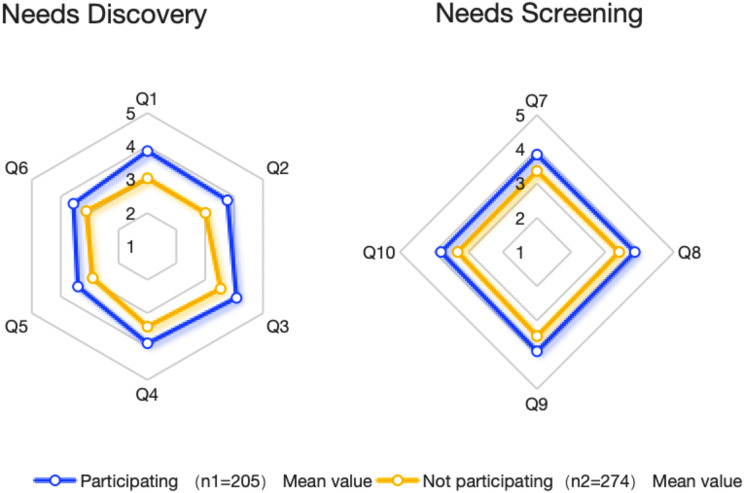
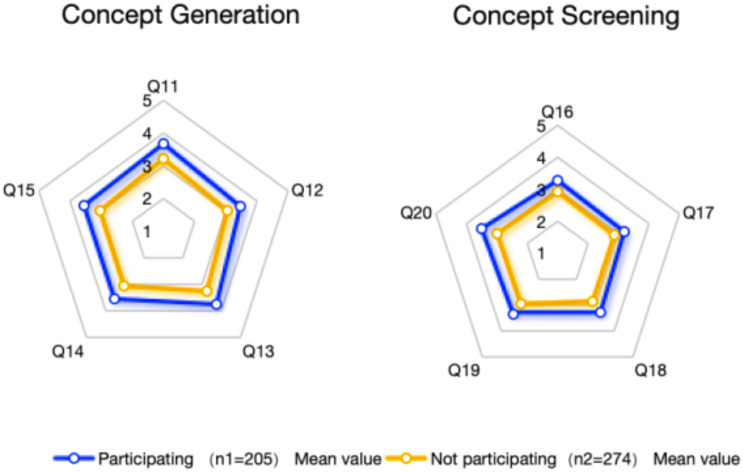
With the trend of economic globalization, innovation and entrepreneurship have become critical strategies for national development. College students, particularly, are a primary focus for cultivating awareness of innovation and entrepreneurship, which is essential for implementing national development strategies. The institution in eastern China has developed a program aimed at fostering medical innovation and entrepreneurship through the Biodesign framework. This study aimed to evaluate the effectiveness of this training system by surveying 479 medical students using a questionnaire designed around three stages: "identify," "invent," and "implement". Factor analysis, descriptive statistical analysis, and T-tests were employed to assess the effectiveness and development pathways of the Biodesign-based cultivation of medical innovation and entrepreneurship talents. The results indicate significant improvements in students' abilities in demand identification, demand screening, concept generation, concept selection, strategic identification, and business planning (p < 0.001), with the most notable improvement in demand identification (t = 6.383). Additionally, students have achieved notable success in writing and publishing papers and patents, as well as securing provincial and national-level awards. Particularly remarkable were the achievements in student competitions, with the number of national-level awards rising from 32 in 2019 to 66 in 2023. In conclusion, the Biodesign-based cultivation model for medical innovation and entrepreneurship has proven effective and merits further promotion among medical students.
随着经济全球化的趋势,创新与创业已成为国家发展的关键战略。尤其是大学生,是培养创新与创业意识的主要重点对象,这对于实施国家发展战略至关重要。中国东部的这所院校制定了一项旨在通过生物设计框架培养医学创新与创业能力的计划。本研究旨在通过使用围绕“识别”“发明”和“实施”三个阶段设计的问卷对479名医学生进行调查,来评估该培训系统的有效性。采用因子分析、描述性统计分析和T检验来评估基于生物设计培养医学创新与创业人才的有效性和发展路径。结果表明,学生在需求识别、需求筛选、概念生成、概念选择、战略识别和商业规划方面的能力有显著提高(p < 0.001),其中需求识别方面的提高最为显著(t = 6.383)。此外,学生在论文和专利的撰写与发表以及获得省级和国家级奖项方面也取得了显著成功。学生竞赛中的成绩尤其突出,国家级奖项数量从2019年的32项增至2023年的66项。总之,基于生物设计的医学创新与创业培养模式已被证明是有效的,值得在医学生中进一步推广。