Sun Yueqiu, Yu Nianzuo, Zhang Junhu, Yang Bai
State Key Laboratory of Supramolecular Structure and Materials, College of Chemistry, Jilin University, Changchun 130000, China.
Joint Laboratory of Opto-Functional Theranostics in Medicine and Chemistry, The First Hospital of Jilin University, Jilin University, Changchun 130000, China.
Micromachines (Basel). 2025 Apr 2;16(4):426. doi: 10.3390/mi16040426.
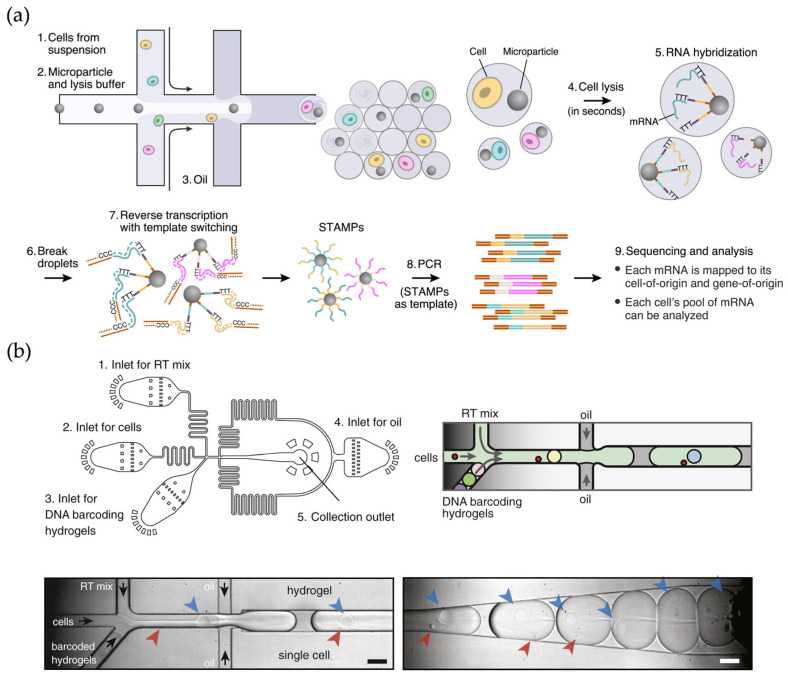
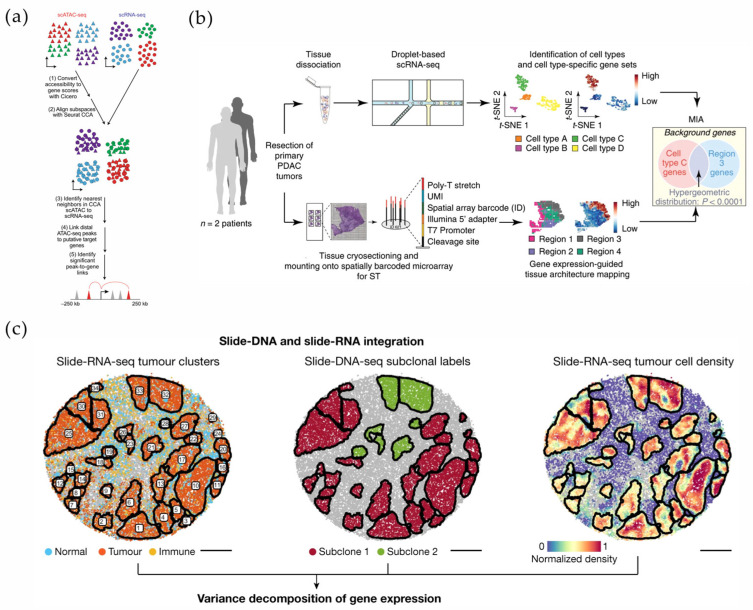
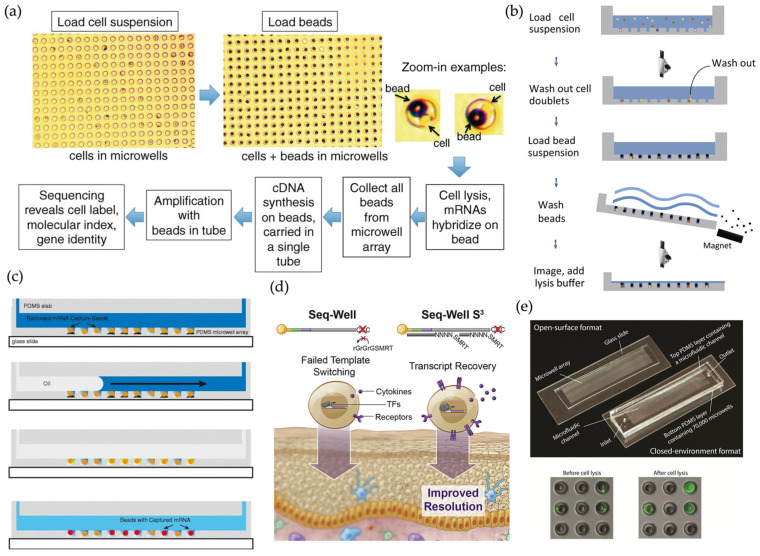
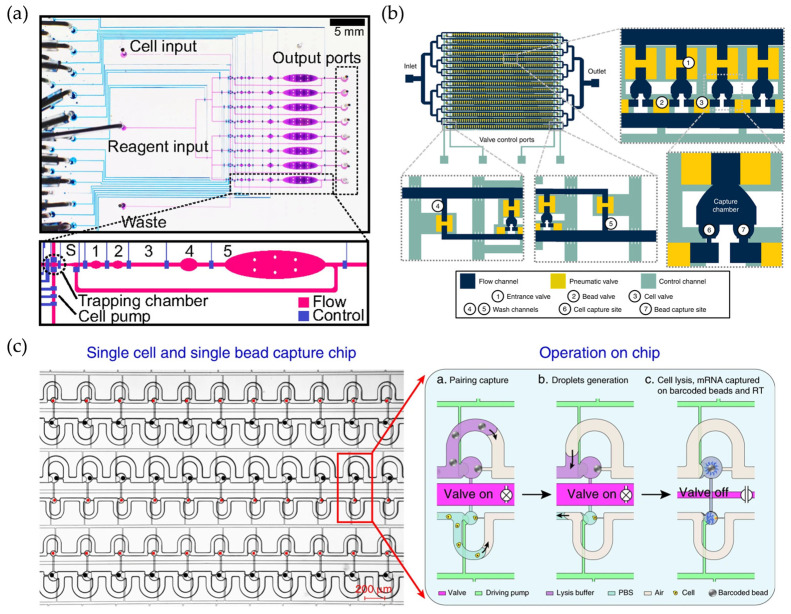
The development of micro- and nano-fabrication technologies has greatly advanced single-cell and spatial omics technologies. With the advantages of integration and compartmentalization, microfluidic chips are capable of generating high-throughput parallel reaction systems for single-cell screening and analysis. As omics technologies improve, microfluidic chips can now integrate promising transcriptomics technologies, providing new insights from molecular characterization for tissue gene expression profiles and further revealing the static and even dynamic processes of tissues in homeostasis and disease. Here, we survey the current landscape of microfluidic methods in the field of single-cell and spatial multi-omics, as well as assessing their relative advantages and limitations. We highlight how microfluidics has been adapted and improved to provide new insights into multi-omics over the past decade. Last, we emphasize the contributions of microfluidic-based omics methods in development, neuroscience, and disease mechanisms, as well as further revealing some perspectives for technological advances in translational and clinical medicine.
微纳加工技术的发展极大地推动了单细胞和空间组学技术的进步。微流控芯片具有集成化和分隔化的优势,能够生成用于单细胞筛选和分析的高通量平行反应系统。随着组学技术的改进,微流控芯片现在可以整合有前景的转录组学技术,从分子特征方面为组织基因表达谱提供新的见解,并进一步揭示组织在稳态和疾病中的静态甚至动态过程。在这里,我们综述了单细胞和空间多组学领域中微流控方法的现状,并评估它们的相对优势和局限性。我们强调了在过去十年中微流控技术是如何被改进和完善以提供对多组学的新见解的。最后,我们强调了基于微流控的组学方法在发育、神经科学和疾病机制方面的贡献,以及进一步揭示了转化医学和临床医学技术进步的一些前景。