Qu Xiaoxiao, Ye Xuanmei, Yu Jian, Zheng Feifei, Tang Yatian, Yuan Fangling, Xie Qipeng
Department of Clinical Laboratory, The Second Affiliated Hospital & Yuying Children's Hospital of Wenzhou Medical University, Wenzhou, 325000, Zhejiang, China.
BMC Infect Dis. 2025 May 14;25(1):697. doi: 10.1186/s12879-025-11086-z.
Respiratory syncytial virus (RSV) is a leading cause of respiratory tract infections in young children, posing significant health challenges worldwide. This study aims to analyze the etiological, clinical, and imaging characteristics of RSV infection in children from Wenzhou, China, to better understand its epidemiological profile and provide insights for early diagnosis, monitoring, and clinical interventions.
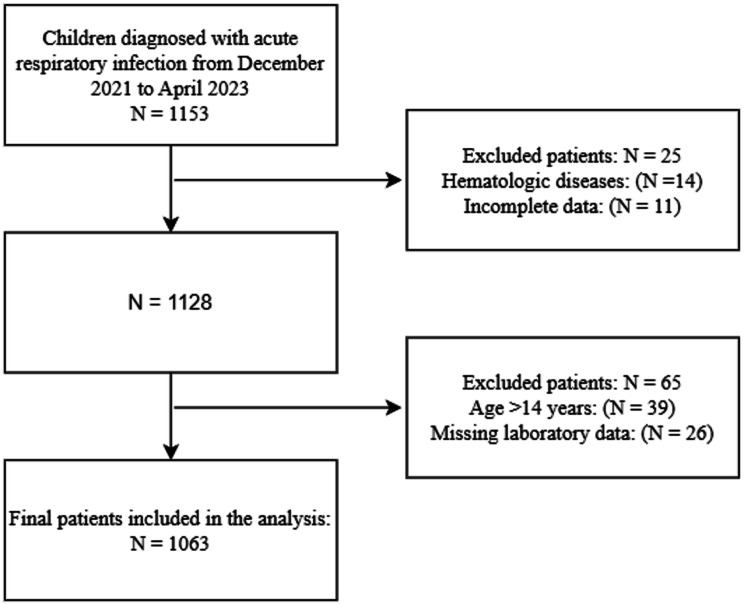
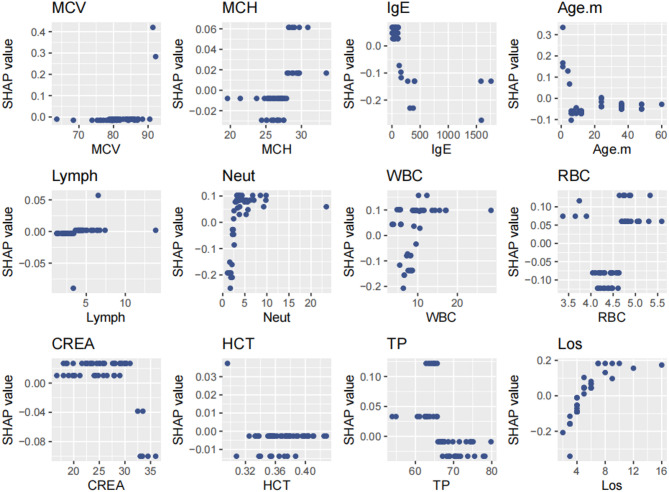
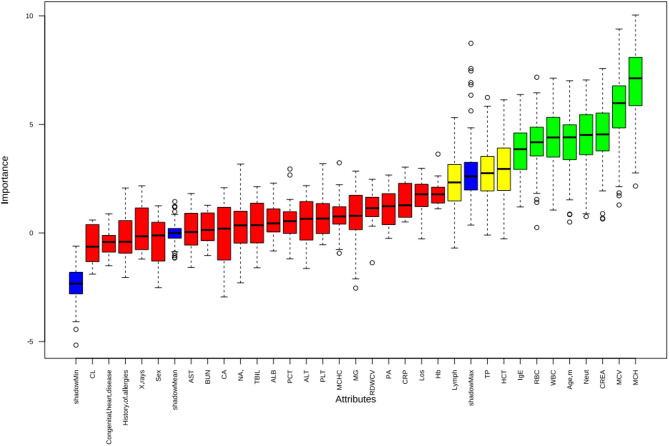
This retrospective descriptive observational study included 1,063 RSV-positive pediatric inpatients (< 14 years) from the Second Affiliated Hospital of Wenzhou Medical University (December, 2021, and April, 2023). Missing data were addressed using multiple imputation. Patients were grouped by co-infection type (viral or bacterial), and differences in demographic, clinical, and imaging features were analyzed. Univariate and multivariate logistic regression identified risk factors for bacterial co-infection in RSV-positive patients. Predictive features were selected via the Boruta algorithm and modeled using XGBoost, with SHAP applied for interpretability. Pathogen distributions were also compared across age groups in both co-infection subtypes.
Among 1,063 hospitalized RSV-positive children, RSV primarily affected those under one year of age, with a substantial proportion of cases (47.3%) showing co-infections. The most frequently detected viral co-pathogen was human rhinovirus (HRV, 42.2%), while Streptococcus pneumoniae (37.3%) was the most common bacterial pathogen. Some children were found to carry multiple pathogens simultaneously. Age-stratified radiographic analysis revealed that bronchitis was the predominant imaging finding across all age groups. Compared with the viral co-infection group, children with bacterial co-infections had longer hospital stays (6.4 vs. 5.4 days), higher white blood cell and neutrophil counts, and lower IgE levels (P < 0.05). Logistic regression analysis identified length of stay, prealbumin (PA), and immunoglobulin E (IgE) as independent predictors of bacterial co-infection. Feature selection using the Boruta algorithm, combined with XGBoost modeling and SHAP interpretation, further confirmed that length of stay, WBC count, neutrophil count, and IgE were the most important predictive variables. Age-specific pathogen analysis showed that influenza A and Streptococcus pneumoniae were predominantly found in children aged 3 to < 6 years (P < 0.05).
RSV infections in Wenzhou predominantly occur in infants under one year of age and frequently involve co-infections with viruses and bacteria, particularly rhinovirus and Streptococcus pneumoniae. Early identification of co-infections and tailored interventions are critical to improving patient outcomes.
Not applicable.
呼吸道合胞病毒(RSV)是幼儿呼吸道感染的主要病因,在全球范围内构成重大健康挑战。本研究旨在分析中国温州儿童RSV感染的病因、临床和影像学特征,以更好地了解其流行病学概况,并为早期诊断、监测和临床干预提供见解。
这项回顾性描述性观察性研究纳入了温州医科大学附属第二医院1063例RSV阳性儿科住院患者(<14岁)(2021年12月至2023年4月)。使用多重填补法处理缺失数据。患者按合并感染类型(病毒或细菌)分组,分析人口统计学、临床和影像学特征的差异。单因素和多因素逻辑回归确定RSV阳性患者细菌合并感染的危险因素。通过Boruta算法选择预测特征,并使用XGBoost进行建模,应用SHAP进行解释。还比较了两种合并感染亚型各年龄组的病原体分布。
在1063例住院的RSV阳性儿童中,RSV主要影响1岁以下儿童,相当比例的病例(47.3%)存在合并感染。最常检测到的病毒合并病原体是人类鼻病毒(HRV,42.2%),而肺炎链球菌(37.3%)是最常见的细菌病原体。发现一些儿童同时携带多种病原体。年龄分层的影像学分析显示,支气管炎是所有年龄组的主要影像学表现。与病毒合并感染组相比,细菌合并感染的儿童住院时间更长(6.4天对5.4天),白细胞和中性粒细胞计数更高,IgE水平更低(P<0.05)。逻辑回归分析确定住院时间、前白蛋白(PA)和免疫球蛋白E(IgE)是细菌合并感染的独立预测因素。使用Boruta算法进行特征选择,结合XGBoost建模和SHAP解释,进一步证实住院时间、白细胞计数、中性粒细胞计数和IgE是最重要的预测变量。特定年龄的病原体分析显示,甲型流感和肺炎链球菌主要见于3至<6岁的儿童(P<0.05)。
温州的RSV感染主要发生在1岁以下婴儿,且经常涉及病毒和细菌的合并感染,尤其是鼻病毒和肺炎链球菌。早期识别合并感染并进行针对性干预对于改善患者预后至关重要。
不适用。