Wu Tingting, King Matthew R, Qiu Yuanxin, Farag Mina, Pappu Rohit V, Lew Matthew D
Department of Electrical and Systems Engineering, James F. McKelvey School of Engineering, Washington University in St. Louis, St. Louis, MO USA.
Center for Biomolecular Condensates, James F. McKelvey School of Engineering, Washington University in St. Louis, St. Louis, MO USA.
Nat Phys. 2025;21(5):778-786. doi: 10.1038/s41567-025-02827-7. Epub 2025 Mar 14.
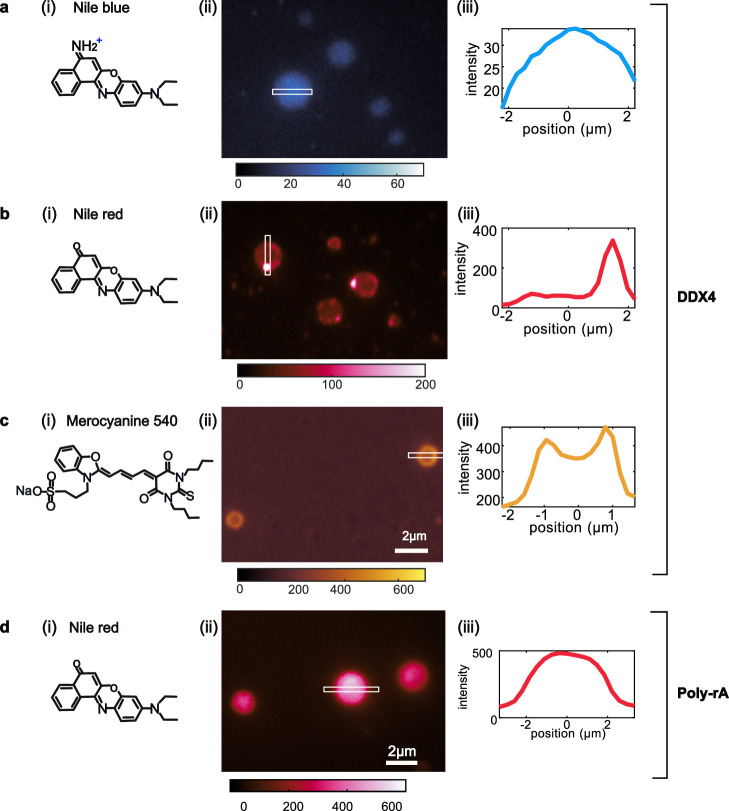
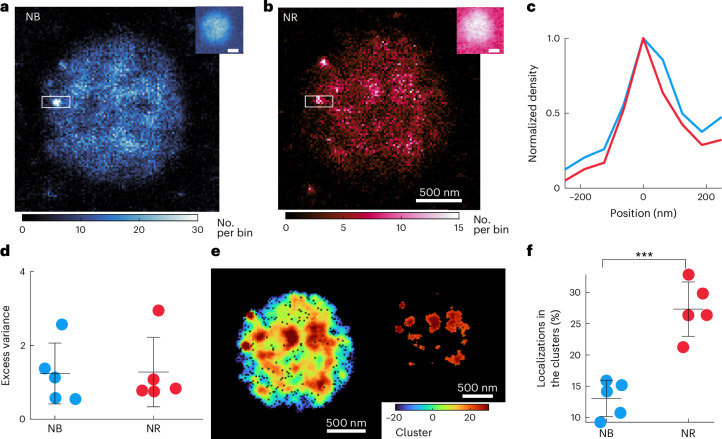
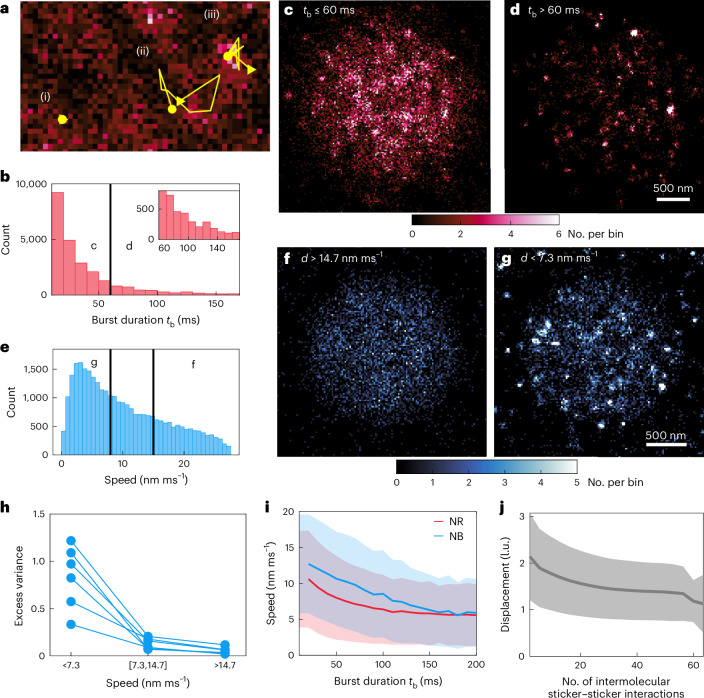
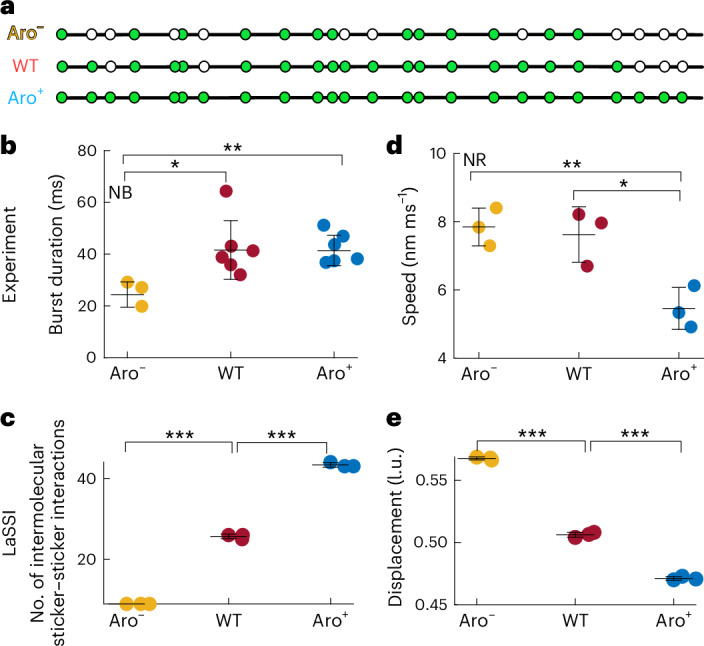
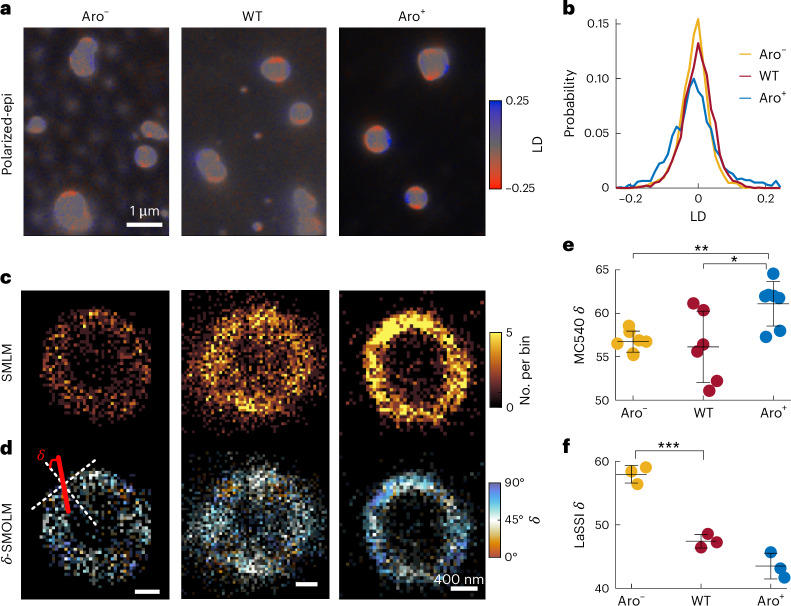
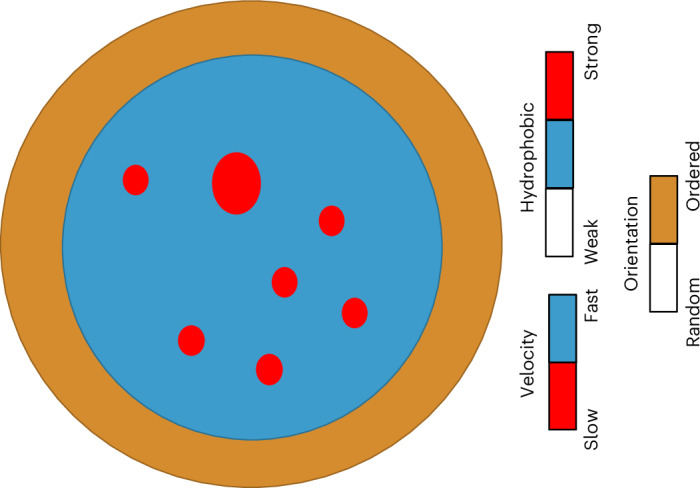
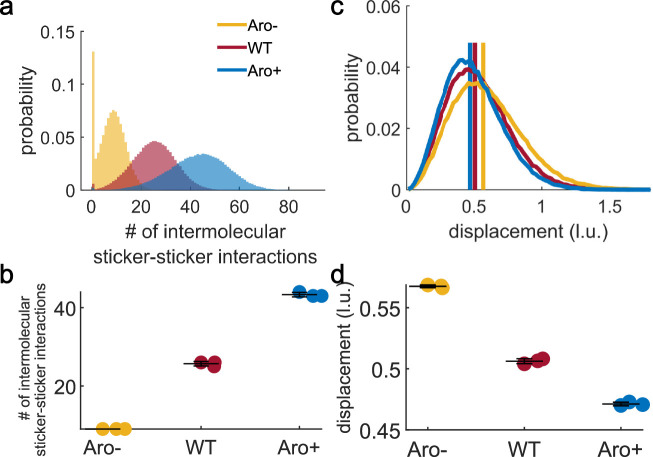
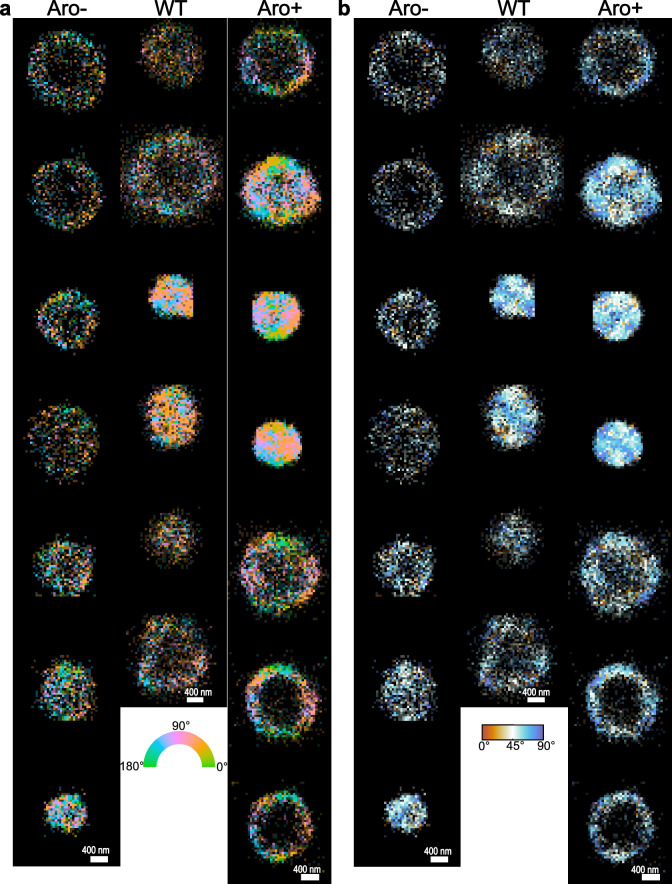
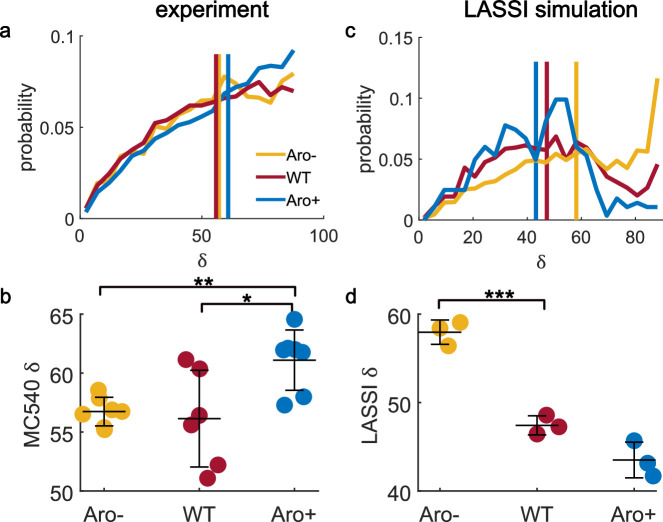
Biomolecular condensates are viscoelastic materials. Simulations predict that condensates formed by intrinsically disordered proteins are network fluids defined by spatially inhomogeneous organization of the underlying molecules. Here, we test these predictions and find that molecules within condensates are organized into slow-moving nanoscale clusters and fast-moving dispersed molecules. These results, obtained using single-fluorogen tracking and super-resolution imaging of different disordered protein-based condensates, affirm the predicted spatially inhomogeneous organization of molecules within condensates. We map the internal environments and interfaces of condensates using fluorogens that localize differently to the interiors versus interface between dilute phase and condensate. We show that nanoscale clusters within condensates are more hydrophobic than regions outside the clusters, and regions within condensates that lie outside clusters are more hydrophobic than coexisting dilute phases. Our findings provide a structural and dynamical basis for the viscoelasticity of condensates.
生物分子凝聚物是粘弹性材料。模拟预测,由内在无序蛋白质形成的凝聚物是由基础分子的空间不均匀组织定义的网络流体。在此,我们检验了这些预测,并发现凝聚物中的分子被组织成缓慢移动的纳米级簇和快速移动的分散分子。这些结果是通过对不同的基于无序蛋白质的凝聚物进行单荧光团追踪和超分辨率成像获得的,证实了凝聚物中分子的预测空间不均匀组织。我们使用在稀相和凝聚物内部与界面处定位不同的荧光团绘制凝聚物的内部环境和界面。我们表明,凝聚物中的纳米级簇比簇外区域更疏水,凝聚物中位于簇外的区域比共存的稀相更疏水。我们的研究结果为凝聚物的粘弹性提供了结构和动力学基础。