Massard Mathilde, Saussereau Bruno, Chirouze Catherine, Lepiller Quentin, Eftimie Raluca, Perasso Antoine
Laboratoire de Mathématiques de Besançon, Université de Franche-Comté, UMR-CNRS 6623, 16 route de GRAY, 25030, Besançon, France.
Laboratoire Chrono-environnement, Université de Franche-Comté, UMR-CNRS 6249, 16 route de GRAY, 25030, Besançon, France.
Infect Dis Model. 2024 Oct 9;10(1):163-188. doi: 10.1016/j.idm.2024.09.009. eCollection 2025 Mar.
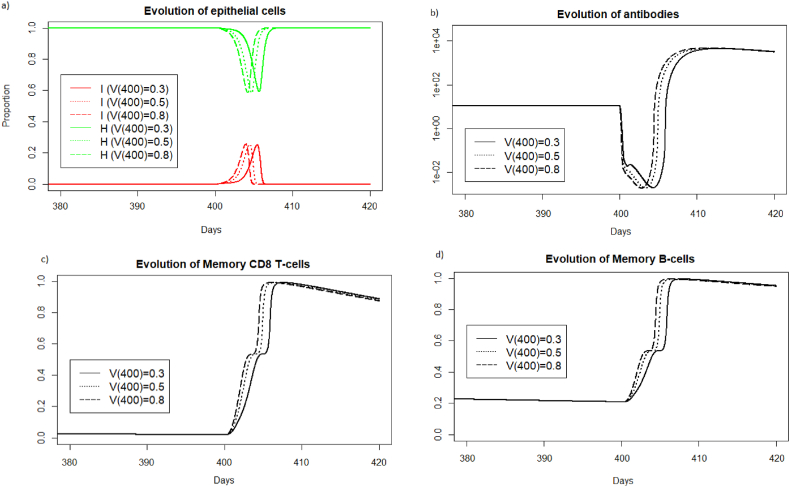
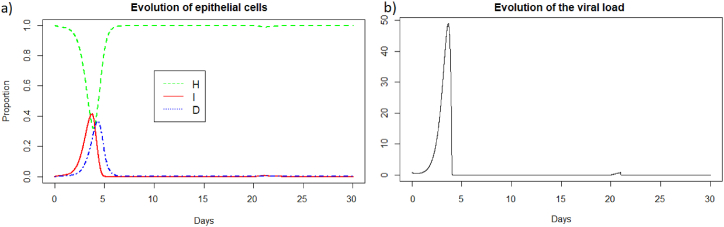
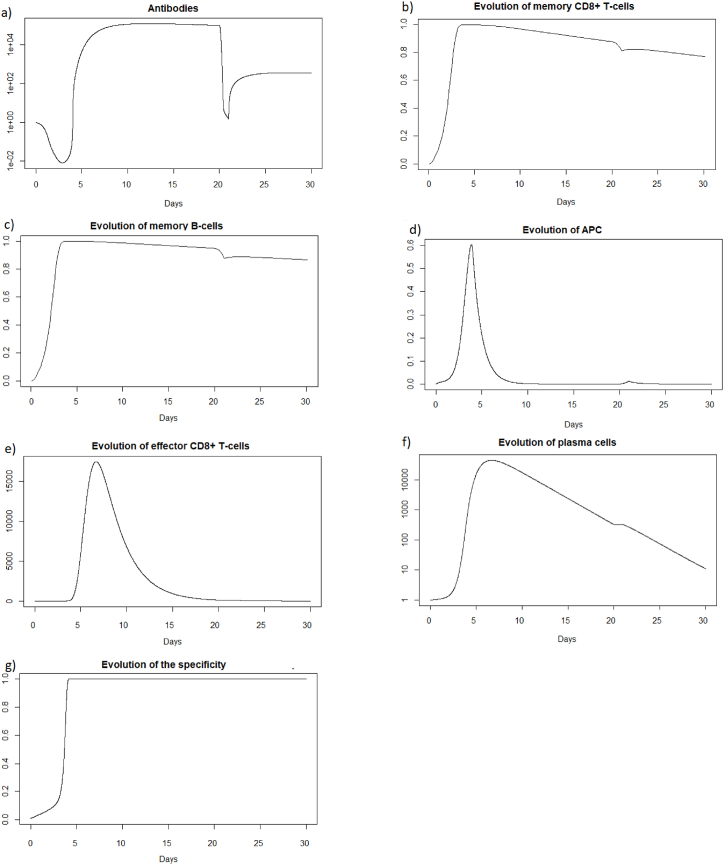
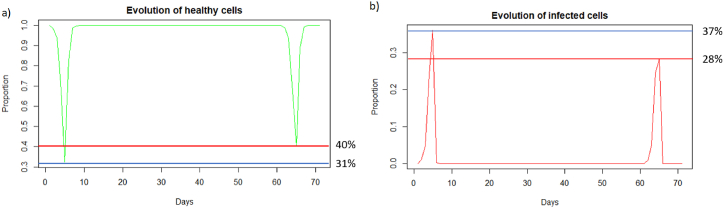
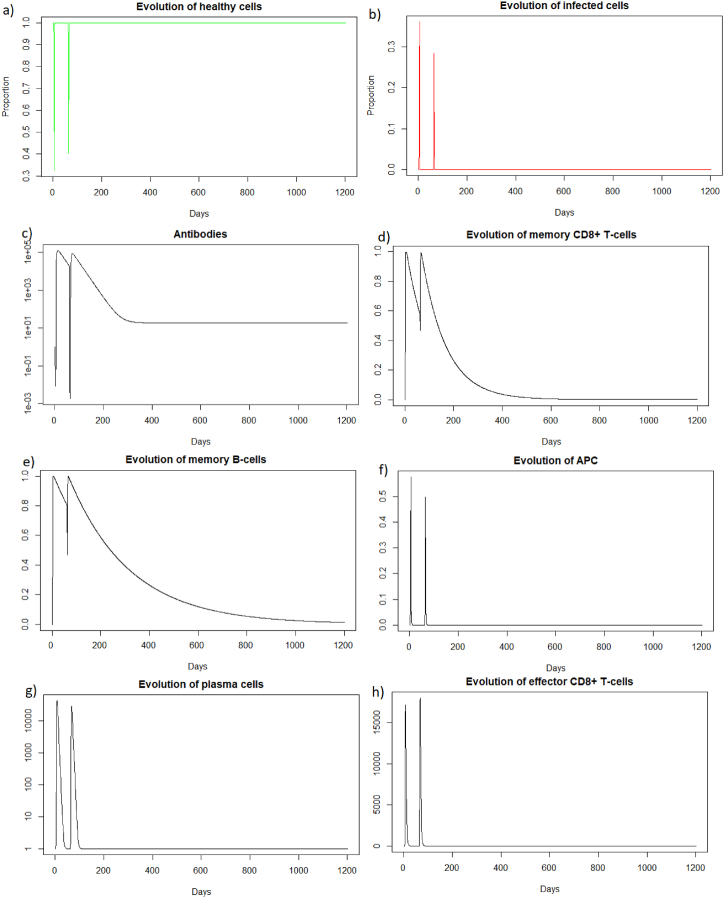
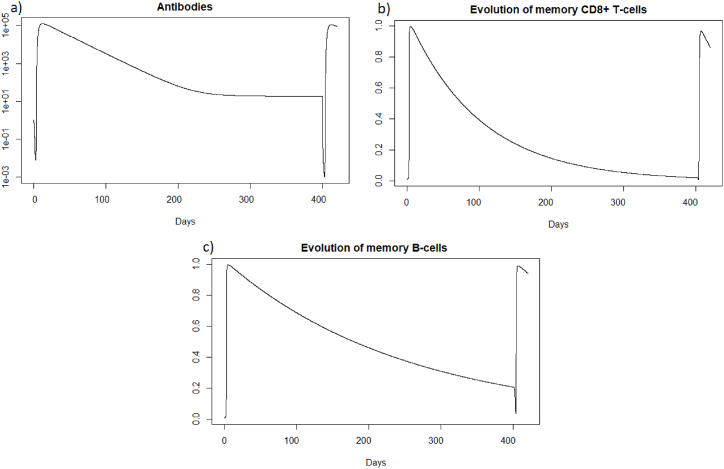
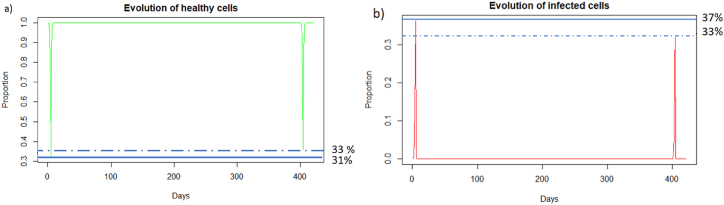
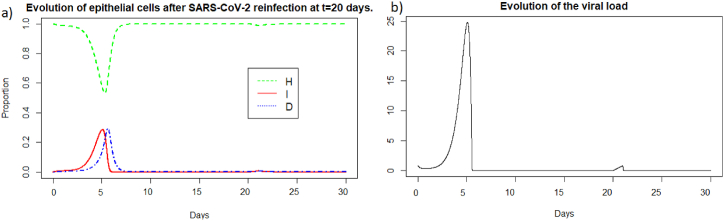
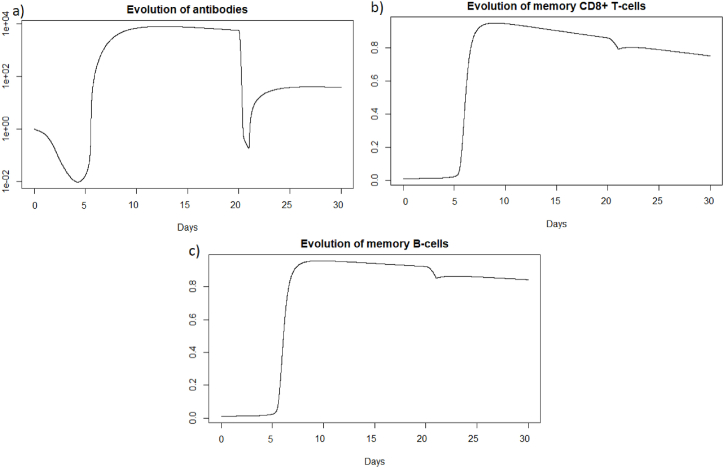
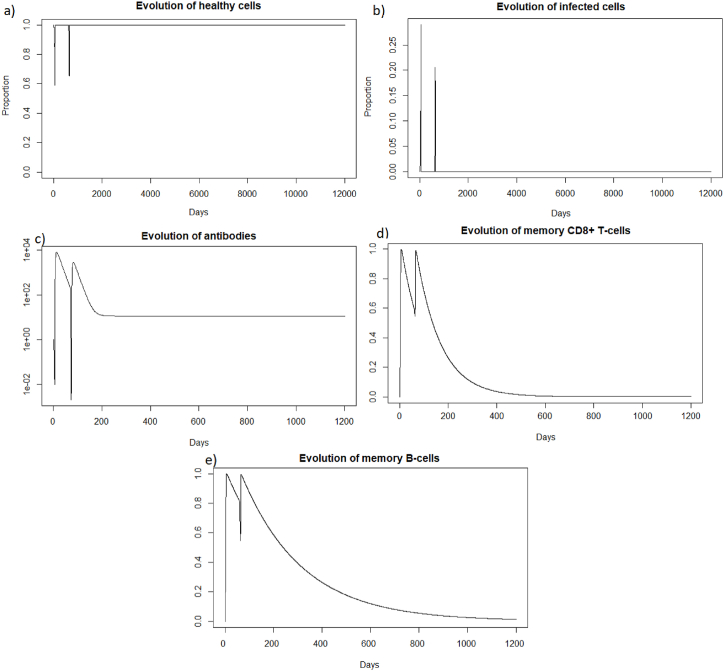
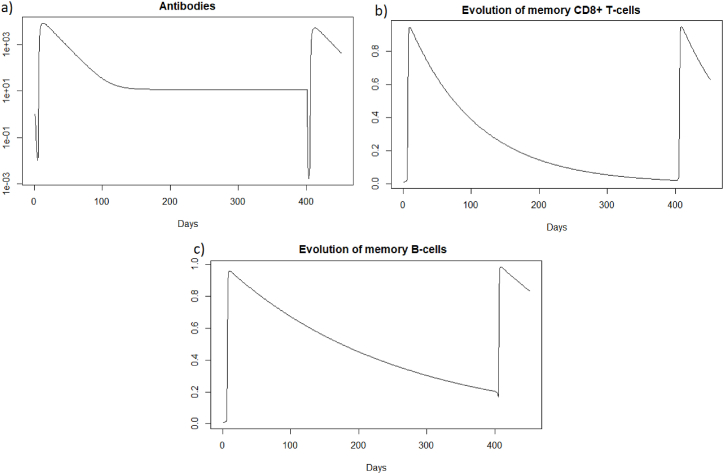
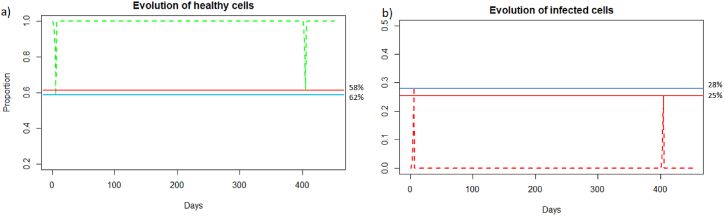
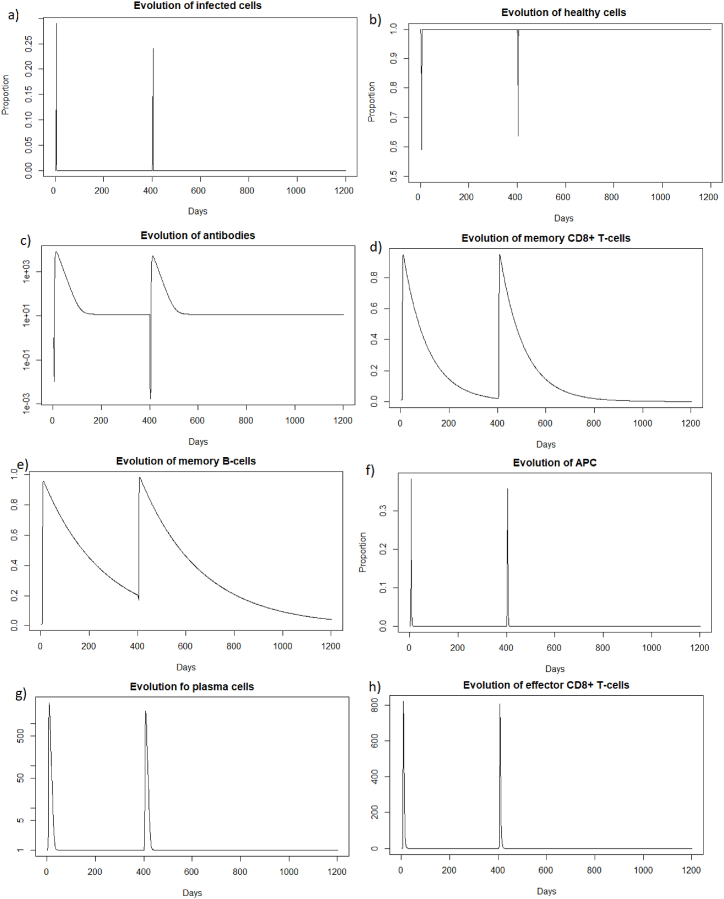
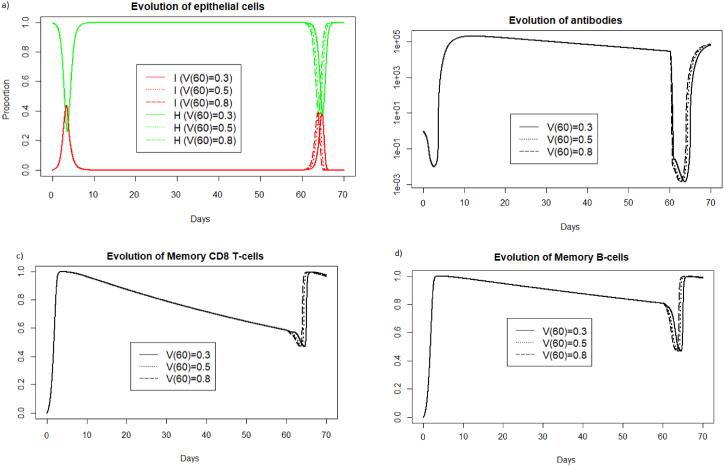
Understanding effector and memory immune responses against influenza A virus (IAV) and severe acute respiratory syndrome coronavirus 2 (SARS-CoV-2) infections and re-infections is extremely important, given that they are now endemic in the community. The goal of this study is to investigate the role of memory cells and antibodies in the immune responses against IAV and SARS-CoV-2 re-infections. To this end, we adapt a previously-published within-host mathematical model (Sadria & Layton, 2021) for the primary immune response against SARS-CoV-2 infections, by including two types of memory immune cells, i.e., memory CD8 T-cells and memory B-cells, and by parametrising the new model with values specific to the two viruses. We first investigate the long-term dynamics of the model by identifying the virus-free steady states and studying the conditions that ensure the stability of these states. Then, we investigate the transient dynamics of this in-host model by simulating different viral reinfection times: 20 days, 60 days and 400 days after the first encounter with the pathogen. This allows us to highlight which memory immune components have the greatest impact on the viral elimination depending on the time of reinfection. Our results suggest that memory immune responses have a greater impact in the case of IAV infections compared to SARS-CoV-2 infections. Moreover, we observe that the immune response after a secondary infection is more efficient when the reinfection occurs at a shorter time.
鉴于甲型流感病毒(IAV)和严重急性呼吸综合征冠状病毒2(SARS-CoV-2)目前在社区中呈地方性流行,了解针对它们感染和再感染的效应器和记忆免疫反应极其重要。本研究的目的是调查记忆细胞和抗体在针对IAV和SARS-CoV-2再感染的免疫反应中的作用。为此,我们通过纳入两种类型的记忆免疫细胞,即记忆CD8 T细胞和记忆B细胞,并使用针对这两种病毒的特定值对新模型进行参数化,改编了一个先前发表的针对SARS-CoV-2感染的宿主内数学模型(Sadria & Layton,2021)。我们首先通过确定无病毒稳态并研究确保这些状态稳定性的条件来研究模型的长期动态。然后,我们通过模拟不同的病毒再感染时间:首次接触病原体后20天、60天和400天,来研究这个宿主内模型的瞬态动态。这使我们能够突出根据再感染时间,哪些记忆免疫成分对病毒清除有最大影响。我们的结果表明,与SARS-CoV-2感染相比,记忆免疫反应在IAV感染的情况下影响更大。此外,我们观察到,当再感染发生在较短时间时,二次感染后的免疫反应更有效。