Kim Sean R, Basnet Pawan, Kovaleski Al P, Ellison Shelby L
Department of Plant and Agroecosystem Sciences, University of Wisconsin- Madison, Madison, WI, 53706, USA.
Pennsylvania Department of Agriculture, Harrisburg, PA, 17110, USA.
J Cannabis Res. 2025 Jul 29;7(1):51. doi: 10.1186/s42238-025-00311-w.
Limited information exists on how temperature affects phytocannabinoids and anthocyanin accumulation and inflorescence dry weight yield in . Understanding how temperature influences these traits is essential for refining cultivation practices, meeting market demands, and developing novel cannabis cultivars with improved agronomic, medicinal, and aesthetic attributes.
In this study, a day-neutral inbred population with uniform expression of purple pigmentation on the leaves and flowers was used to explore how temperatures ranging from 0.5 to 22 °C impacts inflorescence dry weight, cannabidiol (CBD) percentage, and anthocyanin accumulation in cannabis. Data on inflorescence dry weight (g/plant), CBD (%), and anthocyanin concentration (mg∙L) in the primary inflorescence of each plant were collected and analyzed.
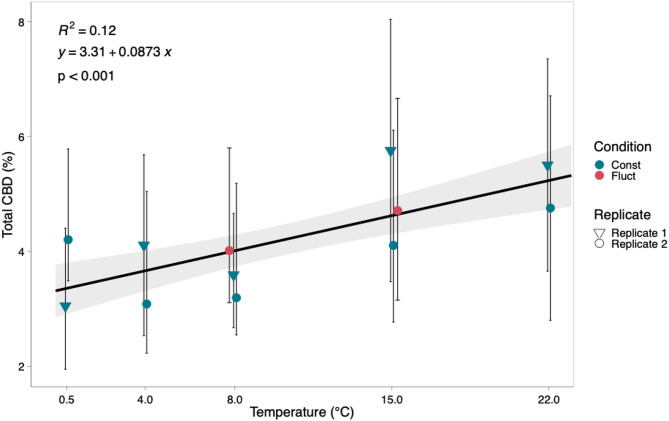
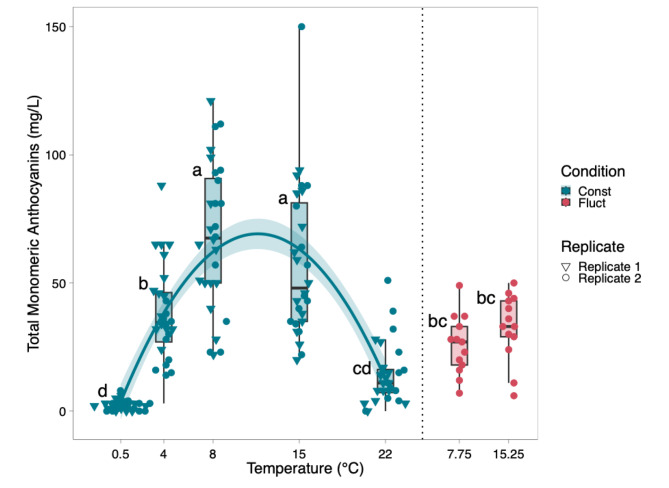
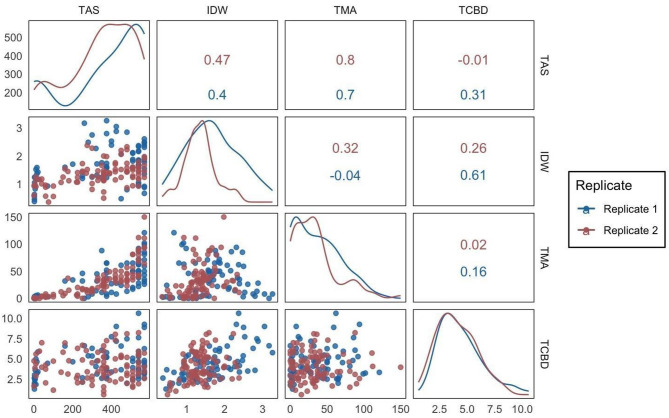
Total CBD concentration and inflorescence dry weight yield increased with increasing temperature– likely a result of plant maturity rather than temperature stimuli. Anthocyanin accumulation was significantly affected by temperature stimuli, exhibiting peak production levels at constant temperatures of 8 °C and 15 °C.
CBD concentration and inflorescence dry weight predominantly correlate with plant maturity, whereas anthocyanin accumulation is responsive to variations in environmental temperature. Maximum anthocyanin levels at 8 °C and 15 °C, along with reduction at 0.5 °C and 22 °C, suggests distinct temperature-dependent regulatory pathways for anthocyanin biosynthesis in cannabis, separate from those influencing CBD biosynthesis and inflorescence dry weight. Modeling anthocyanin concentration, CBD concentration, and total inflorescence dry weight across various temperature treatments could optimize desired floral qualities and other traits associated with yield in cannabis.
The online version contains supplementary material available at 10.1186/s42238-025-00311-w.
关于温度如何影响大麻中植物大麻素和花青素积累以及花序干重产量的信息有限。了解温度如何影响这些性状对于优化种植实践、满足市场需求以及培育具有改良农艺、药用和美学特性的新型大麻品种至关重要。
在本研究中,使用一个叶和花上紫色色素均匀表达的日中性自交群体,来探究0.5至22°C的温度如何影响大麻的花序干重、大麻二酚(CBD)含量和花青素积累。收集并分析了每株植物主花序的花序干重(克/株)、CBD(%)和花青素浓度(毫克∙升)数据。
总CBD浓度和花序干重产量随温度升高而增加——这可能是植物成熟的结果,而非温度刺激的结果。花青素积累受温度刺激显著影响,在8°C和15°C恒温下呈现出峰值产量水平。
CBD浓度和花序干重主要与植物成熟度相关,而花青素积累对环境温度变化有响应。8°C和15°C时花青素水平最高,而在0.5°C和22°C时降低,这表明大麻中花青素生物合成存在与影响CBD生物合成和花序干重不同的、独特的温度依赖性调控途径。对不同温度处理下的花青素浓度、CBD浓度和总花序干重进行建模,可以优化大麻所需的花部品质和其他与产量相关的性状。
在线版本包含可在10.1186/s42238-025-00311-w获取的补充材料。