Matsubara Eri, Matsui Naoyuki
Forestry and Forest Products Research Institute, 1 Matsunosato, Tsukuba 305-8687, Japan.
Molecules. 2025 Aug 6;30(15):3288. doi: 10.3390/molecules30153288.
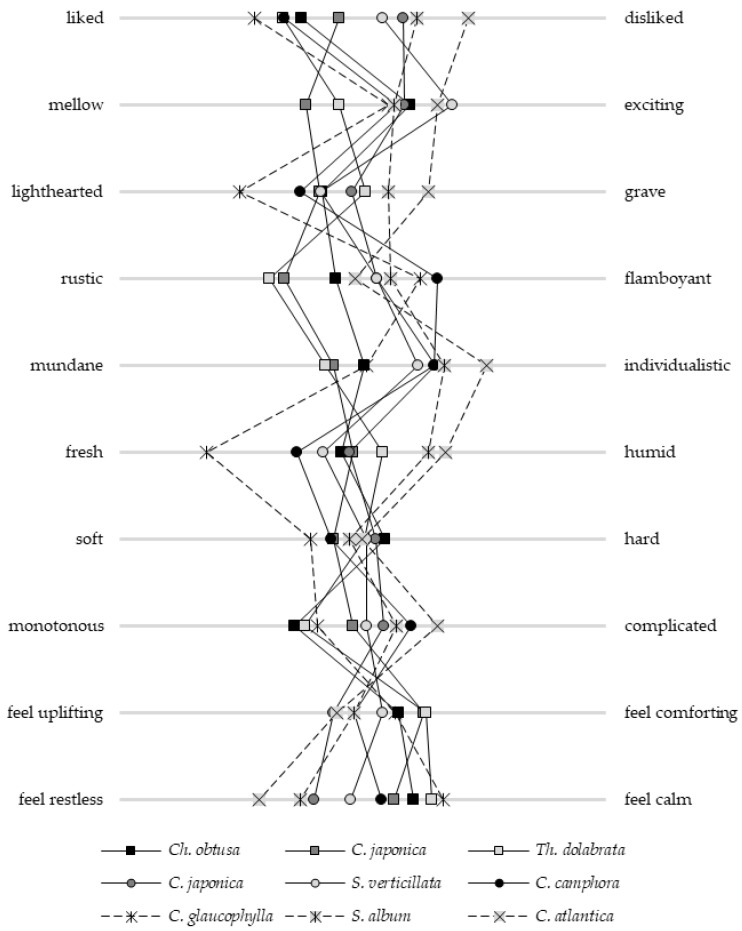
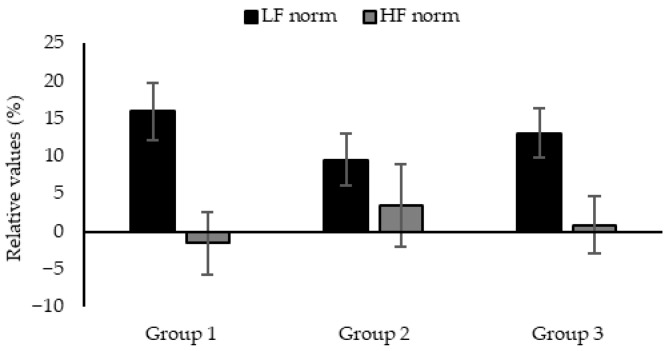
The large number of underutilized tree residues in Japan is a matter of concern, and their appropriate application needs to be promoted. Trees are very diverse, and there are differences in the volatile essential oil compounds and biological activities among different tree species. However, the effects of these tree species' characteristics on human sensitivity and mental and physical functionality remain underexplored. This study investigated the effects of essential oils from multiple tree species on subjective and physiological responses. The essential oils from nine tree species were tested, subjective scent assessments were conducted, and their effect on autonomic nervous activity was measured. The volatile profiles of the oils were analyzed using gas chromatography-mass spectrometry. Our findings revealed clear differences in the composition of volatile essential oils among species, which influenced the scent evaluation and individual preferences. We suggest that scent preferences have the potential to influence physiological responses. The findings indicate that volatile essential oils could play a potential role in making use of tree resources effectively, and they may also be beneficial for maintaining human health.
日本大量未被充分利用的树木残余物令人担忧,需要推动其合理利用。树木种类繁多,不同树种的挥发性精油成分和生物活性存在差异。然而,这些树种特性对人体敏感性以及身心功能的影响仍未得到充分研究。本研究调查了多种树种的精油对主观和生理反应的影响。测试了九种树种的精油,进行了主观气味评估,并测量了它们对自主神经活动的影响。使用气相色谱 - 质谱联用仪分析了这些精油的挥发性成分。我们的研究结果表明,不同树种挥发性精油的成分存在明显差异,这影响了气味评价和个人偏好。我们认为气味偏好有可能影响生理反应。研究结果表明,挥发性精油在有效利用树木资源方面可能发挥潜在作用,并且它们可能对维护人类健康也有益处。