Álvarez-Puig Canòlich, Casamartina Joan, Garnatje Teresa, Niell Manel, Gras Airy, Vallès Joan
Laboratori de Botànica-Unitat Associada CSIC, Facultat de Farmàcia i Ciències de l'Alimentació-Institut de Recerca de la Biodiversitat (IRBio), Universitat de Barcelona, 08028 Barcelona, Catalonia, Spain.
Institut Botànic de Barcelona (CSIC-CMCNB), 08038 Barcelona, Catalonia, Spain.
Foods. 2025 Aug 20;14(16):2897. doi: 10.3390/foods14162897.
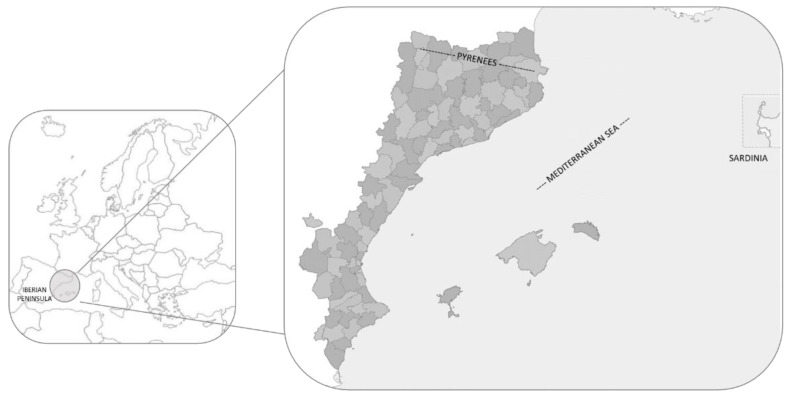
The Catalan Linguistic Area (CLA) is a mycophile region where interest in the nutritional properties of traditional edible fungi is steadily growing, driven by their gastronomic appeal. The present study undertakes a scoping review with two main objectives. First, to compile a list of edible fungi taxa identified in the CLA, and second, to determine whether their nutritional values have already been published. Data were collected through books from different library catalogues and archives, expert consultations, a specialized database, and a search in three academic databases: PubMed, Scopus and Web of Science. As a result, we obtained a list of 643 culinary fungi taxa, of which 35.46% have reported nutritional values. Moreover, among the most cited CLA culinary fungi, Britzelm. and (Fr.) Tul. & C. Tul. have no nutritional values reported in the literature. Additionally, an ethnomycoticity index (EMI) and ethnomyconymic diversity index are proposed as adaptations to ethnomycology of two commonly used ethnobotanical indices. To conclude, wild edible fungi (WEF) are widely used in the CLA, but nutritional values for the majority of macromycetes are still lacking. Further studies need to be carried out regarding ethnomycology, enhancing their nutritional values, since data recorded are disperse and difficult to standardise.
加泰罗尼亚语区(CLA)是一个喜爱真菌的地区,在其美食吸引力的推动下,人们对传统可食用真菌的营养特性的兴趣正在稳步增长。本研究进行了一项范围综述,有两个主要目标。第一,编制一份在加泰罗尼亚语区鉴定出的可食用真菌分类群清单,第二,确定它们的营养价值是否已经发表。数据是通过来自不同图书馆目录和档案的书籍、专家咨询、一个专业数据库以及在三个学术数据库(PubMed、Scopus和Web of Science)中的搜索收集的。结果,我们获得了一份包含643种烹饪用真菌分类群的清单,其中35.46%有报道过营养价值。此外,在引用最多的加泰罗尼亚语区烹饪用真菌中,布氏口蘑(Britzelm.)和(法国)图尔氏口蘑((Fr.) Tul. & C. Tul.)在文献中没有报道过营养价值。此外,还提出了一个民族真菌性指数(EMI)和民族真菌名称多样性指数,作为对两种常用民族植物学指数在民族真菌学方面进行的改编。总之,野生可食用真菌(WEF)在加泰罗尼亚语区被广泛使用,但大多数大型真菌的营养价值仍然缺乏。由于记录的数据分散且难以标准化,需要在民族真菌学方面进行进一步研究,以提高它们的营养价值。