• 文献检索
  • 文档翻译
  • 深度研究
  • 学术资讯
  • Suppr Zotero 插件Zotero 插件
  • 邀请有礼
  • 套餐&价格
  • 历史记录
应用&插件
Suppr Zotero 插件Zotero 插件浏览器插件Mac 客户端Windows 客户端微信小程序
定价
高级版会员购买积分包购买API积分包
服务
文献检索文档翻译深度研究API 文档MCP 服务
关于我们
关于 Suppr公司介绍联系我们用户协议隐私条款
关注我们

Suppr 超能文献

核心技术专利:CN118964589B侵权必究
粤ICP备2023148730 号-1Suppr @ 2026

文献检索

告别复杂PubMed语法,用中文像聊天一样搜索,搜遍4000万医学文献。AI智能推荐,让科研检索更轻松。

立即免费搜索

文件翻译

保留排版,准确专业,支持PDF/Word/PPT等文件格式,支持 12+语言互译。

免费翻译文档

深度研究

AI帮你快速写综述,25分钟生成高质量综述,智能提取关键信息,辅助科研写作。

立即免费体验

基于注意力机制的卷积神经网络结合挤压与激励机制增强植物病害分类

Enhanced plant disease classification with attention-based convolutional neural network using squeeze and excitation mechanism.

作者信息

Karthikeyan S, Charan R, Narayanan Sathiya, Jani Anbarasi L

机构信息

School of Electronics Engineering, Vellore Institute of Technology, Chennai, India.

School of Computer Science Engineering, Vellore Institute of Technology, Chennai, India.

出版信息

Front Artif Intell. 2025 Aug 12;8:1640549. doi: 10.3389/frai.2025.1640549. eCollection 2025.

DOI:10.3389/frai.2025.1640549
PMID:40873494
原文链接:https://pmc.ncbi.nlm.nih.gov/articles/PMC12378314/
Abstract

INTRODUCTION

Technology is becoming essential in agriculture, especially with the growth of smart devices and edge computing. These tools help boost productivity by automating tasks and allowing real-time analysis on devices with limited memory and resources. However, many current models struggle with accuracy, size, and speed particularly when handling multi-label classification problems.

METHODS

This paper proposes a Convolutional Neural Network with Squeeze and Excitation Enabled Identity Blocks (CNN-SEEIB), a hybrid CNN-based deep learning architecture for multi-label classification of plant diseases. CNN-SEEIB incorporates an attention mechanism in its identity blocks to leverage the visual attention that enhances the classification performance and computational efficiency. PlantVillage dataset containing 38 classes of diseased crop leaves alongside healthy leaves, totaling 54,305 images, is utilized for experimentation.

RESULTS

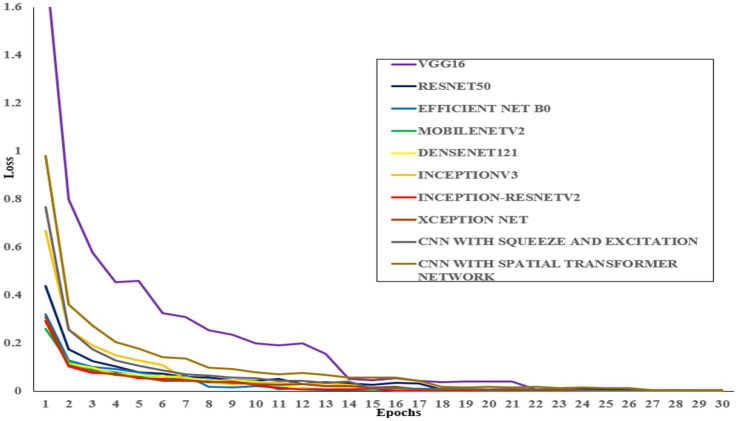
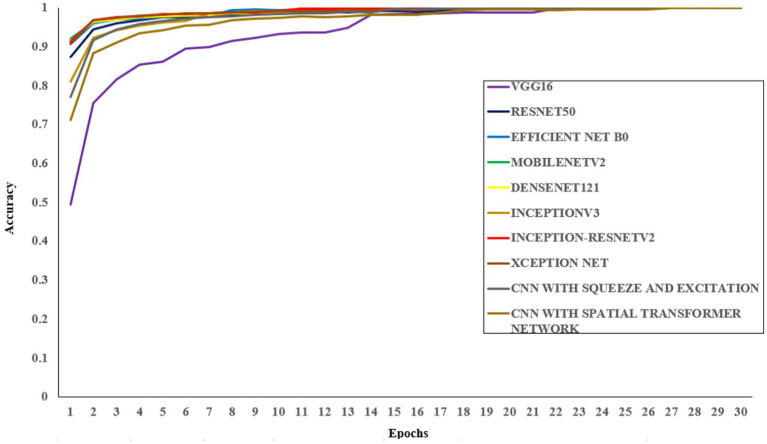
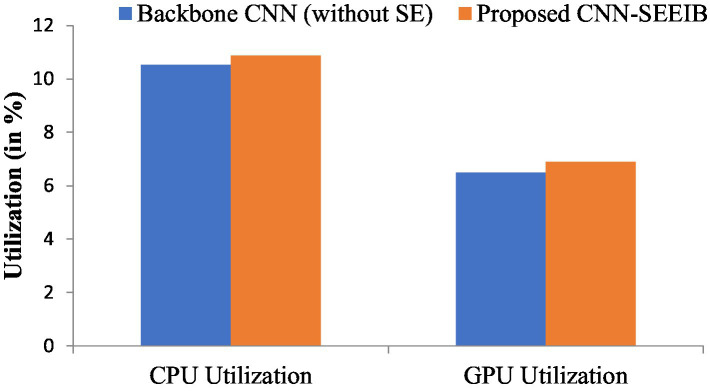
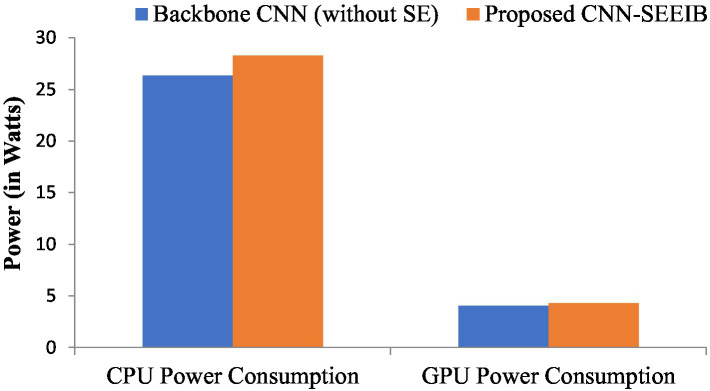
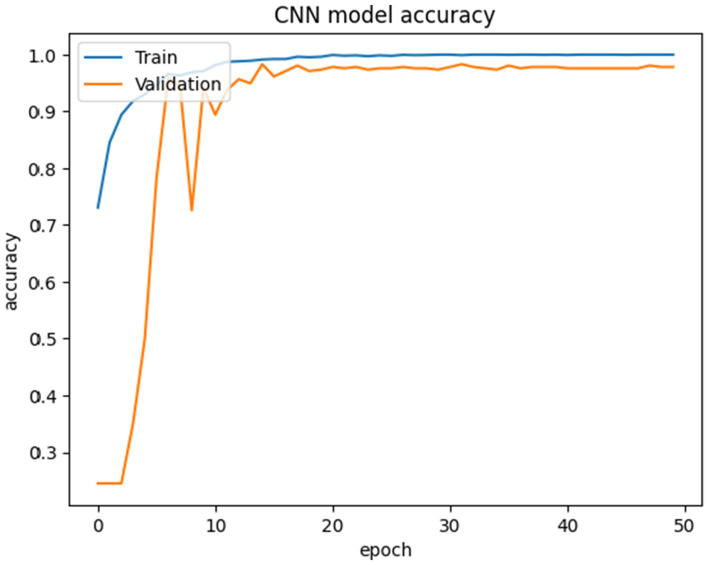
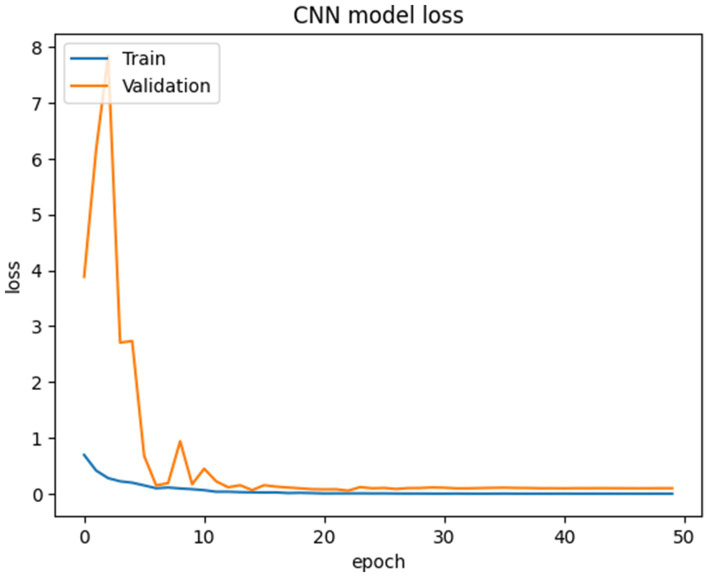
CNN-SEEIB achieved a classification accuracy of 99.79%, precision of 0.9970, recall of 0.9972, and an F1 score of 0.9971. In addition, the model attained an inference time of 64 milliseconds per image, making it suitable for real-time deployment. The performance of CNNSEEIB is benchmarked against the state-of-the-art deep learning architectures, and resource utilization metrics such as CPU/GPU usage and power consumption are also reported, highlighting the model's efficiency.

DISCUSSION

The proposed architecture is also validated on a potato leaf disease dataset of 4,062 images from Central Punjab, Pakistan, achieving a 97.77% accuracy in classifying Healthy, Early Blight, and Late Blight classes.

摘要

引言

技术在农业中变得至关重要,尤其是随着智能设备和边缘计算的发展。这些工具通过自动化任务并允许在内存和资源有限的设备上进行实时分析来提高生产力。然而,许多当前模型在准确性、大小和速度方面存在困难,特别是在处理多标签分类问题时。

方法

本文提出了一种具有挤压与激励恒等块的卷积神经网络(CNN-SEEIB),这是一种基于卷积神经网络的混合深度学习架构,用于植物病害的多标签分类。CNN-SEEIB在其恒等块中融入了注意力机制,以利用视觉注意力来提高分类性能和计算效率。使用包含38类患病作物叶片以及健康叶片的PlantVillage数据集,共计54305张图像进行实验。

结果

CNN-SEEIB的分类准确率达到99.79%,精确率为0.9970,召回率为0.9972,F1分数为0.9971。此外,该模型每张图像的推理时间为64毫秒,适用于实时部署。将CNNSEEIB的性能与最先进的深度学习架构进行基准测试,并报告了诸如CPU/ GPU使用情况和功耗等资源利用指标,突出了该模型的效率。

讨论

所提出的架构还在来自巴基斯坦旁遮普省中部的4062张马铃薯叶病害数据集上进行了验证,在对健康、早疫病和晚疫病类别进行分类时准确率达到97.77%。

https://cdn.ncbi.nlm.nih.gov/pmc/blobs/f219/12378314/3c54075d9c57/frai-08-1640549-g015.jpg
https://cdn.ncbi.nlm.nih.gov/pmc/blobs/f219/12378314/20b31d1b13ac/frai-08-1640549-g001.jpg
https://cdn.ncbi.nlm.nih.gov/pmc/blobs/f219/12378314/3d23633e392a/frai-08-1640549-g002.jpg
https://cdn.ncbi.nlm.nih.gov/pmc/blobs/f219/12378314/4aecb80c1934/frai-08-1640549-g003.jpg
https://cdn.ncbi.nlm.nih.gov/pmc/blobs/f219/12378314/ffaaebf4492d/frai-08-1640549-g004.jpg
https://cdn.ncbi.nlm.nih.gov/pmc/blobs/f219/12378314/a148b9db5f4d/frai-08-1640549-g005.jpg
https://cdn.ncbi.nlm.nih.gov/pmc/blobs/f219/12378314/d5e7a3510a9f/frai-08-1640549-g006.jpg
https://cdn.ncbi.nlm.nih.gov/pmc/blobs/f219/12378314/9fb0532dbaaf/frai-08-1640549-g007.jpg
https://cdn.ncbi.nlm.nih.gov/pmc/blobs/f219/12378314/caf124bdd9d3/frai-08-1640549-g008.jpg
https://cdn.ncbi.nlm.nih.gov/pmc/blobs/f219/12378314/2e537581bbc0/frai-08-1640549-g009.jpg
https://cdn.ncbi.nlm.nih.gov/pmc/blobs/f219/12378314/875dc5192898/frai-08-1640549-g010.jpg
https://cdn.ncbi.nlm.nih.gov/pmc/blobs/f219/12378314/5093b99ab8ba/frai-08-1640549-g011.jpg
https://cdn.ncbi.nlm.nih.gov/pmc/blobs/f219/12378314/8f99e04f68c5/frai-08-1640549-g012.jpg
https://cdn.ncbi.nlm.nih.gov/pmc/blobs/f219/12378314/b0c554e321f2/frai-08-1640549-g013.jpg
https://cdn.ncbi.nlm.nih.gov/pmc/blobs/f219/12378314/674e06a095bc/frai-08-1640549-g014.jpg
https://cdn.ncbi.nlm.nih.gov/pmc/blobs/f219/12378314/3c54075d9c57/frai-08-1640549-g015.jpg
https://cdn.ncbi.nlm.nih.gov/pmc/blobs/f219/12378314/20b31d1b13ac/frai-08-1640549-g001.jpg
https://cdn.ncbi.nlm.nih.gov/pmc/blobs/f219/12378314/3d23633e392a/frai-08-1640549-g002.jpg
https://cdn.ncbi.nlm.nih.gov/pmc/blobs/f219/12378314/4aecb80c1934/frai-08-1640549-g003.jpg
https://cdn.ncbi.nlm.nih.gov/pmc/blobs/f219/12378314/ffaaebf4492d/frai-08-1640549-g004.jpg
https://cdn.ncbi.nlm.nih.gov/pmc/blobs/f219/12378314/a148b9db5f4d/frai-08-1640549-g005.jpg
https://cdn.ncbi.nlm.nih.gov/pmc/blobs/f219/12378314/d5e7a3510a9f/frai-08-1640549-g006.jpg
https://cdn.ncbi.nlm.nih.gov/pmc/blobs/f219/12378314/9fb0532dbaaf/frai-08-1640549-g007.jpg
https://cdn.ncbi.nlm.nih.gov/pmc/blobs/f219/12378314/caf124bdd9d3/frai-08-1640549-g008.jpg
https://cdn.ncbi.nlm.nih.gov/pmc/blobs/f219/12378314/2e537581bbc0/frai-08-1640549-g009.jpg
https://cdn.ncbi.nlm.nih.gov/pmc/blobs/f219/12378314/875dc5192898/frai-08-1640549-g010.jpg
https://cdn.ncbi.nlm.nih.gov/pmc/blobs/f219/12378314/5093b99ab8ba/frai-08-1640549-g011.jpg
https://cdn.ncbi.nlm.nih.gov/pmc/blobs/f219/12378314/8f99e04f68c5/frai-08-1640549-g012.jpg
https://cdn.ncbi.nlm.nih.gov/pmc/blobs/f219/12378314/b0c554e321f2/frai-08-1640549-g013.jpg
https://cdn.ncbi.nlm.nih.gov/pmc/blobs/f219/12378314/674e06a095bc/frai-08-1640549-g014.jpg
https://cdn.ncbi.nlm.nih.gov/pmc/blobs/f219/12378314/3c54075d9c57/frai-08-1640549-g015.jpg

相似文献

1
Enhanced plant disease classification with attention-based convolutional neural network using squeeze and excitation mechanism.基于注意力机制的卷积神经网络结合挤压与激励机制增强植物病害分类
Front Artif Intell. 2025 Aug 12;8:1640549. doi: 10.3389/frai.2025.1640549. eCollection 2025.
2
Prescription of Controlled Substances: Benefits and Risks管制药品的处方:益处与风险
3
CBAM VGG16: An efficient driver distraction classification using CBAM embedded VGG16 architecture.CBAM-VGG16:一种使用嵌入 CBAM 的 VGG16 架构的高效驾驶员分心分类方法。
Comput Biol Med. 2024 Sep;180:108945. doi: 10.1016/j.compbiomed.2024.108945. Epub 2024 Aug 1.
4
CXR-MultiTaskNet a unified deep learning framework for joint disease localization and classification in chest radiographs.CXR-MultiTaskNet:一种用于胸部X光片中疾病联合定位与分类的统一深度学习框架。
Sci Rep. 2025 Aug 31;15(1):32022. doi: 10.1038/s41598-025-16669-z.
5
A fine tuned EfficientNet-B0 convolutional neural network for accurate and efficient classification of apple leaf diseases.一种经过微调的高效神经网络EfficientNet-B0,用于准确高效地分类苹果叶病害。
Sci Rep. 2025 Jul 16;15(1):25732. doi: 10.1038/s41598-025-04479-2.
6
Deep Learning for the Early Detection of Invasive Ductal Carcinoma in Histopathological Images: Convolutional Neural Network Approach With Transfer Learning.基于深度学习的组织病理学图像中浸润性导管癌早期检测:采用迁移学习的卷积神经网络方法
JMIR Form Res. 2025 Aug 21;9:e62996. doi: 10.2196/62996.
7
Development and Validation of a Convolutional Neural Network Model to Predict a Pathologic Fracture in the Proximal Femur Using Abdomen and Pelvis CT Images of Patients With Advanced Cancer.利用晚期癌症患者腹部和骨盆 CT 图像建立卷积神经网络模型预测股骨近端病理性骨折的研究
Clin Orthop Relat Res. 2023 Nov 1;481(11):2247-2256. doi: 10.1097/CORR.0000000000002771. Epub 2023 Aug 23.
8
Improving Breast Cancer Diagnosis in Ultrasound Images Using Deep Learning with Feature Fusion and Attention Mechanism.基于特征融合与注意力机制的深度学习用于改善超声图像中的乳腺癌诊断
Acad Radiol. 2025 May 27. doi: 10.1016/j.acra.2025.05.007.
9
A fake news detection model using the integration of multimodal attention mechanism and residual convolutional network.一种融合多模态注意力机制和残差卷积网络的假新闻检测模型。
Sci Rep. 2025 Jul 1;15(1):20544. doi: 10.1038/s41598-025-05702-w.
10
Short-Term Memory Impairment短期记忆障碍

本文引用的文献

1
XSE-TomatoNet: An explainable AI based tomato leaf disease classification method using EfficientNetB0 with squeeze-and-excitation blocks and multi-scale feature fusion.XSE-TomatoNet:一种基于可解释人工智能的番茄叶病分类方法,该方法使用带有挤压与激励模块和多尺度特征融合的EfficientNetB0。
MethodsX. 2025 Jan 6;14:103159. doi: 10.1016/j.mex.2025.103159. eCollection 2025 Jun.
2
Integrating CBAM and Squeeze-and-Excitation Networks for Accurate Grapevine Leaf Disease Diagnosis.融合卷积块注意力模块(CBAM)和挤压激励网络用于准确的葡萄叶疾病诊断。
Food Sci Nutr. 2025 Jun 2;13(6):e70377. doi: 10.1002/fsn3.70377. eCollection 2025 Jun.
3
Enhancing plant disease detection through deep learning: a Depthwise CNN with squeeze and excitation integration and residual skip connections.
通过深度学习增强植物病害检测:一种具有挤压与激励集成和残差跳跃连接的深度可分离卷积神经网络
Front Plant Sci. 2025 Jan 23;15:1505857. doi: 10.3389/fpls.2024.1505857. eCollection 2024.
4
A Survey on Vision Transformer.视觉Transformer综述
IEEE Trans Pattern Anal Mach Intell. 2023 Jan;45(1):87-110. doi: 10.1109/TPAMI.2022.3152247. Epub 2022 Dec 5.
5
Review of deep learning: concepts, CNN architectures, challenges, applications, future directions.深度学习综述:概念、卷积神经网络架构、挑战、应用及未来方向。
J Big Data. 2021;8(1):53. doi: 10.1186/s40537-021-00444-8. Epub 2021 Mar 31.
6
Plant Disease Classification: A Comparative Evaluation of Convolutional Neural Networks and Deep Learning Optimizers.植物病害分类:卷积神经网络与深度学习优化器的比较评估
Plants (Basel). 2020 Oct 6;9(10):1319. doi: 10.3390/plants9101319.
7
Using Deep Learning for Image-Based Plant Disease Detection.利用深度学习进行基于图像的植物病害检测。
Front Plant Sci. 2016 Sep 22;7:1419. doi: 10.3389/fpls.2016.01419. eCollection 2016.