Saleem Muhammad Hammad, Potgieter Johan, Arif Khalid Mahmood
Department of Mechanical and Electrical Engineering, School of Food and Advanced Technology, Massey University, Auckland 0632, New Zealand.
Massey Agritech Partnership Research Centre, School of Food and Advanced Technology, Massey University, Palmerston North 4442, New Zealand.
Plants (Basel). 2020 Oct 6;9(10):1319. doi: 10.3390/plants9101319.
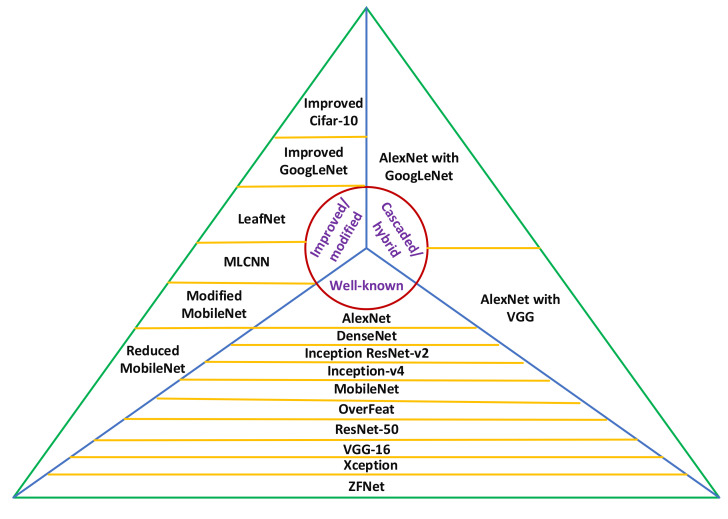
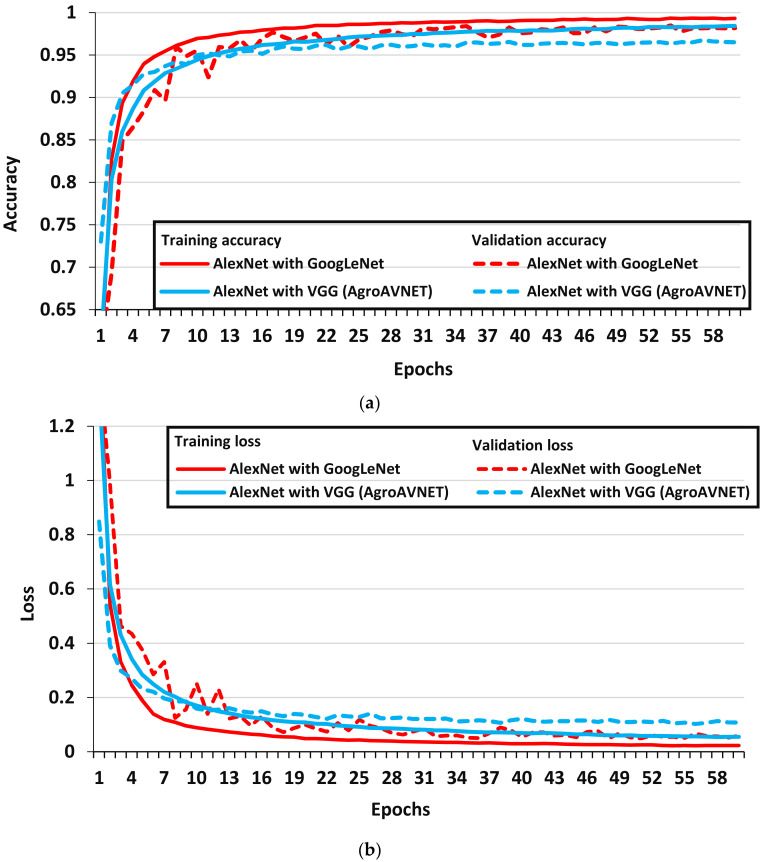
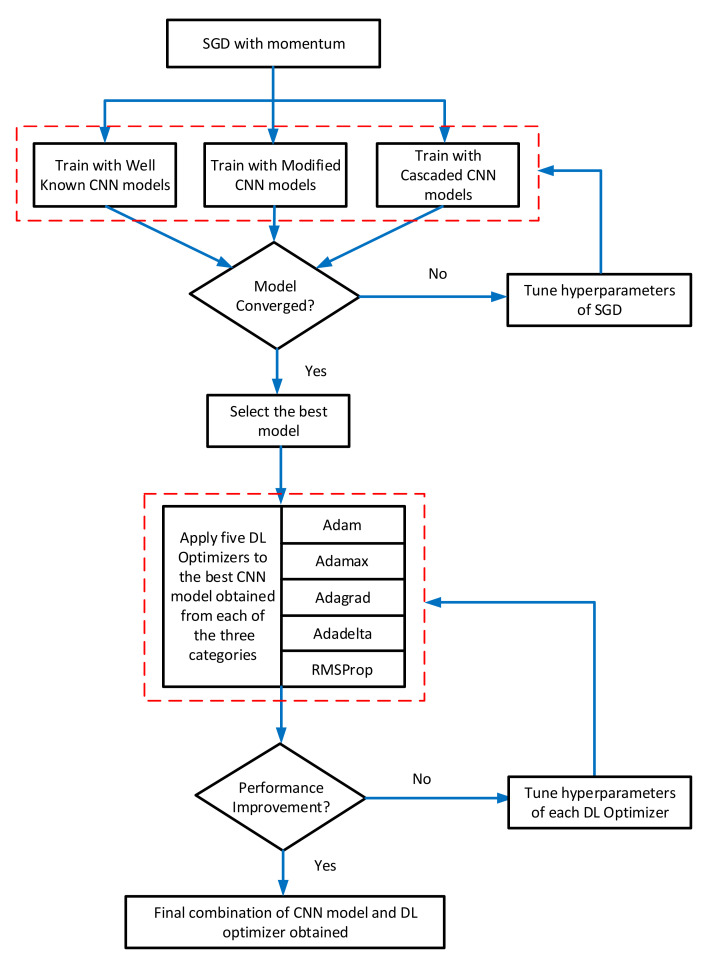
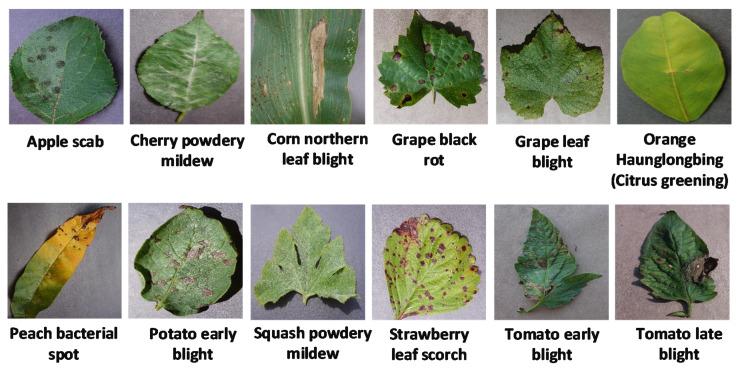
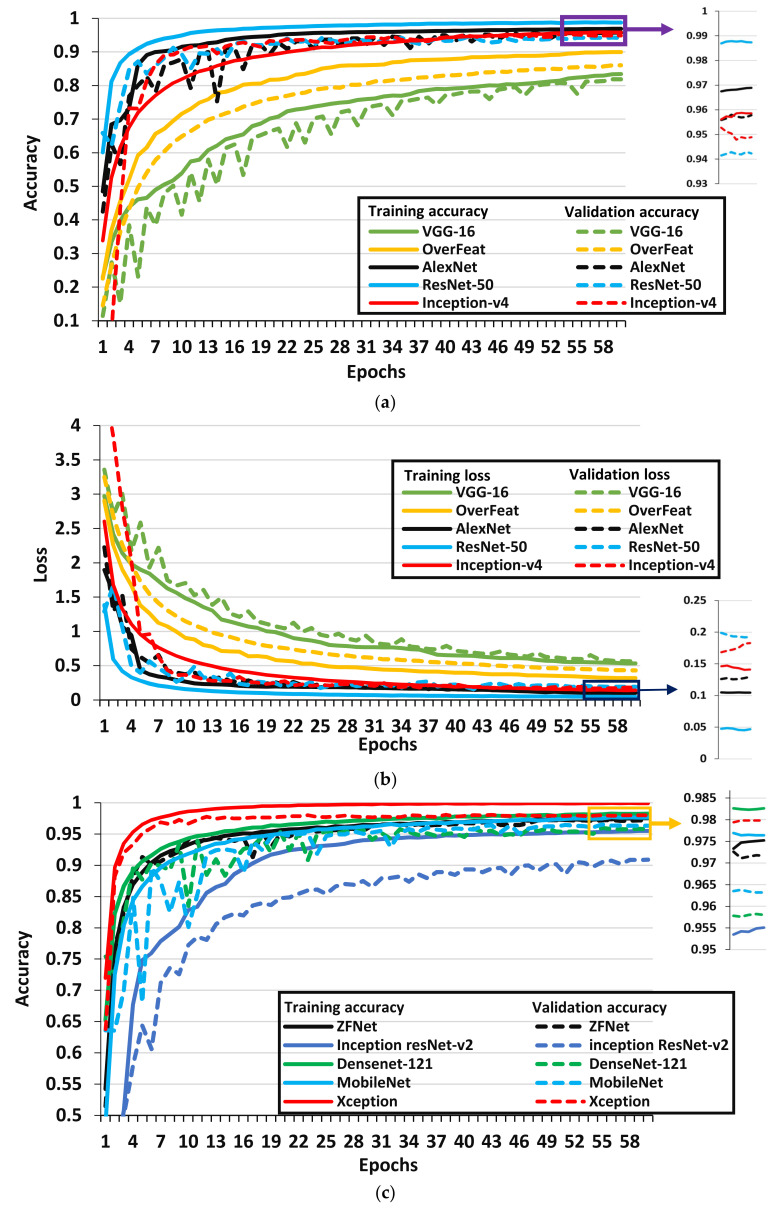
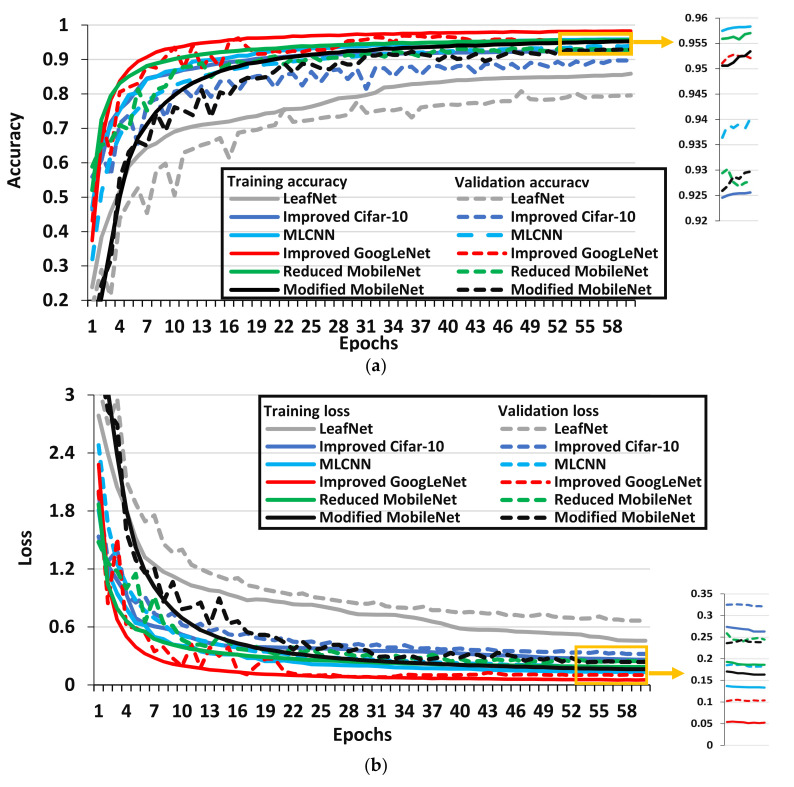
Recently, plant disease classification has been done by various state-of-the-art deep learning (DL) architectures on the publicly available/author generated datasets. This research proposed the deep learning-based comparative evaluation for the classification of plant disease in two steps. Firstly, the best convolutional neural network (CNN) was obtained by conducting a comparative analysis among well-known CNN architectures along with modified and cascaded/hybrid versions of some of the DL models proposed in the recent researches. Secondly, the performance of the best-obtained model was attempted to improve by training through various deep learning optimizers. The comparison between various CNNs was based on performance metrics such as validation accuracy/loss, F1-score, and the required number of epochs. All the selected DL architectures were trained in the PlantVillage dataset which contains 26 different diseases belonging to 14 respective plant species. Keras with TensorFlow backend was used to train deep learning architectures. It is concluded that the Xception architecture trained with the Adam optimizer attained the highest validation accuracy and F1-score of 99.81% and 0.9978 respectively which is comparatively better than the previous approaches and it proves the novelty of the work. Therefore, the method proposed in this research can be applied to other agricultural applications for transparent detection and classification purposes.
最近,植物病害分类是通过各种先进的深度学习(DL)架构在公开可用/作者生成的数据集上进行的。本研究分两步提出了基于深度学习的植物病害分类比较评估方法。首先,通过对著名的卷积神经网络(CNN)架构以及最近研究中提出的一些深度学习模型的改进版和级联/混合版进行比较分析,获得最佳的卷积神经网络。其次,尝试通过各种深度学习优化器进行训练来提高所获得的最佳模型的性能。各种卷积神经网络之间的比较基于诸如验证准确率/损失、F1分数以及所需的轮数等性能指标。所有选定的深度学习架构都在包含属于14种不同植物物种的26种不同病害的植物村数据集中进行训练。使用以TensorFlow为后端的Keras来训练深度学习架构。结果表明,使用Adam优化器训练的Xception架构分别获得了99.81%和0.9978的最高验证准确率和F1分数,这比以前的方法相对更好,证明了这项工作的新颖性。因此,本研究中提出的方法可应用于其他农业应用,以进行透明的检测和分类。