Assani Mohamed-Zakaria, Boldeanu Lidia, Manolea Maria-Magdalena, Boldeanu Mihail Virgil, Siloși Isabela, Assani Alexandru-Dan, Văduva Constantin-Cristian, Dijmărescu Anda Lorena
Doctoral School, University of Medicine and Pharmacy of Craiova, 200349 Craiova, Romania.
Department of Immunology, Faculty of Medicine, University of Medicine and Pharmacy of Craiova, 200349 Craiova, Romania.
Int J Mol Sci. 2025 Sep 7;26(17):8719. doi: 10.3390/ijms26178719.
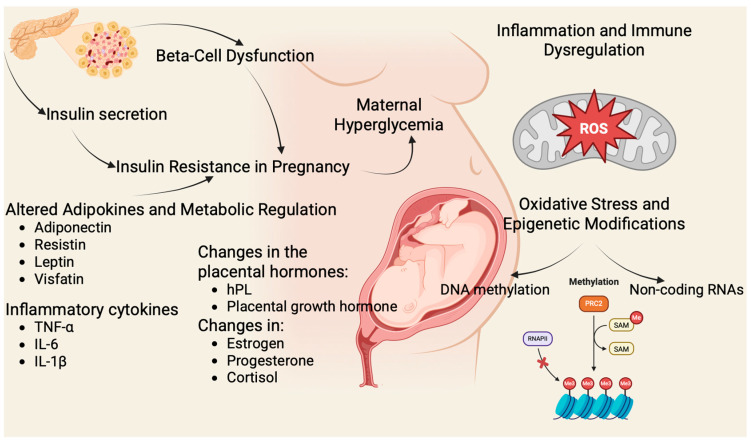
Gestational diabetes mellitus (GDM) is one of the most common metabolic complications during pregnancy, affecting up to 14% of pregnancies globally. GDM is characterized by glucose intolerance that arises or is first identified during pregnancy and is linked to significant short- and long-term adverse outcomes for both mothers and their offspring. The pathophysiology of GDM involves more than maternal insulin resistance and β-cell dysfunction. It is influenced by complex interactions among placental hormones, adipokines, inflammatory mediators, and oxidative stress pathways. Additionally, placental-derived exosomes and metabolomic signatures have emerged as promising biomarkers for early prediction and monitoring of the disease. Despite advancements in clinical diagnosis and management, including lifestyle interventions and pharmacological treatments, current strategies are still inadequate to prevent complications for both mothers and newborns entirely. Recent molecular insights into GDM development have been explored, along with emerging biomarkers and potential therapies. This synthesis also considers prospects for precision medicine strategies that could significantly improve GDM management. The urgent need for improved prevention and treatment of GDM is evident. A deeper understanding of the molecular foundations of GDM is essential and urgent, as it may enhance clinical outcomes and provide opportunities for early prevention of intergenerational metabolic disease risk.
妊娠期糖尿病(GDM)是孕期最常见的代谢并发症之一,全球高达14%的妊娠会受其影响。GDM的特征是在孕期出现或首次被发现的葡萄糖不耐受,并且与母亲及其后代的重大短期和长期不良后果相关。GDM的病理生理学不仅仅涉及母体胰岛素抵抗和β细胞功能障碍。它受到胎盘激素、脂肪因子、炎症介质和氧化应激途径之间复杂相互作用的影响。此外,胎盘来源的外泌体和代谢组学特征已成为该疾病早期预测和监测的有前景的生物标志物。尽管在临床诊断和管理方面取得了进展,包括生活方式干预和药物治疗,但目前的策略仍不足以完全预防母亲和新生儿的并发症。最近对GDM发展的分子见解已被探索,同时也有新兴的生物标志物和潜在疗法。本综述还考虑了可能显著改善GDM管理的精准医学策略的前景。改善GDM预防和治疗的迫切需求显而易见。深入了解GDM的分子基础至关重要且紧迫,因为这可能改善临床结局,并为早期预防代际代谢疾病风险提供机会。