Gocke D J, Preisig R, Morris T Q, McKay D G, Bradley S E
J Clin Invest. 1967 Sep;46(9):1506-17. doi: 10.1172/JCI105642.
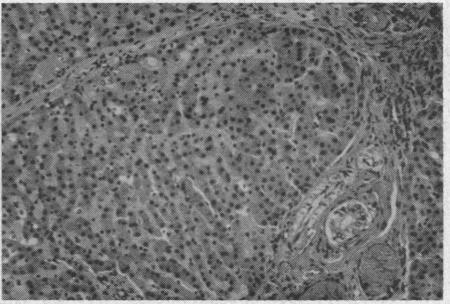
Experimental infection with canine hepatitis virus has been studied in a series of 49 dogs. The pattern of response to infection was distinctly modified by the immune status of the animal. All of 19 fully susceptible dogs had an acute, fulminating fatal hepatitis when infected with a standard dose of virus, and all of 19 dogs with high levels of immunity to the virus survived without apparent illness. However, 11 dogs were spontaneously encountered with partial immunity to the infectious agent, and these animals developed different, prolonged forms of hepatitis following infection. In four animals death occurred in 8-21 days following what may be called a subacute course. The remaining seven dogs survived up to 8 months with evidence of chronic hepatic damage. The subacute and chronic forms of hepatitis were reproduced experimentally in seven of eight fully susceptible dogs which were passively immunized against the canine hepatitis virus by administration of hyperimmune serum. Although the virus could be found in sites of hepatic damage in the early stages of the subacute and chronic diseases, it could not be demonstrated in the later stages which were characterized by persistent hepatic damage and a marked chronic inflammatory reaction. Dogs with chronic hepatitis eventually developed extensive hepatic fibrosis. The pathologic, physiologic, virologic, and immunologic features of these experimental forms of viral hepatitis are described.
对49只犬进行了犬传染性肝炎病毒的实验性感染研究。动物的免疫状态明显改变了对感染的反应模式。19只完全易感的犬在感染标准剂量病毒后均患急性暴发性致命肝炎,19只对该病毒具有高度免疫力的犬均存活且无明显疾病。然而,有11只犬自发地表现出对感染因子的部分免疫力,这些动物在感染后出现了不同的、病程延长的肝炎形式。4只动物在经历了可称为亚急性病程后,于8至21天内死亡。其余7只犬存活了8个月,有慢性肝损伤的迹象。在8只完全易感的犬中,有7只通过给予高免血清被动免疫犬传染性肝炎病毒后,实验性再现了亚急性和慢性肝炎形式。虽然在亚急性和慢性疾病的早期阶段,病毒可在肝损伤部位被发现,但在以持续性肝损伤和明显慢性炎症反应为特征的后期阶段却无法检测到。患有慢性肝炎的犬最终发展为广泛的肝纤维化。描述了这些实验性病毒性肝炎形式的病理、生理、病毒学和免疫学特征。