Brownstein D G, Smith A L, Johnson E A
Am J Pathol. 1981 Nov;105(2):156-63.
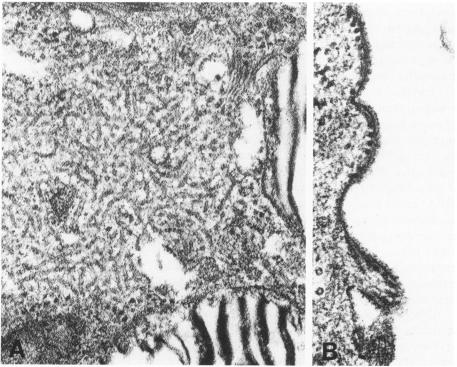
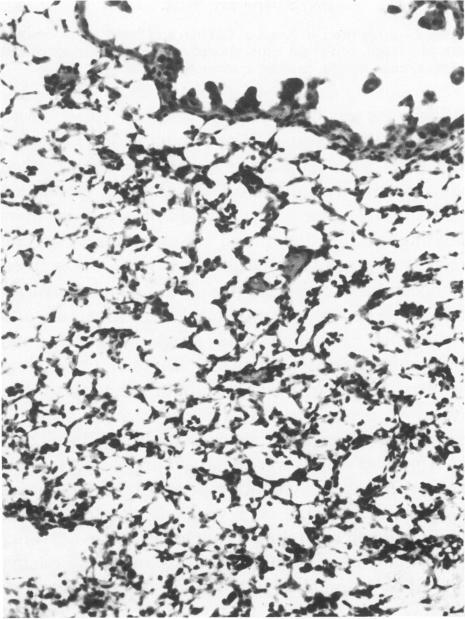
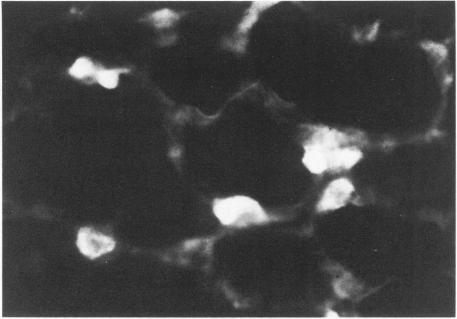
The pathogenesis of Sendai virus infection in genetically resistant (C57Bl/6) and susceptible (DBA/2) nonimmune adult mice was investigated. Rising serum complement-fixation (CF) antibody titers were delayed in DBA/2 mice as compared with C57Bl/6 mice. C57Bl/6 mice developed descending desquamative endobronchiolitis, and DBA/2 mice developed descending proliferative endobronchiolitis and bronchogenic alveolitis. Peribronchiolar lymphoid cuffs that formed in C57Bl/6 mice were thicker and more densely populated than those of DBA/2 mice. Immunofluorescence demonstrated viral antigens confined to the epithelial lining of conducting airways in C57Bl/6 mice but extending to alveolar corner cells in DBA/2 mice. Studies with a transmission electron microscope confirmed that Type II pneumocytes were infected only in DBA/2 mice. IgG-containing cells selectively accumulated along the airways of both strains, but fewer were recruited by DBA/2 mice. These results suggest that genetic resistance to Sendai virus is expressed through the immune system.
研究了仙台病毒在基因抗性(C57Bl/6)和易感(DBA/2)非免疫成年小鼠中的感染发病机制。与C57Bl/6小鼠相比,DBA/2小鼠血清补体结合(CF)抗体滴度上升延迟。C57Bl/6小鼠发生下行性脱屑性细支气管炎,DBA/2小鼠发生下行性增殖性细支气管炎和支气管源性肺泡炎。C57Bl/6小鼠形成的支气管周围淋巴袖套比DBA/2小鼠的更厚且细胞密度更高。免疫荧光显示,C57Bl/6小鼠的病毒抗原局限于传导气道的上皮内衬,但在DBA/2小鼠中延伸至肺泡角细胞。透射电子显微镜研究证实,仅在DBA/2小鼠中II型肺细胞被感染。含IgG的细胞沿两种品系的气道选择性积聚,但DBA/2小鼠募集的细胞较少。这些结果表明,对仙台病毒的基因抗性是通过免疫系统表达的。