Foster P M, Creasy D M, Foster J R, Gray T J
Environ Health Perspect. 1984 Aug;57:207-17. doi: 10.1289/ehp.8457207.
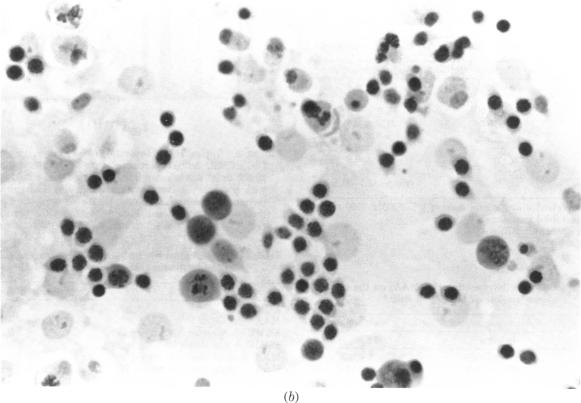
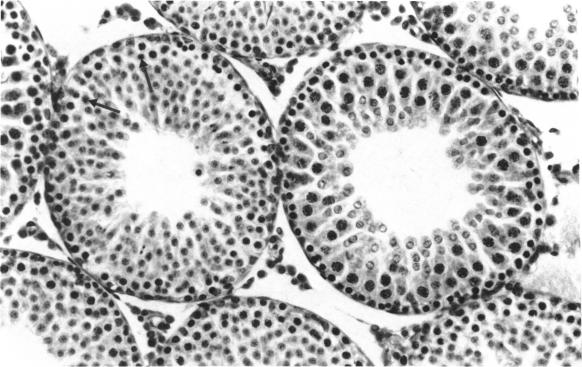
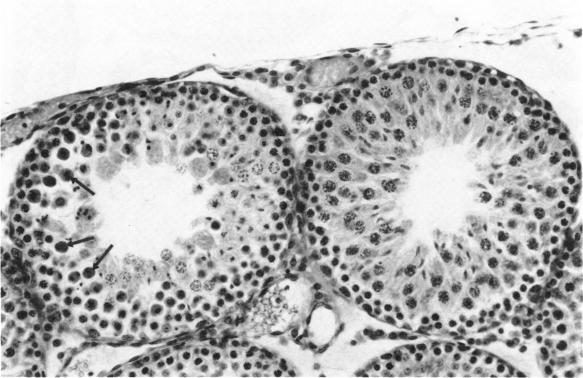
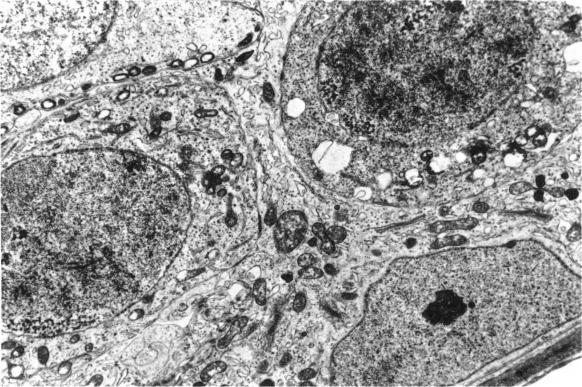
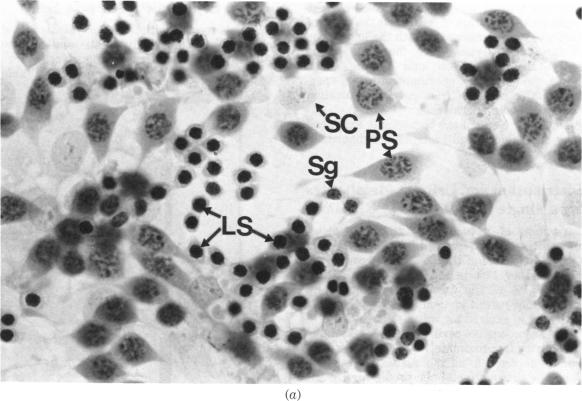
Ethylene glycol monomethyl ether (EGME) and ethylene glycol monoethyl ether (EGEE) were administered orally to young male rats at doses varying from 50 to 500 mg/kg/day and 250 to 1000 mg/kg/day for EGME and EGEE, respectively, for 11 days. At sequential times animals were killed and testicular histology examined. The initial and major site of damage following EGME treatment was restricted to the primary spermatocytes undergoing postzygotene meiotic maturation and division. EGEE produced damage of an identical nature, but a larger dose was required to elicit equivalent severity (500 mg EGEE/kg being approximately equivalent to 100 mg EGME/kg). Additionally, within the spermatocyte population, differential sensitivity was observed depending on the precise stage of meiotic maturation: dividing (stage XIV) and early pachytene (stages I-II) greater than late pachytene (stages VIII-XIII) greater than mid-pachytene (stages III-VII). Equivalent doses of methoxyacetic acid (MAA) and ethoxyacetic acid (EAA) gave injury similar to the corresponding glycol ether. When animals were pretreated with inhibitors of alcohol metabolism followed by a testicular toxic dose of EGME (500 mg/kg), an inhibitor of alcohol dehydrogenase (pyrazole) offered complete protection. Pretreatment with the aldehyde dehydrogenase inhibitors disulfiram or pargyline did not ameliorate the testicular toxicity of EGME. In mixed cultures of Sertoli-germ cells, MAA and not EGME produced effects on spermatocytes analogous to that seen in vivo, at concentrations approximately equivalent to steady-state plasma levels after a single oral dose of EGME (500 mg/kg). It would seem likely that a metabolite (MAA or possibly methoxyacetaldehyde) and not EGME is responsible for the production of testicular damage.
将乙二醇单甲醚(EGME)和乙二醇单乙醚(EGEE)分别以50至500毫克/千克/天和250至1000毫克/千克/天的剂量口服给予年轻雄性大鼠,持续11天。在连续的时间点处死动物并检查睾丸组织学。EGME处理后最初和主要的损伤部位局限于正在进行合子后减数分裂成熟和分裂的初级精母细胞。EGEE产生了相同性质的损伤,但需要更大的剂量才能引发同等程度的严重损伤(500毫克EGEE/千克大约相当于100毫克EGME/千克)。此外,在精母细胞群体中,根据减数分裂成熟的精确阶段观察到了不同的敏感性:分裂期(第十四阶段)和粗线期早期(第一至二阶段)大于粗线期晚期(第八至十三阶段)大于粗线期中期(第三至七阶段)。等量的甲氧基乙酸(MAA)和乙氧基乙酸(EAA)造成的损伤与相应的二醇醚相似。当用酒精代谢抑制剂对动物进行预处理,随后给予睾丸毒性剂量的EGME(500毫克/千克)时,酒精脱氢酶抑制剂(吡唑)提供了完全的保护作用。用醛脱氢酶抑制剂双硫仑或帕吉林预处理并不能改善EGME的睾丸毒性。在支持细胞 - 生殖细胞混合培养物中,MAA而非EGME对精母细胞产生的影响类似于在体内观察到的影响,其浓度大约相当于单次口服剂量EGME(500毫克/千克)后的稳态血浆水平。似乎很可能是一种代谢产物(MAA或可能是甲氧基乙醛)而非EGME导致了睾丸损伤。