Reading R, Raybould S, Jarvis S
Northumberland Health Authority.
BMJ. 1993 Dec 4;307(6917):1458-62. doi: 10.1136/bmj.307.6917.1458.
To compare proportions of low birthweight babies and mean heights of schoolchildren between rural and urban areas at different levels of social deprivation.
Cross sectional population based study classifying cases by Townsend material deprivation index of enumeration district of residence and by rural areas, small towns, and large towns.
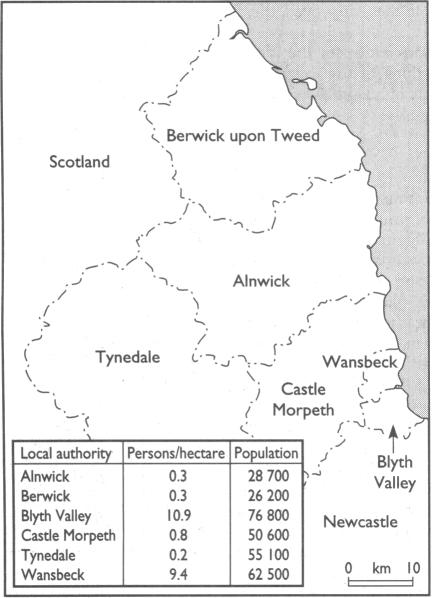
Northumberland Health District.
18,930 singleton infants delivered alive during January 1985 to September 1990 and resident in Northumberland in October 1990; 9055 children aged 5 to 8 1/2 years attending Northumberland schools in the winter of 1989-90.
Odds ratios for birth weight less than 2800 g; difference in mean height measured by standard deviation (SD) score.
Between the most deprived and most affluent 20% of enumeration districts the odds ratio for low birth weight adjusted for rural or urban setting was 1.71 (95% confidence interval 1.51 to 1.93) and the difference in mean height -0.232 SD score (-0.290 to -0.174). Between large towns and rural areas the odds ratio for low birth weight adjusted for deprivation was 1.37 (1.23 to 1.53) and the difference in mean height -0.162 SD score (-0.214 to -0.110). Results for small towns were intermediate between large towns and rural areas.
Inequalities in birth weight and height exist in all rural and urban settings between deprived and affluent areas. In addition, there is substantial disadvantage to living in urban areas compared with rural areas which results from social or environmental factors unrelated to current levels of deprivation.
比较不同社会剥夺水平下农村和城市地区低体重儿的比例以及学童的平均身高。
基于人群的横断面研究,根据居住枚举区的汤森物质剥夺指数以及农村、小镇和大城市进行病例分类。
诺森伯兰健康区。
1985年1月至1990年9月期间在诺森伯兰存活分娩的18930名单胎婴儿,且于1990年10月居住在诺森伯兰;1989 - 1990年冬季在诺森伯兰学校就读的9055名5至8.5岁儿童。
出生体重低于2800克的比值比;以标准差(SD)评分衡量的平均身高差异。
在最贫困和最富裕的20%枚举区之间,经农村或城市环境调整后的低出生体重比值比为1.71(95%置信区间1.51至1.93),平均身高差异为 -0.232 SD评分(-0.290至 -0.174)。在大城市和农村地区之间,经剥夺调整后的低出生体重比值比为1.37(1.23至1.53),平均身高差异为 -0.162 SD评分(-0.214至 -0.110)。小镇的结果介于大城市和农村地区之间。
贫困和富裕地区的农村和城市环境中均存在出生体重和身高的不平等。此外,与农村地区相比,生活在城市地区存在显著劣势,这是由与当前剥夺水平无关的社会或环境因素导致的。