• 文献检索
  • 文档翻译
  • 深度研究
  • 学术资讯
  • Suppr Zotero 插件Zotero 插件
  • 邀请有礼
  • 套餐&价格
  • 历史记录
应用&插件
Suppr Zotero 插件Zotero 插件浏览器插件Mac 客户端Windows 客户端微信小程序
定价
高级版会员购买积分包购买API积分包
服务
文献检索文档翻译深度研究API 文档MCP 服务
关于我们
关于 Suppr公司介绍联系我们用户协议隐私条款
关注我们

Suppr 超能文献

核心技术专利:CN118964589B侵权必究
粤ICP备2023148730 号-1Suppr @ 2026

文献检索

告别复杂PubMed语法,用中文像聊天一样搜索,搜遍4000万医学文献。AI智能推荐,让科研检索更轻松。

立即免费搜索

文件翻译

保留排版,准确专业,支持PDF/Word/PPT等文件格式,支持 12+语言互译。

免费翻译文档

深度研究

AI帮你快速写综述,25分钟生成高质量综述,智能提取关键信息,辅助科研写作。

立即免费体验

对致癌物进行解毒的酶的化学和分子调控。

Chemical and molecular regulation of enzymes that detoxify carcinogens.

作者信息

Prestera T, Holtzclaw W D, Zhang Y, Talalay P

机构信息

Department of Pharmacology and Molecular Sciences, Johns Hopkins University School of Medicine, Baltimore, MD 21205-2185.

出版信息

Proc Natl Acad Sci U S A. 1993 Apr 1;90(7):2965-9. doi: 10.1073/pnas.90.7.2965.

DOI:10.1073/pnas.90.7.2965
PMID:8385353
原文链接:https://pmc.ncbi.nlm.nih.gov/articles/PMC46217/
Abstract

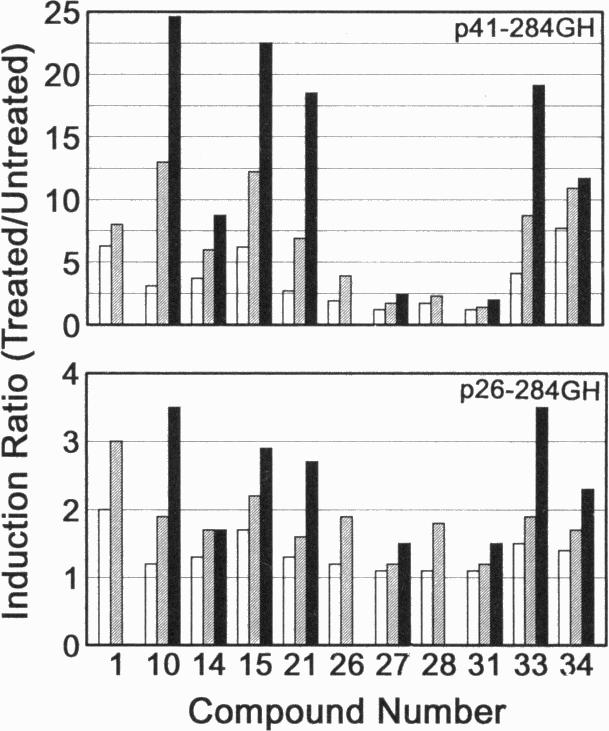
Inductions of detoxication (phase 2) enzymes, such as glutathione transferases and NAD(P)H:(quinone-acceptor) oxidoreductase, are a major mechanism for protecting animals and their cells against the toxic and neoplastic effects of carcinogens. These inductions result from enhanced transcription, and they are evoked by diverse chemical agents: oxidizable diphenols and phenylenediamines; Michael reaction acceptors; organic isothiocyanates; other electrophiles--e.g., alkyl and aryl halides; metal ions--e.g., HgCl2 and CdCl2; trivalent arsenic derivatives; vicinal dimercaptans; organic hydroperoxides and hydrogen peroxide; and 1,2-dithiole-3-thiones. The molecular mechanisms of these inductions were analyzed with the help of a construct containing a 41-bp enhancer element derived from the 5' upstream region of the mouse liver glutathione transferase Ya subunit gene ligated to the 5' end of the isolated promoter region of this gene, and inserted into a plasmid containing a human growth hormone reporter gene. When this construct was transfected into Hep G2 human hepatoma cells, the concentrations of 28 compounds (from the above classes) required to double growth hormone production, and the concentrations required to double quinone reductase specific activities in Hepa 1c1c7 cells, spanned a range of four orders of magnitude but were closely linearly correlated. Six compounds tested were inactive in both systems. A 26-bp subregion of the above enhancer oligonucleotide (containing the two tandem "AP-1-like" sites but lacking the preceding ETS protein binding sequence) was considerably less responsive to the same inducers. We conclude that the 41-bp enhancer element mediates most, if not all, of the phase 2 enzyme inducer activity of all of these widely different classes of compounds.

摘要

解毒(第二阶段)酶的诱导,如谷胱甘肽转移酶和NAD(P)H:(醌-受体)氧化还原酶,是保护动物及其细胞免受致癌物毒性和肿瘤形成作用的主要机制。这些诱导是由转录增强引起的,并且由多种化学试剂诱发:可氧化的二酚和苯二胺;迈克尔反应受体;有机异硫氰酸酯;其他亲电试剂,如烷基和芳基卤化物;金属离子,如HgCl2和CdCl2;三价砷衍生物;邻二硫醇;有机氢过氧化物和过氧化氢;以及1,2-二硫杂环戊烯-3-硫酮。借助一个构建体分析了这些诱导的分子机制,该构建体包含一个41bp的增强子元件,其来源于小鼠肝脏谷胱甘肽转移酶Ya亚基基因5'上游区域,连接到该基因分离的启动子区域的5'末端,并插入到一个含有人生长激素报告基因的质粒中。当将该构建体转染到Hep G2人肝癌细胞中时,使生长激素产量加倍所需的28种化合物(来自上述类别)的浓度,以及使Hepa 1c1c7细胞中醌还原酶比活性加倍所需的浓度,跨度达四个数量级,但呈密切的线性相关。测试的六种化合物在两个系统中均无活性。上述增强子寡核苷酸的一个26bp亚区域(包含两个串联的“AP-1样”位点,但缺少前面的ETS蛋白结合序列)对相同诱导剂的反应性明显较低。我们得出结论,41bp的增强子元件介导了所有这些广泛不同类别的化合物的大部分(如果不是全部)第二阶段酶诱导活性。
https://cdn.ncbi.nlm.nih.gov/pmc/blobs/c706/46217/ecffccc7ef72/pnas01466-0420-a.jpg

相似文献

1
Chemical and molecular regulation of enzymes that detoxify carcinogens.对致癌物进行解毒的酶的化学和分子调控。
Proc Natl Acad Sci U S A. 1993 Apr 1;90(7):2965-9. doi: 10.1073/pnas.90.7.2965.
2
The electrophile counterattack response: protection against neoplasia and toxicity.亲电体反击反应:对肿瘤形成和毒性的防护
Adv Enzyme Regul. 1993;33:281-96. doi: 10.1016/0065-2571(93)90024-8.
3
Electrophile and antioxidant regulation of enzymes that detoxify carcinogens.致癌物解毒酶的亲电体与抗氧化剂调节
Proc Natl Acad Sci U S A. 1995 Sep 12;92(19):8965-9. doi: 10.1073/pnas.92.19.8965.
4
Regulation of phase 2 enzyme induction by oltipraz and other dithiolethiones.奥替普拉及其他二硫代硫酮对2期酶诱导的调控。
Carcinogenesis. 1994 Feb;15(2):177-81. doi: 10.1093/carcin/15.2.177.
5
Xenobiotic-inducible expression of murine glutathione S-transferase Ya subunit gene is controlled by an electrophile-responsive element.异生物素诱导的小鼠谷胱甘肽S-转移酶Ya亚基基因表达受亲电试剂反应元件调控。
Proc Natl Acad Sci U S A. 1990 Aug;87(16):6258-62. doi: 10.1073/pnas.87.16.6258.
6
Parallel induction of heme oxygenase-1 and chemoprotective phase 2 enzymes by electrophiles and antioxidants: regulation by upstream antioxidant-responsive elements (ARE).亲电试剂和抗氧化剂对血红素加氧酶-1和化学保护第二相酶的平行诱导作用:由上游抗氧化反应元件(ARE)调控
Mol Med. 1995 Nov;1(7):827-37.
7
Chemoprotection against cancer by phase 2 enzyme induction.通过诱导二期酶实现对癌症的化学保护。
Toxicol Lett. 1995 Dec;82-83:173-9. doi: 10.1016/0378-4274(95)03553-2.
8
Total intracellular accumulation levels of dietary isothiocyanates determine their activity in elevation of cellular glutathione and induction of Phase 2 detoxification enzymes.膳食异硫氰酸盐的细胞内总积累水平决定了它们在提高细胞内谷胱甘肽水平和诱导第二阶段解毒酶方面的活性。
Carcinogenesis. 2001 Dec;22(12):1987-92. doi: 10.1093/carcin/22.12.1987.
9
The rat quinone reductase antioxidant response element. Identification of the nucleotide sequence required for basal and inducible activity and detection of antioxidant response element-binding proteins in hepatoma and non-hepatoma cell lines.大鼠醌还原酶抗氧化反应元件。肝癌和非肝癌细胞系中基础及诱导活性所需核苷酸序列的鉴定以及抗氧化反应元件结合蛋白的检测。
J Biol Chem. 1995 Oct 13;270(41):24468-74. doi: 10.1074/jbc.270.41.24468.
10
Regulation of enzymes that detoxify the electrophilic forms of chemical carcinogens.对使化学致癌物亲电形式解毒的酶的调节。
Princess Takamatsu Symp. 1990;21:177-87.

引用本文的文献

1
Activation of the Nrf2 Pathway by Sulforaphane Improves Hypoglycaemia-Induced Cognitive Impairment in a Rodent Model of Type 1 Diabetes.萝卜硫素激活Nrf2信号通路可改善1型糖尿病啮齿动物模型中低血糖诱导的认知障碍。
Antioxidants (Basel). 2025 Mar 4;14(3):308. doi: 10.3390/antiox14030308.
2
Collaborative Effects of Caloric Restriction and Quercetin on Age-related Oxidative Stress Reduction through NQO1/Sirt1 Gene Regulation.热量限制和槲皮素通过NQO1/Sirt1基因调控对减轻与年龄相关的氧化应激的协同作用。
Int J Prev Med. 2024 Dec 28;15:74. doi: 10.4103/ijpvm.ijpvm_119_23. eCollection 2024.
3
Sulforaphane and ophthalmic diseases.

本文引用的文献

1
Induction of cystine and glutamate transport activity in human fibroblasts by diethyl maleate and other electrophilic agents.马来酸二乙酯及其他亲电试剂对人成纤维细胞中胱氨酸和谷氨酸转运活性的诱导作用。
J Biol Chem. 1984 Feb 25;259(4):2435-40.
2
On the mechanisms of induction of cancer-protective enzymes: a unifying proposal.论癌症保护酶的诱导机制:一项统一提议。
Proc Natl Acad Sci U S A. 1985 Dec;82(23):8232-6. doi: 10.1073/pnas.82.23.8232.
3
1,2-Dithiol-3-thione analogs: effects on NAD(P)H:quinone reductase and glutathione levels in murine hepatoma cells.
萝卜硫素与眼科疾病
Food Sci Nutr. 2024 May 22;12(8):5296-5311. doi: 10.1002/fsn3.4230. eCollection 2024 Aug.
4
Ferroptosis regulation through Nrf2 and implications for neurodegenerative diseases.铁死亡调控通过 Nrf2 及其对神经退行性疾病的影响。
Arch Toxicol. 2024 Mar;98(3):579-615. doi: 10.1007/s00204-023-03660-8. Epub 2024 Jan 24.
5
A potent phosphodiester Keap1-Nrf2 protein-protein interaction inhibitor as the efficient treatment of Alzheimer's disease.一种有效的磷酸二酯酶 Keap1-Nrf2 蛋白-蛋白相互作用抑制剂,可作为阿尔茨海默病的有效治疗方法。
Redox Biol. 2023 Aug;64:102793. doi: 10.1016/j.redox.2023.102793. Epub 2023 Jun 24.
6
Characterization of early psychosis patients carrying a genetic vulnerability to redox dysregulation: a computational analysis of mechanism-based gene expression profile in fibroblasts.携带氧化还原失调遗传易感性的早期精神病患者的特征:成纤维细胞中基于机制的基因表达谱的计算分析。
Mol Psychiatry. 2023 May;28(5):1983-1994. doi: 10.1038/s41380-023-02034-x. Epub 2023 Mar 31.
7
Effects of Medicinal Plants and Phytochemicals in Nrf2 Pathways during Inflammatory Bowel Diseases and Related Colorectal Cancer: A Comprehensive Review.药用植物和植物化学物质在炎症性肠病及相关结直肠癌中对Nrf2信号通路的影响:综述
Metabolites. 2023 Feb 7;13(2):243. doi: 10.3390/metabo13020243.
8
Anti-inflammatory and Immunomodulatory Properties of .的抗炎和免疫调节特性。
Biomed Res Int. 2022 Jul 23;2022:3645038. doi: 10.1155/2022/3645038. eCollection 2022.
9
Structural Insights into the NAD(P)H:Quinone Oxidoreductase from .来自……的NAD(P)H:醌氧化还原酶的结构见解
ACS Omega. 2022 Jul 13;7(29):25705-25714. doi: 10.1021/acsomega.2c02954. eCollection 2022 Jul 26.
10
NRF2 in dermatological disorders: Pharmacological activation for protection against cutaneous photodamage and photodermatosis.NRF2 在皮肤科疾病中的作用:药物激活对皮肤光损伤和光皮病的保护作用。
Free Radic Biol Med. 2022 Aug 1;188:262-276. doi: 10.1016/j.freeradbiomed.2022.06.238. Epub 2022 Jun 23.
1,2 - 二硫醇 - 3 - 硫酮类似物:对小鼠肝癌细胞中NAD(P)H:醌还原酶和谷胱甘肽水平的影响
Carcinogenesis. 1986 Jun;7(6):977-80. doi: 10.1093/carcin/7.6.977.
4
Mouse glutathione S-transferase Ya subunit: gene structure and sequence.小鼠谷胱甘肽S-转移酶Ya亚基:基因结构与序列
DNA. 1987 Aug;6(4):317-24. doi: 10.1089/dna.1987.6.317.
5
Regulatory mechanisms of monofunctional and bifunctional anticarcinogenic enzyme inducers in murine liver.小鼠肝脏中单功能和双功能抗癌酶诱导剂的调控机制
Cancer Res. 1988 Sep 1;48(17):4776-82.
6
Direct measurement of NAD(P)H:quinone reductase from cells cultured in microtiter wells: a screening assay for anticarcinogenic enzyme inducers.微量滴定板培养细胞中NAD(P)H:醌还原酶的直接测量:一种抗癌酶诱导剂的筛选测定法。
Anal Biochem. 1988 Mar;169(2):328-36. doi: 10.1016/0003-2697(88)90292-8.
7
Identification of a common chemical signal regulating the induction of enzymes that protect against chemical carcinogenesis.鉴定一种调节诱导对化学致癌具有防护作用的酶的常见化学信号。
Proc Natl Acad Sci U S A. 1988 Nov;85(21):8261-5. doi: 10.1073/pnas.85.21.8261.
8
Human growth hormone as a reporter gene in regulation studies employing transient gene expression.在利用瞬时基因表达的调控研究中,将人生长激素作为报告基因。
Mol Cell Biol. 1986 Sep;6(9):3173-9. doi: 10.1128/mcb.6.9.3173-3179.1986.
9
Regulatory elements controlling the basal and drug-inducible expression of glutathione S-transferase Ya subunit gene.调控谷胱甘肽S-转移酶Ya亚基基因基础表达和药物诱导表达的调控元件。
DNA. 1989 Jul-Aug;8(6):399-408. doi: 10.1089/dna.1.1989.8.399.
10
Transcriptional regulation of the rat glutathione S-transferase Ya subunit gene. Characterization of a xenobiotic-responsive element controlling inducible expression by phenolic antioxidants.大鼠谷胱甘肽S-转移酶Ya亚基基因的转录调控。一种受酚类抗氧化剂控制的诱导型表达的外源性反应元件的特性。
J Biol Chem. 1990 Aug 25;265(24):14648-53.