Bachmanov A A, Reed D R, Ninomiya Y, Inoue M, Tordoff M G, Price R A, Beauchamp G K
Monell Chemical Senses Center, 3500 Market Street, Philadelphia, PA 19104, USA.
Mamm Genome. 1997 Aug;8(8):545-8. doi: 10.1007/s003359900500.
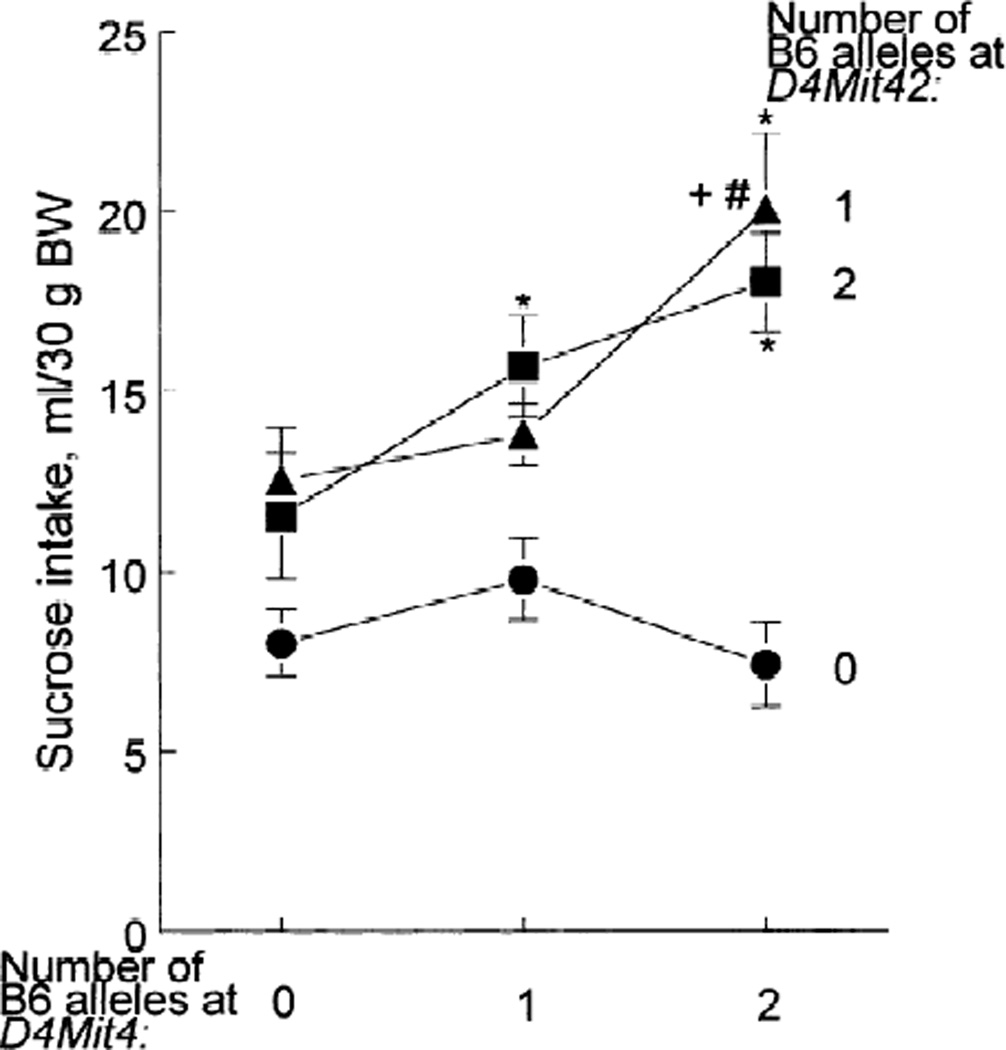
Individual variability in sucrose consumption is prominent in humans and other species. To investigate the genetic contribution to this complex behavior, we conducted behavioral, electrophysiological, and genetic studies, using male progeny of two inbred mouse strains (C57BL/6ByJ [B6] and 129/J [129]) and their F2 hybrids. Two loci on Chromosome (Chr) 4 were responsible for over 50% of the genetic variability in sucrose intake. These loci apparently modulated intake by altering peripheral neural responses to sucrose. One locus affected the response threshold, whereas the other affected the response magnitude. These findings suggest that the majority of difference in sucrose intake between male B6 and 129 mice is due to polymorphisms of two genes that influence receptor or peripheral nervous system activity.
蔗糖摄入量的个体差异在人类和其他物种中都很显著。为了研究这种复杂行为的遗传因素,我们使用两个近交系小鼠品系(C57BL/6ByJ [B6] 和129/J [129])及其F2杂交后代进行了行为、电生理和遗传研究。4号染色体上的两个基因座负责超过50%的蔗糖摄入量遗传变异。这些基因座显然通过改变外周神经对蔗糖的反应来调节摄入量。一个基因座影响反应阈值,而另一个影响反应幅度。这些发现表明,雄性B6和129小鼠之间蔗糖摄入量的大部分差异是由于影响受体或外周神经系统活动的两个基因的多态性所致。