Kim Hyo- Cheol, Chung Jin Wook, Park Jae Hyung, Yin Yong Hu, Park Seong Ho, Yoon Chang Jin, Choi Young Ho
Department of Radiology, Seoul National University College of Medicine, Seoul, Korea.
Korean J Radiol. 2003 Jul-Sep;4(3):146-52. doi: 10.3348/kjr.2003.4.3.146.
To evaluate the role of CT venography in the diagnosis and treatment of benign thoracic central venous obstruction.
Eighteen patients who had undergone both CT venography and digital subtraction venography were prospectively enrolled in this study. The following features were analyzed by two observers: the cause, degree, and extent of venous obstruction; associated thrombosis; and implications for the planning of treatment. CT venography and digital subtraction venography were compared in defined venous segments, and the degree of obstruction, and correlation was expressed using Spearman's rank correlation coefficient.
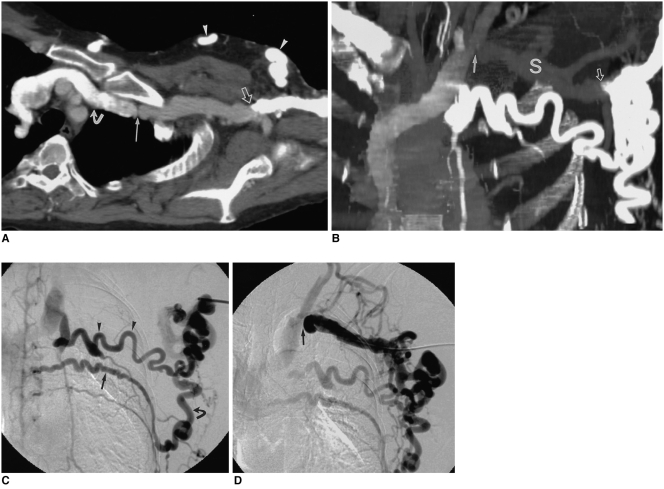
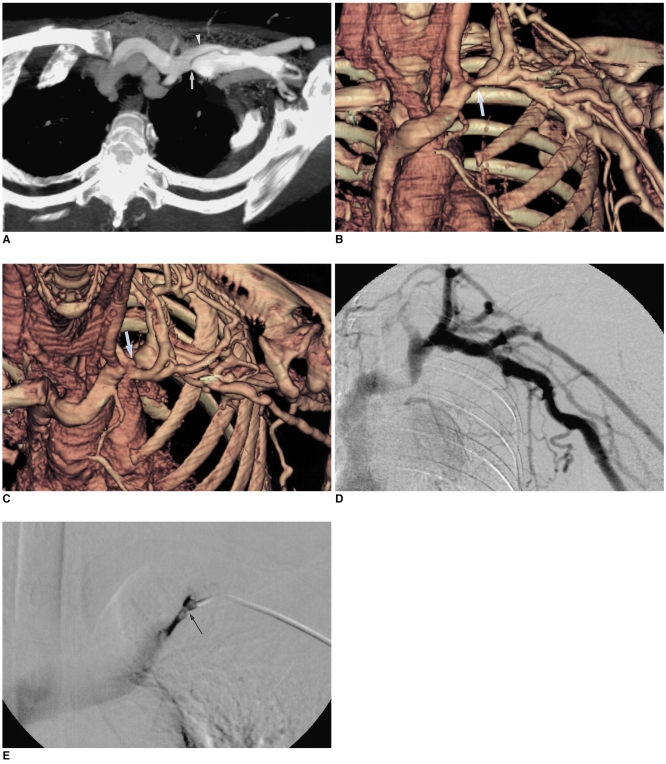
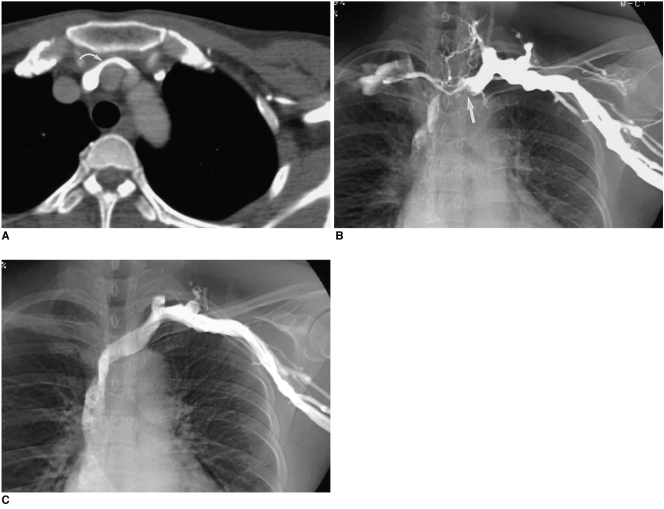
In all patients, CT venography depicted the causes of obstruction, including extrinsic compression of the left brachiocephalic vein, and mediastinal inflammatory pseudotumor. Interobserver agreement regarding classification of the degree of obstruction was judged as good for CT venography (K=0.864), and in evaluating this, there was significant correlation between CT venography and digital subtraction venography (reader 1: Rs = 0.58, p < 0.01; reader 2: Rs = 0.56, p < 0.01). In evaluating the status of central veins proximal to long segmental obstruction, and associated thrombosis, CT venography was superior to digital subtraction venography. In half of all patients, the findings of CT venography led to changes in the treatment plan.
The findings of CT venography correlated closely with those of digital subtraction venography, and the former accurately depicted the degree and extent of benign venous obstruction.
评估CT静脉成像在良性胸段中心静脉梗阻诊断及治疗中的作用。
本前瞻性研究纳入了18例同时接受CT静脉成像和数字减影静脉造影的患者。两名观察者分析了以下特征:静脉梗阻的原因、程度及范围;相关血栓形成情况;以及对治疗方案规划的影响。在特定静脉节段对CT静脉成像和数字减影静脉造影进行比较,并使用Spearman等级相关系数表示梗阻程度及相关性。
在所有患者中,CT静脉成像均显示了梗阻原因,包括左头臂静脉的外部压迫以及纵隔炎性假瘤。观察者间对CT静脉成像梗阻程度分类的一致性被判定为良好(K = 0.864),在评估这一点时,CT静脉成像与数字减影静脉造影之间存在显著相关性(观察者1:Rs = 0.58,p < 0.01;观察者2:Rs = 0.56,p < 0.01)。在评估长节段梗阻近端中心静脉的状况及相关血栓形成时,CT静脉成像优于数字减影静脉造影。在所有患者中,有一半患者CT静脉成像的结果导致了治疗方案的改变。
CT静脉成像的结果与数字减影静脉造影的结果密切相关,前者能准确描绘良性静脉梗阻的程度及范围。