Viitala Peter E, Newhouse Ian J, LaVoie Norm, Gottardo Christine
Kinesiology, Lakehead University, Thunder Bay, Canada.
Lipids Health Dis. 2004 Jun 22;3:14. doi: 10.1186/1476-511X-3-14.
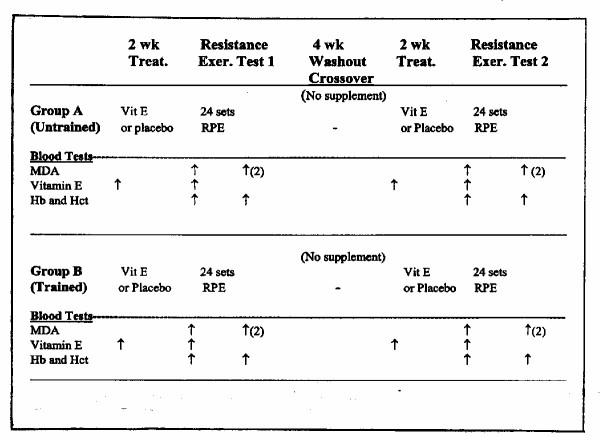
The theoretical benefits of using antioxidant vitamin supplements to quench oxygen free radicals appear large. High intensity aerobic-type exercise produces oxygen free radicals that can cause damage to lipid membranes (lipid peroxidation) that may lead to many problems such as the inactivation of cell membrane enzymes, the progression of degenerative diseases (cardiovascular disease and cancer) and lessening of the effectiveness of the immune system. The major function of vitamin E is to work as a chain-breaking antioxidant in a fat soluble environment. Little research has examined lipid peroxidation associated with high intensity resistance exercise or possible protective effects of antioxidant supplementation or the effects of training state.
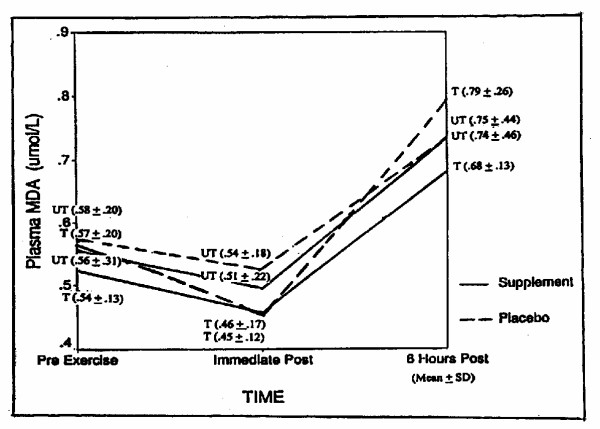
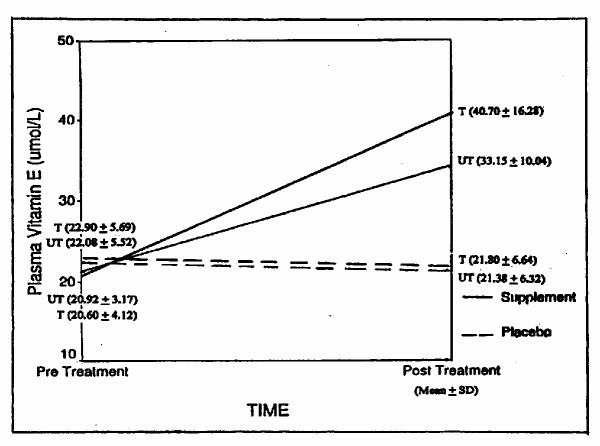
There were no significant group (trained vs untrained) or treatment (vitamin E vs placebo) effects found between the 4 groups assessed. There was only one significant difference found and that was in the main effect for time (F = 22.41, p < 0.01).
The Resistance Exercise Test caused a significant increase in malondialdehyde in all 4 groups at 6 hours post exercise. There was no evidence that vitamin E supplementation was effective in reducing oxidative damage in comparison to the placebo group. As well, there was no difference between the trained and untrained groups with respect to their impact on lipid peroxidation measures.
使用抗氧化维生素补充剂来清除氧自由基的理论益处似乎很大。高强度有氧型运动会产生氧自由基,这些自由基会对脂质膜造成损害(脂质过氧化),进而可能导致许多问题,如细胞膜酶失活、退行性疾病(心血管疾病和癌症)的进展以及免疫系统效能降低。维生素E的主要功能是在脂溶性环境中作为链断裂抗氧化剂发挥作用。很少有研究探讨与高强度抗阻运动相关的脂质过氧化、抗氧化剂补充的可能保护作用或训练状态的影响。
在评估的4组之间未发现显著的组间(训练组与未训练组)或处理间(维生素E组与安慰剂组)效应。仅发现一个显著差异,即时间的主效应(F = 22.41,p < 0.01)。
抗阻运动测试导致所有4组在运动后6小时丙二醛显著增加。没有证据表明与安慰剂组相比,补充维生素E在减少氧化损伤方面有效。同样,训练组和未训练组在对脂质过氧化指标的影响方面没有差异。