Le Pendu Jacques, Ruvoën-Clouet Nathalie, Kindberg Elin, Svensson Lennart
Inserm U601, University of Nantes, Institute of Biology, 9 Quai Moncousu, 44093 Nantes, Cedex 01, France.
Semin Immunol. 2006 Dec;18(6):375-86. doi: 10.1016/j.smim.2006.07.009. Epub 2006 Sep 14.
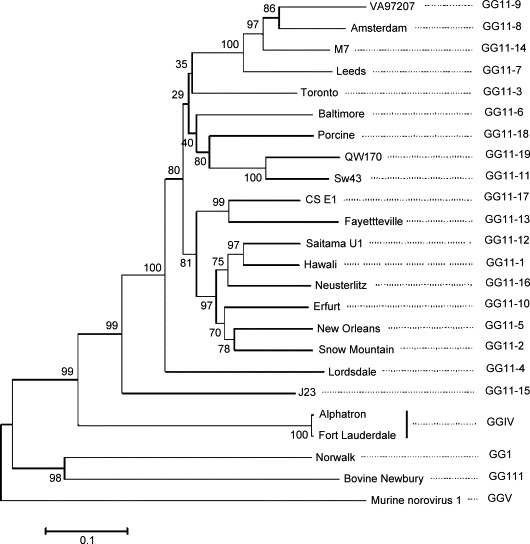
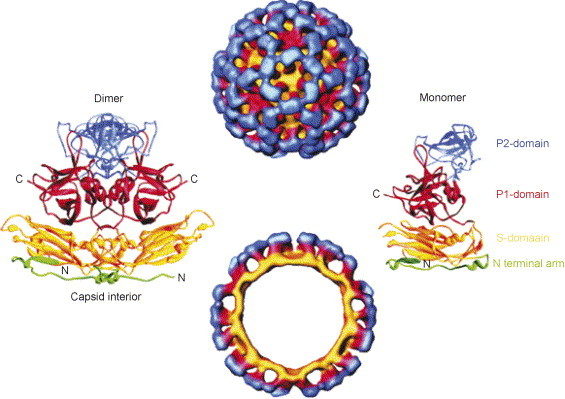
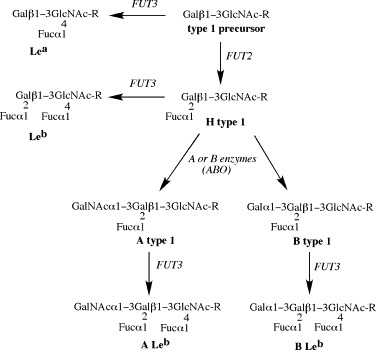
Noroviruses have emerged as a major cause of acute gastroenteritis in humans of all ages. Despite high infectivity of the virus and lack of long-term immunity, volunteer and authentic studies has suggested the existence of inherited protective factors. Recent studies have shown that histo-blood group antigens (HBGAs) and in particular secretor status controlled by the alpha1,2fucosyltransferase FUT2 gene determine susceptibility to norovirus infections, with nonsecretors (FUT2-/-), representing 20% of Europeans, being highly resistant to symptomatic infections with major strains of norovirus. Moreover, the capsid protein from distinct strains shows different HBGA specificities, suggesting a host-pathogen co-evolution driven by carbohydrate-protein interactions.
诺如病毒已成为各年龄段人类急性胃肠炎的主要病因。尽管该病毒具有高传染性且缺乏长期免疫力,但志愿者研究和实际研究表明存在遗传保护因素。最近的研究表明,组织血型抗原(HBGAs),特别是由α1,2岩藻糖基转移酶FUT2基因控制的分泌状态,决定了对诺如病毒感染的易感性,非分泌者(FUT2-/-)占欧洲人的20%,对主要诺如病毒株的症状性感染具有高度抗性。此外,不同毒株的衣壳蛋白显示出不同的HBGA特异性,这表明碳水化合物-蛋白质相互作用驱动了宿主-病原体的共同进化。