Jensen N S, Casey T A, Stanton T B
Physiopathology Research Unit, U.S. Department of Agriculture, Ames, Iowa 50010.
J Clin Microbiol. 1990 Dec;28(12):2717-21. doi: 10.1128/jcm.28.12.2717-2721.1990.
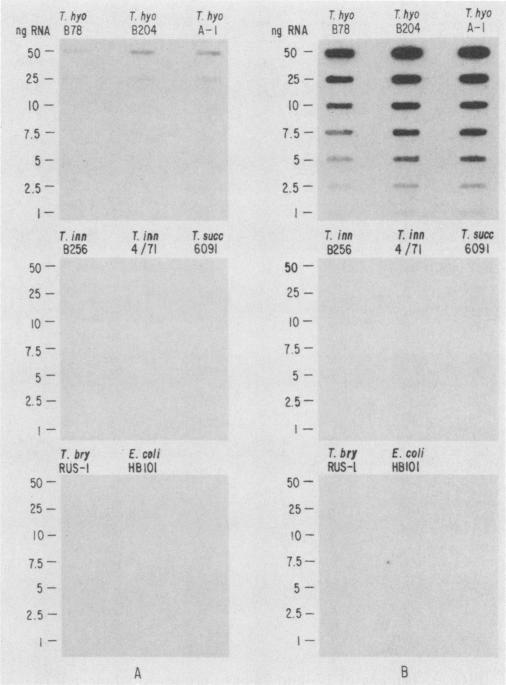
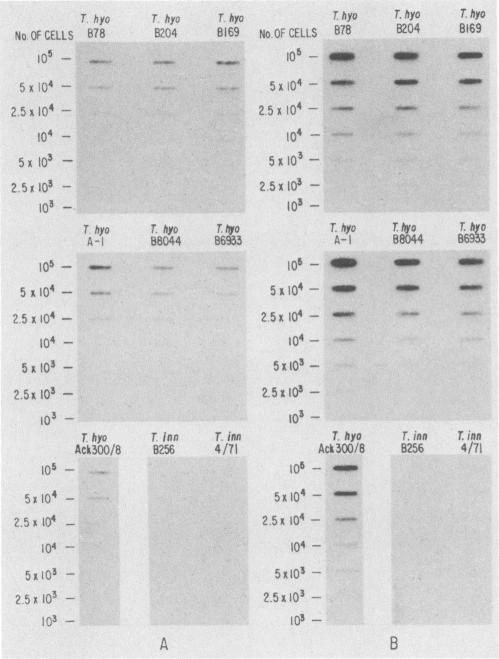
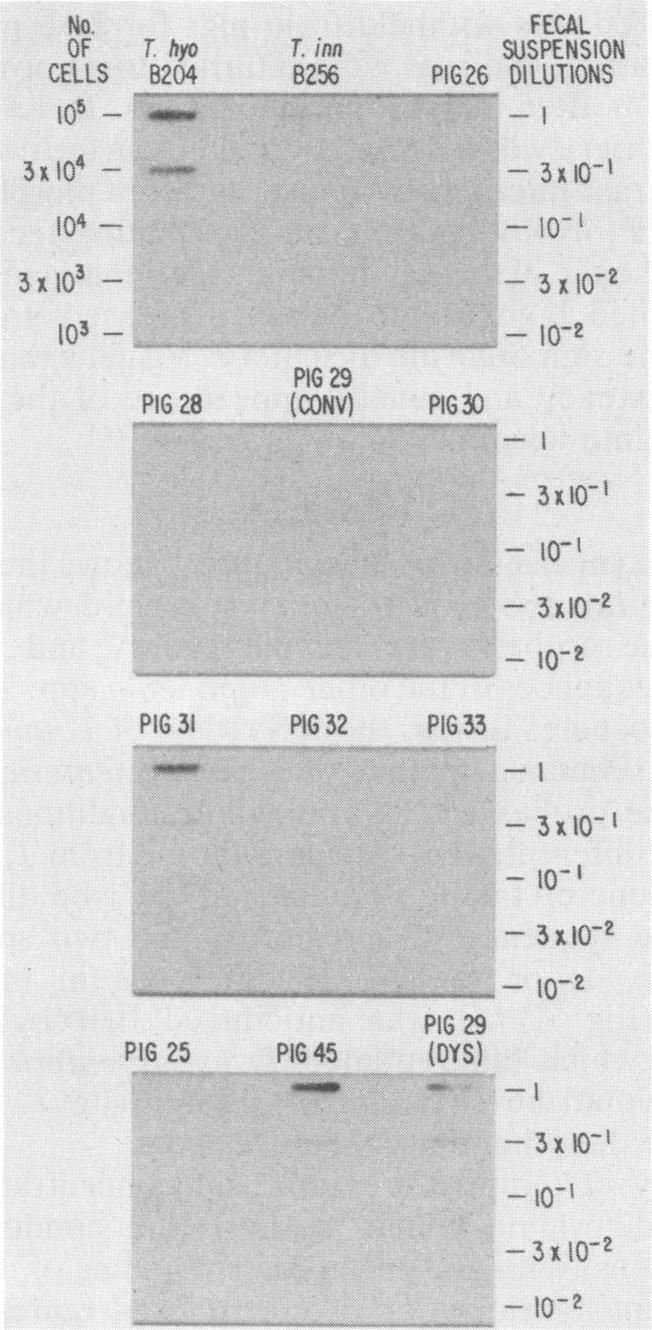
Oligodeoxynucleotide probes (17 and 28 bases long) complementary to a unique region of Treponema hyodysenteriae 16S rRNA were developed. These probes bound specifically to partially purified rRNA and whole-cell rRNA of T. hyodysenteriae. No binding to partially purified rRNA or whole-cell rRNA of Treponema innocens, Treponema succinifaciens, Treponema bryantii, or Escherichia coli occurred under stringent conditions. The 28-base probe was 5 to 10 times more sensitive than the 17-base probe when hybridized with T. hyodysenteriae rRNA. The 28-base probe detected T. hyodysenteriae in the feces of experimentally inoculated pigs exhibiting clinical signs of swine dysentery.
开发了与猪痢疾短螺旋体16S rRNA独特区域互补的寡脱氧核苷酸探针(17个和28个碱基长)。这些探针与猪痢疾短螺旋体部分纯化的rRNA和全细胞rRNA特异性结合。在严格条件下,未与无害短螺旋体、琥珀酸短螺旋体、布氏短螺旋体或大肠杆菌的部分纯化rRNA或全细胞rRNA发生结合。当与猪痢疾短螺旋体rRNA杂交时,28碱基的探针比17碱基的探针敏感5至10倍。28碱基的探针在表现出猪痢疾临床症状的实验接种猪粪便中检测到了猪痢疾短螺旋体。