Geuenich Silvia, Goffinet Christine, Venzke Stephanie, Nolkemper Silke, Baumann Ingo, Plinkert Peter, Reichling Jürgen, Keppler Oliver T
Department of Virology, University of Heidelberg, Heidelberg, Germany.
Retrovirology. 2008 Mar 20;5:27. doi: 10.1186/1742-4690-5-27.
Aqueous extracts from leaves of well known species of the Lamiaceae family were examined for their potency to inhibit infection by human immunodeficiency virus type 1 (HIV-1).
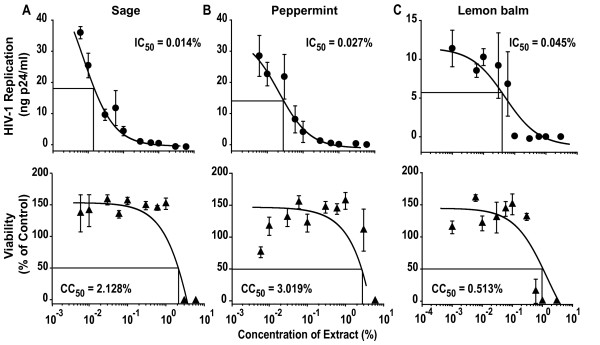
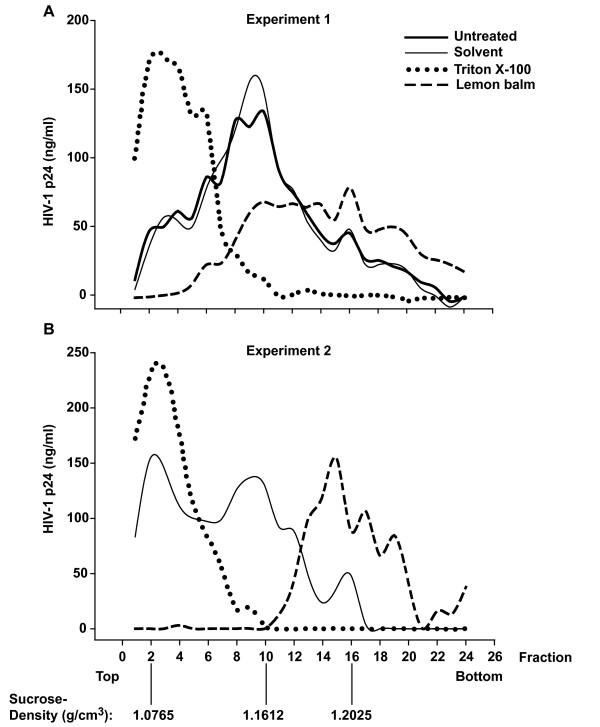
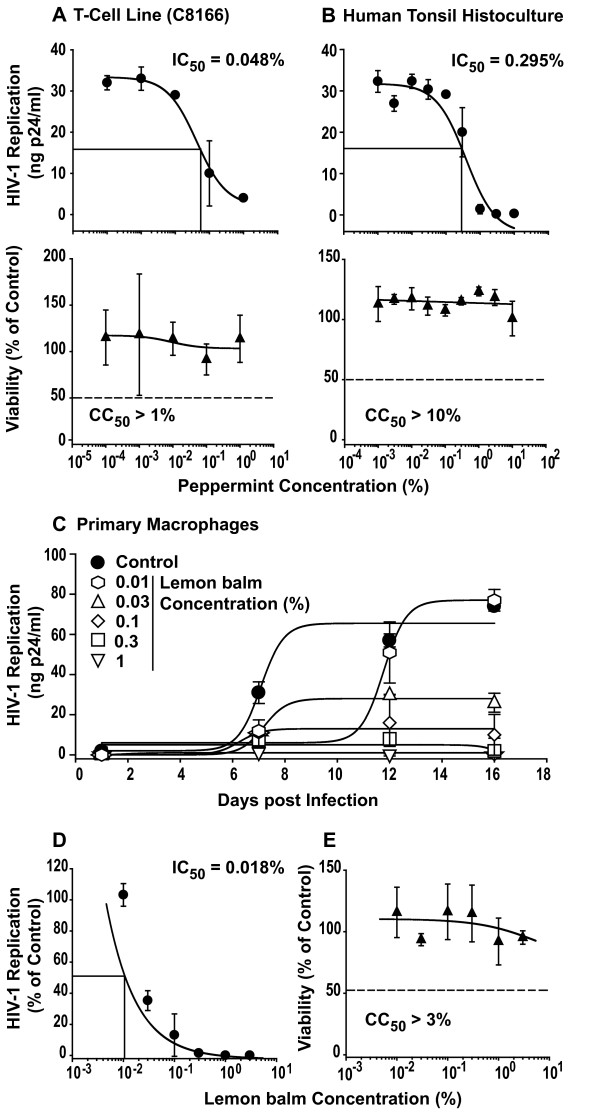
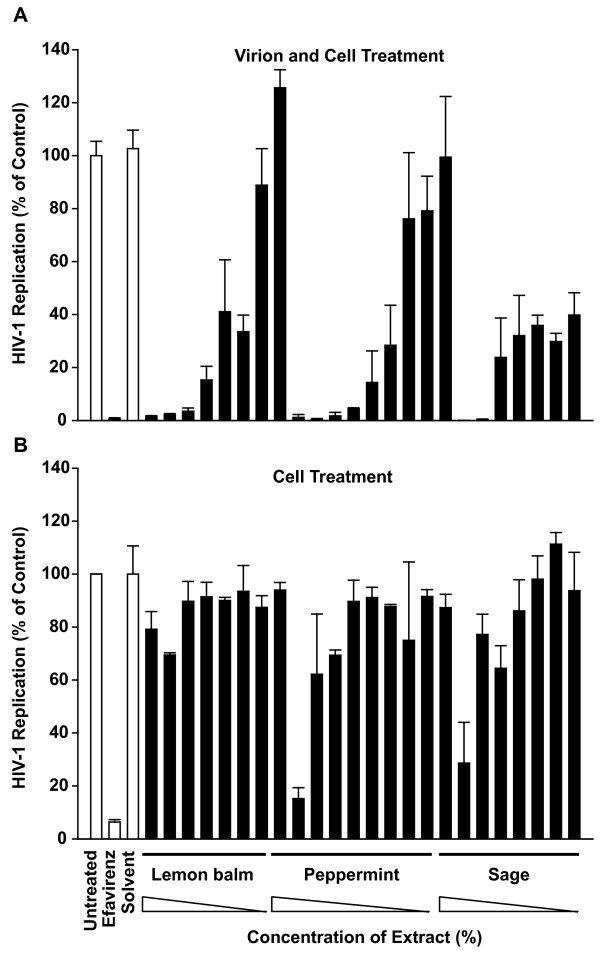
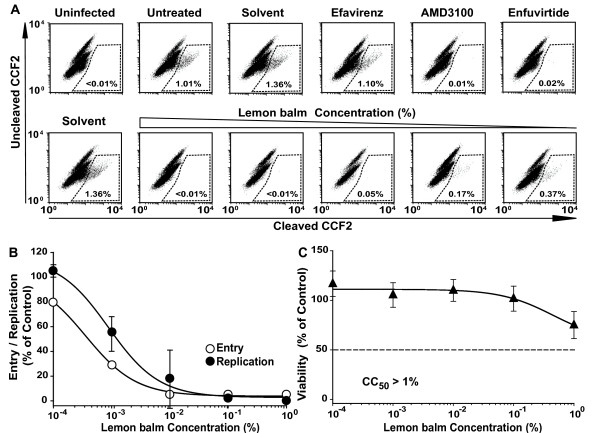
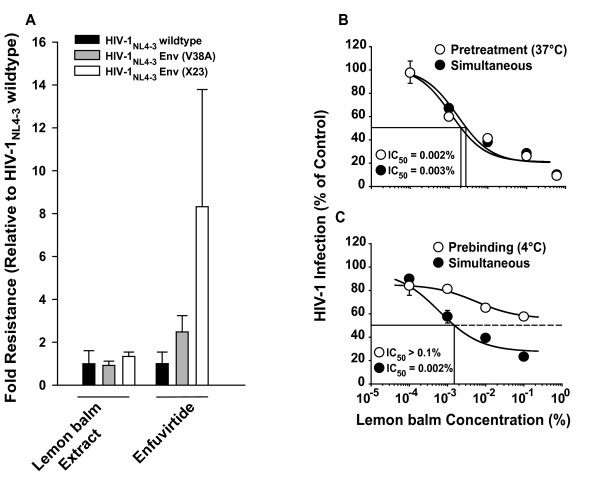
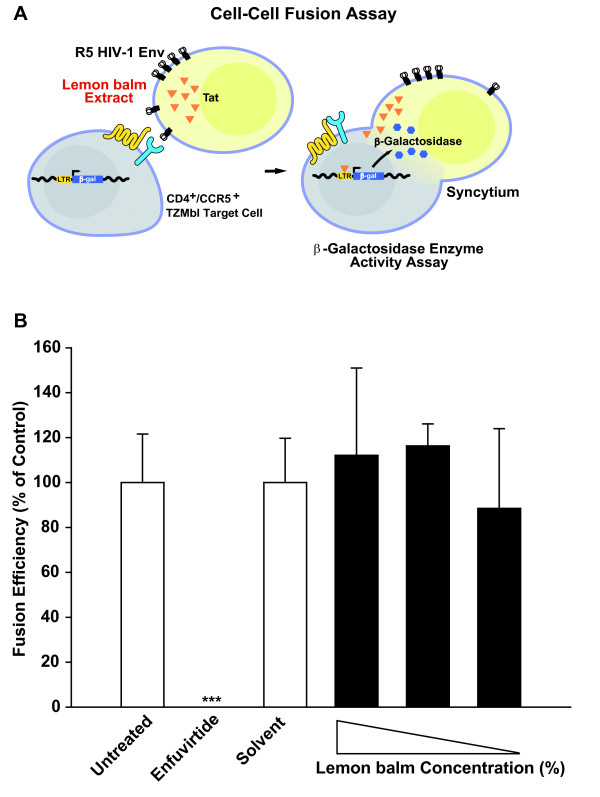
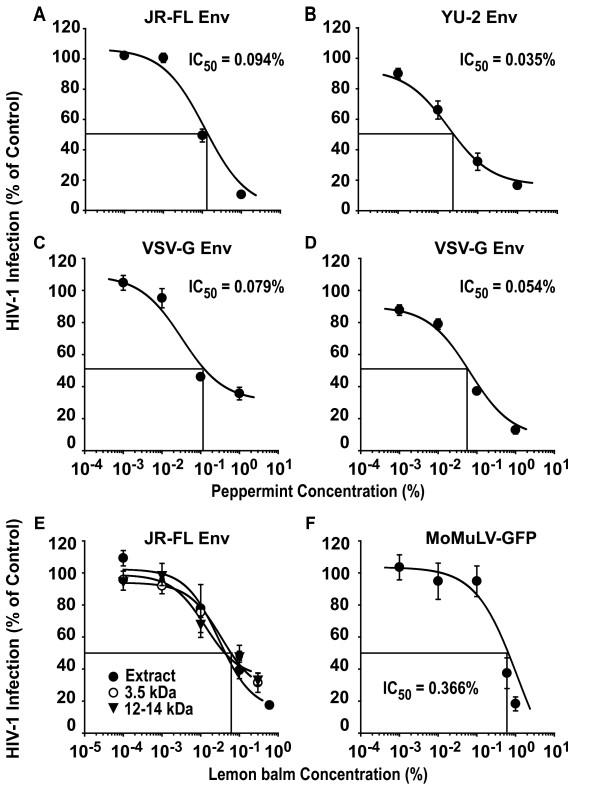
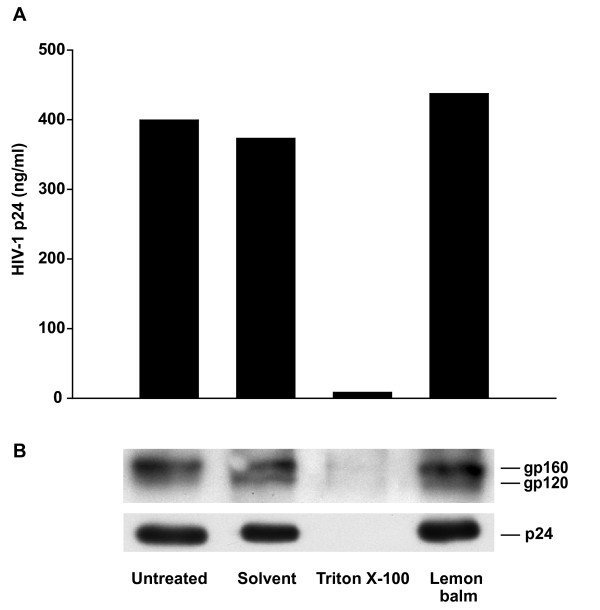
Extracts from lemon balm (Melissa officinalis L.), peppermint (Mentha x piperita L.), and sage (Salvia officinalis L.) exhibited a high and concentration-dependent activity against the infection of HIV-1 in T-cell lines, primary macrophages, and in ex vivo tonsil histocultures with 50% inhibitory concentrations as low as 0.004%. The aqueous Lamiaceae extracts did not or only at very high concentrations interfere with cell viability. Mechanistically, extract exposure of free virions potently and rapidly inhibited infection, while exposure of surface-bound virions or target cells alone had virtually no antiviral effect. In line with this observation, a virion-fusion assay demonstrated that HIV-1 entry was drastically impaired following treatment of particles with Lamiaceae extracts, and the magnitude of this effect at the early stage of infection correlated with the inhibitory potency on HIV-1 replication. Extracts were active against virions carrying diverse envelopes (X4 and R5 HIV-1, vesicular stomatitis virus, ecotropic murine leukemia virus), but not against a non-enveloped adenovirus. Following exposure to Lamiaceae extracts, the stability of virions as well as virion-associated levels of envelope glycoprotein and processed Gag protein were unaffected, while, surprisingly, sucrose-density equilibrium gradient analyses disclosed a marked increase of virion density.
Aqueous extracts from Lamiaceae can drastically and rapidly reduce the infectivity of HIV-1 virions at non-cytotoxic concentrations. An extract-induced enhancement of the virion's density prior to its surface engagement appears to be the most likely mode of action. By harbouring also a strong activity against herpes simplex virus type 2, these extracts may provide a basis for the development of novel virucidal topical microbicides.
对唇形科知名物种叶片的水提取物进行了检测,以评估其抑制1型人类免疫缺陷病毒(HIV-1)感染的能力。
蜜蜂花(Melissa officinalis L.)、薄荷(Mentha x piperita L.)和鼠尾草(Salvia officinalis L.)的提取物在T细胞系、原代巨噬细胞和体外扁桃体组织培养物中对HIV-1感染表现出高浓度依赖性活性,50%抑制浓度低至0.004%。唇形科水提取物不会或仅在非常高的浓度下才会干扰细胞活力。从机制上讲,游离病毒体暴露于提取物中会有效且迅速地抑制感染,而单独暴露于表面结合的病毒体或靶细胞几乎没有抗病毒作用。与此观察结果一致,病毒体融合试验表明,用唇形科提取物处理颗粒后,HIV-1的进入受到严重损害,并且在感染早期这种作用的程度与对HIV-1复制的抑制效力相关。提取物对携带不同包膜的病毒体(X4和R5 HIV-1、水疱性口炎病毒、嗜亲性鼠白血病病毒)有活性,但对无包膜的腺病毒无活性。暴露于唇形科提取物后,病毒体的稳定性以及病毒体相关的包膜糖蛋白和加工后的Gag蛋白水平不受影响,而令人惊讶的是,蔗糖密度平衡梯度分析显示病毒体密度显著增加。
唇形科水提取物可在无细胞毒性浓度下显著且迅速降低HIV-1病毒体的感染性。提取物诱导病毒体在其表面结合之前密度增加似乎是最可能的作用方式。由于这些提取物对2型单纯疱疹病毒也有很强的活性,它们可能为开发新型杀病毒局部杀菌剂提供基础。