Leiden University, Cognitive Psychology, P.O. Box 9555, 2300 RB Leiden, The Netherlands.
Psychol Res. 2010 Mar;74(2):138-51. doi: 10.1007/s00426-009-0227-1. Epub 2009 Feb 12.
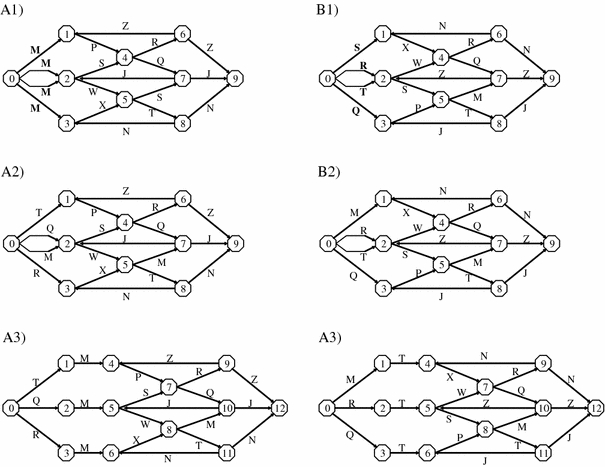
In the contextual cueing paradigm, Endo and Takeda (in Percept Psychophys 66:293-302, 2004) provided evidence that implicit learning involves selection of the aspect of a structure that is most useful to one's task. The present study attempted to replicate this finding in artificial grammar learning to investigate whether or not implicit learning commonly involves such a selection. Participants in Experiment 1 were presented with an induction task that could be facilitated by several characteristics of the exemplars. For some participants, those characteristics included a perfectly predictive feature. The results suggested that the aspect of the structure that was most useful to the induction task was selected and learned implicitly. Experiment 2 provided evidence that, although salience affected participants' awareness of the perfectly predictive feature, selection for implicit learning was mainly based on usefulness.
在语境线索范式中,Endo 和 Takeda(在感知心理物理学 66:293-302,2004 年)提供了证据,表明内隐学习涉及到对结构最有用方面的选择,以完成一个人的任务。本研究试图在人工语法学习中复制这一发现,以调查内隐学习是否通常涉及到这种选择。实验 1 的参与者接受了一个诱导任务,该任务可以通过示例的几个特征来促进。对于一些参与者来说,这些特征包括一个完全可预测的特征。结果表明,对诱导任务最有用的结构方面被选择并内隐地学习。实验 2 提供的证据表明,尽管显著性影响了参与者对完全可预测特征的意识,但内隐学习的选择主要基于有用性。