Niederer Iris, Kriemler Susi, Zahner Lukas, Bürgi Flavia, Ebenegger Vincent, Hartmann Tim, Meyer Ursina, Schindler Christian, Nydegger Andreas, Marques-Vidal Pedro, Puder Jardena J
Institute of Exercise and Health Sciences, University of Basel, Basel, Switzerland.
BMC Public Health. 2009 Mar 31;9:94. doi: 10.1186/1471-2458-9-94.
Childhood obesity and physical inactivity are increasing dramatically worldwide. Children of low socioeconomic status and/or children of migrant background are especially at risk. In general, the overall effectiveness of school-based programs on health-related outcomes has been disappointing. A special gap exists for younger children and in high risk groups.
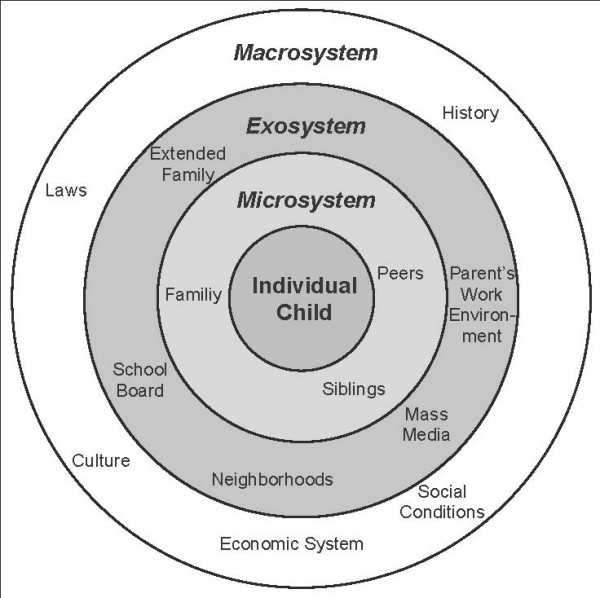
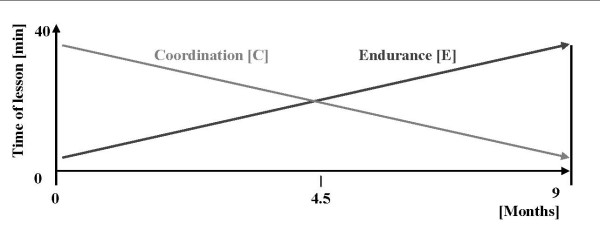
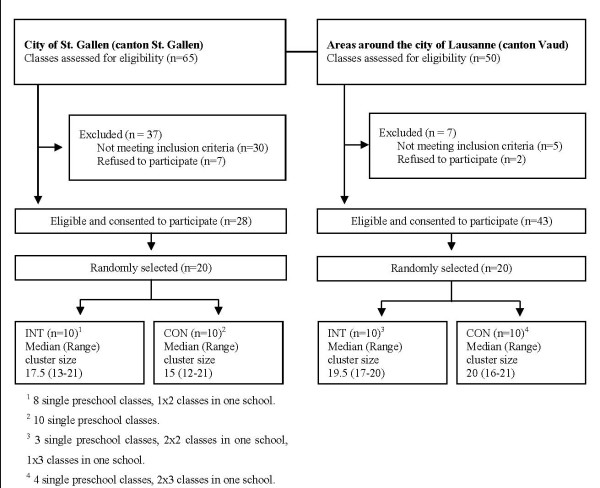
METHODS/DESIGN: This paper describes the rationale, design, curriculum, and evaluation of a multicenter preschool randomized intervention study conducted in areas with a high migrant population in two out of 26 Swiss cantons. Twenty preschool classes in the German (canton St. Gallen) and another 20 in the French (canton Vaud) part of Switzerland were separately selected and randomized to an intervention and a control arm by the use of opaque envelopes. The multidisciplinary lifestyle intervention aimed to increase physical activity and sleep duration, to reinforce healthy nutrition and eating behaviour, and to reduce media use. According to the ecological model, it included children, their parents and the teachers. The regular teachers performed the majority of the intervention and were supported by a local health promoter. The intervention included physical activity lessons, adaptation of the built infrastructure; promotion of regional extracurricular physical activity; playful lessons about nutrition, media use and sleep, funny homework cards and information materials for teachers and parents. It lasted one school year. Baseline and post-intervention evaluations were performed in both arms. Primary outcome measures included BMI and aerobic fitness (20 m shuttle run test). Secondary outcomes included total (skinfolds, bioelectrical impedance) and central (waist circumference) body fat, motor abilities (obstacle course, static and dynamic balance), physical activity and sleep duration (accelerometry and questionnaires), nutritional behaviour and food intake, media use, quality of life and signs of hyperactivity (questionnaires), attention and spatial working memory ability (two validated tests). Researchers were blinded to group allocation.
The purpose of this paper is to outline the design of a school-based multicenter cluster randomized, controlled trial aiming to reduce body mass index and to increase aerobic fitness in preschool children in culturally different parts of Switzerland with a high migrant population.
Trial Registration: (clinicaltrials.gov) NCT00674544.
全球范围内,儿童肥胖和身体活动不足的情况正在急剧增加。社会经济地位较低的儿童和/或有移民背景的儿童尤其面临风险。总体而言,以学校为基础的项目对健康相关结果的整体效果令人失望。年幼儿童和高危群体中存在特别的差距。
方法/设计:本文描述了在瑞士26个州中的两个州的高移民人口地区进行的一项多中心学龄前儿童随机干预研究的基本原理、设计、课程和评估。瑞士德语区(圣加仑州)的20个学前班和法语区(沃州)的另外20个学前班分别通过使用不透明信封被随机分为干预组和对照组。多学科生活方式干预旨在增加身体活动和睡眠时间,强化健康营养和饮食行为,并减少媒体使用。根据生态模型,该干预包括儿童、他们的父母和教师。正规教师进行了大部分干预,并得到当地健康促进者的支持。干预包括体育课、对建筑基础设施的改造;促进区域课外体育活动;关于营养、媒体使用和睡眠的趣味课程、有趣的家庭作业卡片以及给教师和家长的信息材料。该干预持续一学年。对两组均进行了基线和干预后评估。主要结局指标包括BMI和有氧适能(20米往返跑测试)。次要结局包括总体(皮褶厚度、生物电阻抗)和中心(腰围)体脂、运动能力(障碍课程、静态和动态平衡)、身体活动和睡眠时间(加速度计和问卷)、营养行为和食物摄入量、媒体使用、生活质量和多动迹象(问卷)、注意力和空间工作记忆能力(两项经过验证的测试)。研究人员对分组情况不知情。
本文的目的是概述一项以学校为基础的多中心整群随机对照试验的设计,该试验旨在降低瑞士文化多元、移民人口众多地区学龄前儿童的体重指数并提高其有氧适能。
试验注册:(clinicaltrials.gov)NCT00674544。