Levin Michael
Tufts Center for Regenerative and Developmental Biology, Biology Department, Tufts University, Medford, MA 02155, USA.
Semin Cell Dev Biol. 2009 Jul;20(5):543-56. doi: 10.1016/j.semcdb.2009.04.013. Epub 2009 May 3.
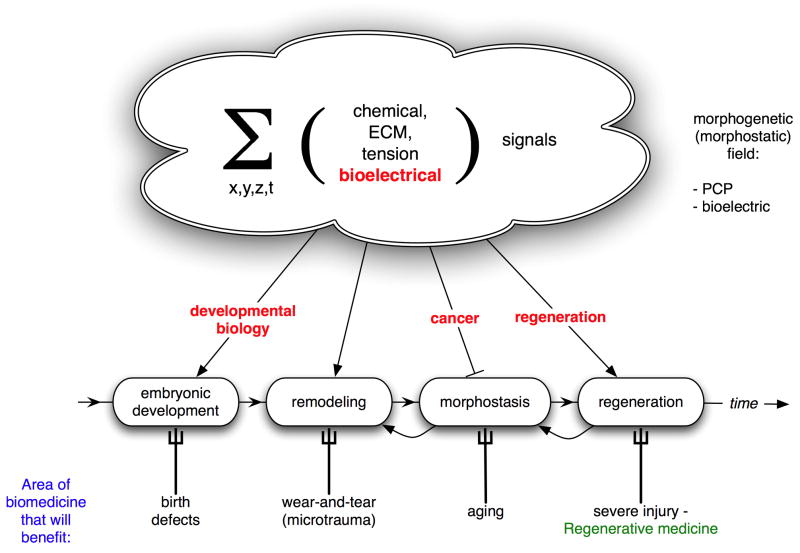
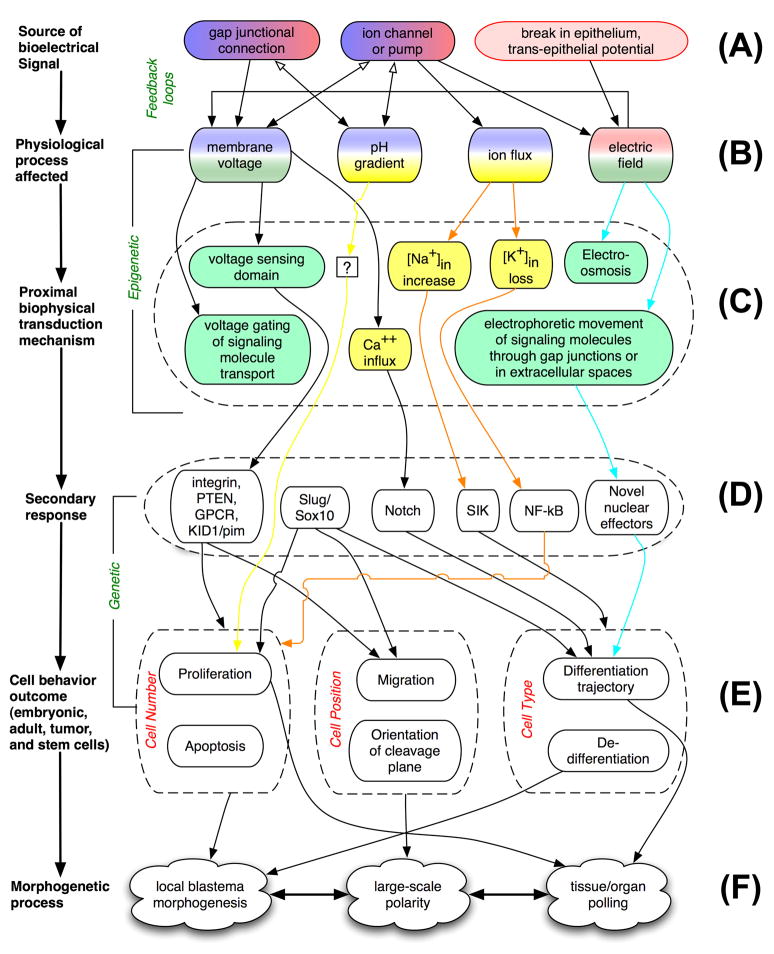
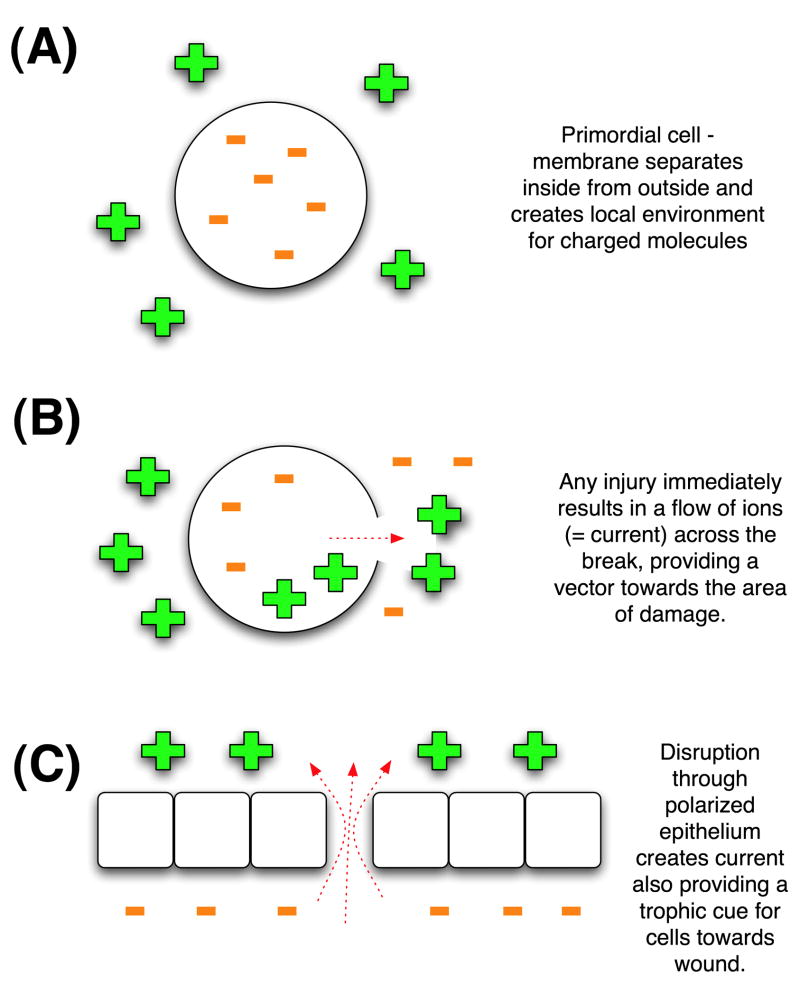
Regenerative biology has focused largely on chemical factors and transcriptional networks. However, endogenous ion flows serve as key epigenetic regulators of cell behavior. Bioelectric signaling involves feedback loops, long-range communication, polarity, and information transfer over multiple size scales. Understanding the roles of endogenous voltage gradients, ion flows, and electric fields will contribute to the basic understanding of numerous morphogenetic processes and the means by which they can robustly restore pattern after perturbation. By learning to modulate the bioelectrical signals that control cell proliferation, migration, and differentiation, we gain a powerful set of new techniques with which to manipulate growth and patterning in biomedical contexts. This chapter reviews the unique properties of bioelectric signaling, surveys molecular strategies and reagents for its investigation, and discusses the opportunities made available for regenerative medicine.
再生生物学主要聚焦于化学因子和转录网络。然而,内源性离子流是细胞行为的关键表观遗传调节因子。生物电信号传导涉及反馈回路、长距离通讯、极性以及多个尺度上的信息传递。理解内源性电压梯度、离子流和电场的作用,将有助于深入了解众多形态发生过程,以及在受到扰动后它们能稳健恢复模式的方式。通过学习调节控制细胞增殖、迁移和分化的生物电信号,我们获得了一套强大的新技术,可用于在生物医学背景下操控生长和模式形成。本章回顾了生物电信号传导的独特特性,概述了用于其研究的分子策略和试剂,并讨论了再生医学所面临的机遇。