Department of Pharmaceutical Chemistry, University of California San Francisco, San Francisco, California, USA.
Nat Biotechnol. 2009 Oct;27(10):946-50. doi: 10.1038/nbt.1568. Epub 2009 Oct 4.
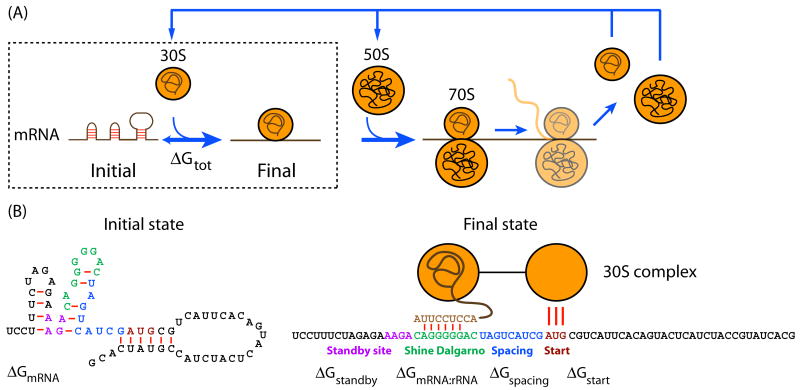
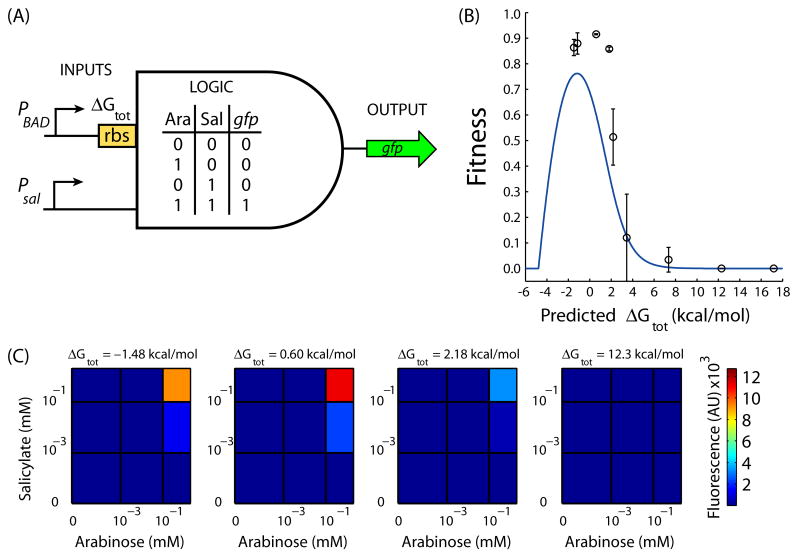
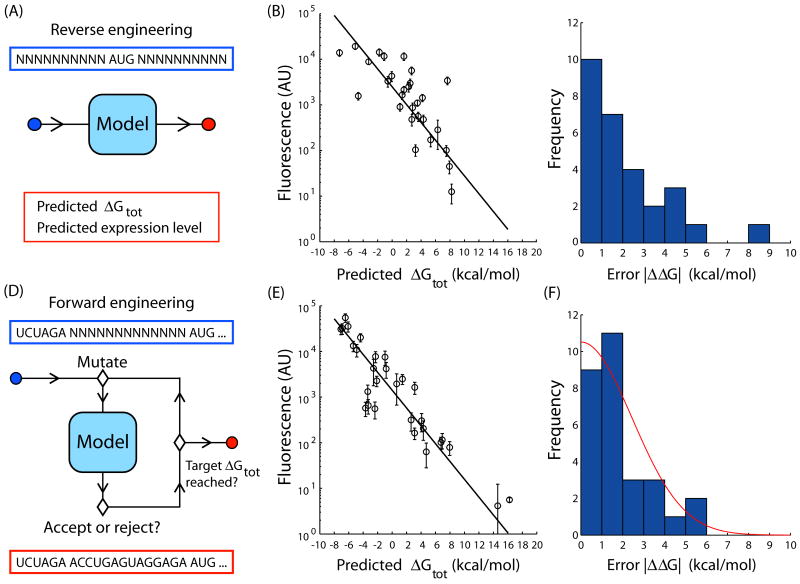
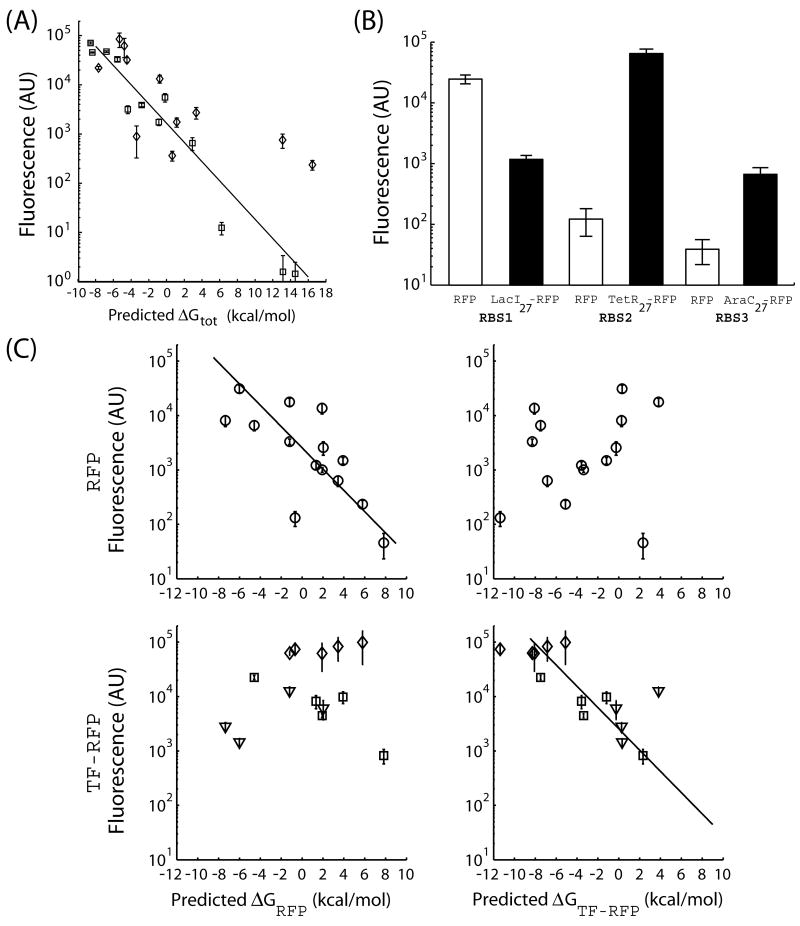
Microbial engineering often requires fine control over protein expression--for example, to connect genetic circuits or control flux through a metabolic pathway. To circumvent the need for trial and error optimization, we developed a predictive method for designing synthetic ribosome binding sites, enabling a rational control over the protein expression level. Experimental validation of >100 predictions in Escherichia coli showed that the method is accurate to within a factor of 2.3 over a range of 100,000-fold. The design method also correctly predicted that reusing identical ribosome binding site sequences in different genetic contexts can result in different protein expression levels. We demonstrate the method's utility by rationally optimizing protein expression to connect a genetic sensor to a synthetic circuit. The proposed forward engineering approach should accelerate the construction and systematic optimization of large genetic systems.
微生物工程通常需要对蛋白质表达进行精细控制——例如,连接遗传回路或控制代谢途径中的通量。为了避免反复试验和优化的需要,我们开发了一种设计合成核糖体结合位点的预测方法,从而能够对蛋白质表达水平进行合理控制。在大肠杆菌中对>100 个预测进行的实验验证表明,该方法在 100,000 倍的范围内,准确性在 2.3 倍以内。该设计方法还正确预测了在不同遗传环境中重复使用相同的核糖体结合位点序列会导致不同的蛋白质表达水平。我们通过合理优化蛋白质表达来连接遗传传感器和合成回路,展示了该方法的实用性。所提出的正向工程方法应该加速大型遗传系统的构建和系统优化。