Department of Preclinical Sciences, The University of West Indies, Faculty of Medical Sciences, Biochemistry Unit, EWMSC, Trinidad and Tobago.
Evid Based Complement Alternat Med. 2011;2011:419612. doi: 10.1093/ecam/nep160. Epub 2011 Mar 17.
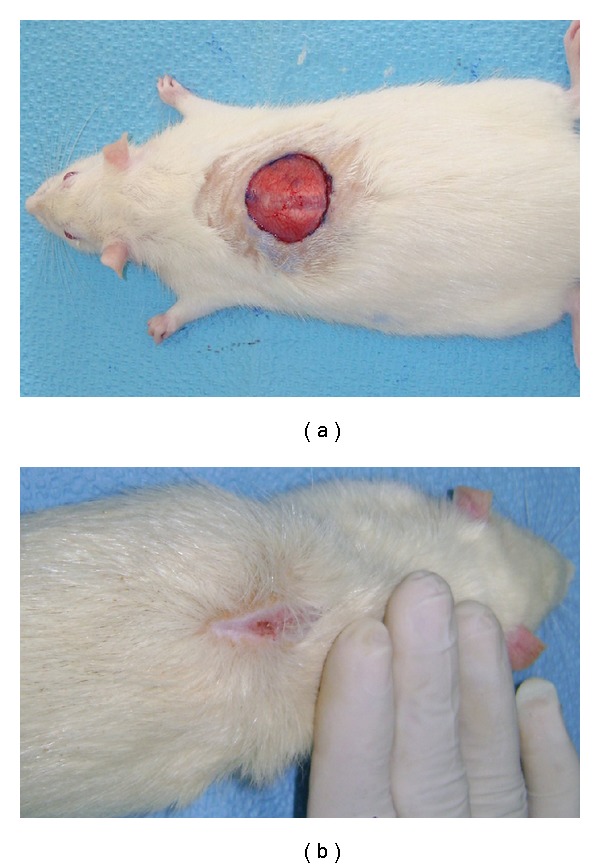
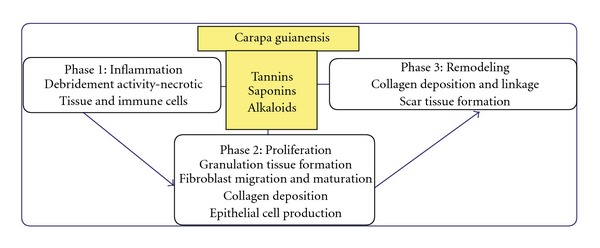
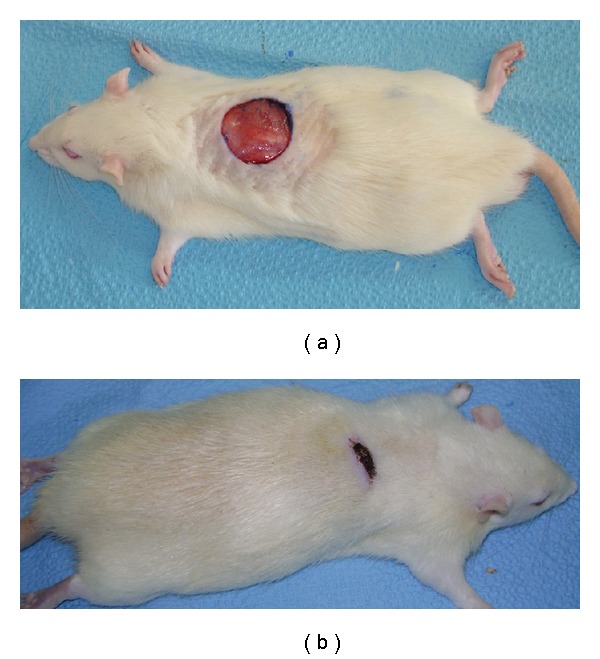
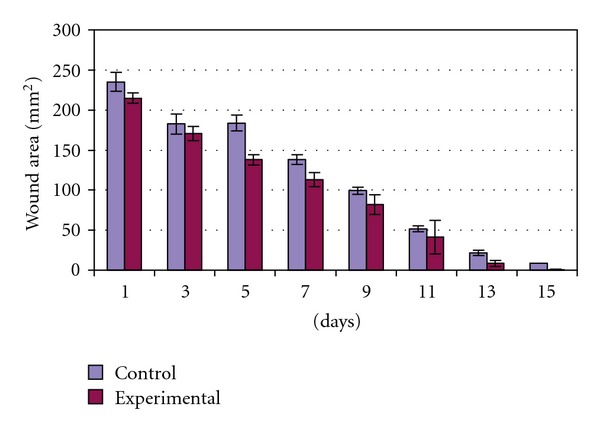
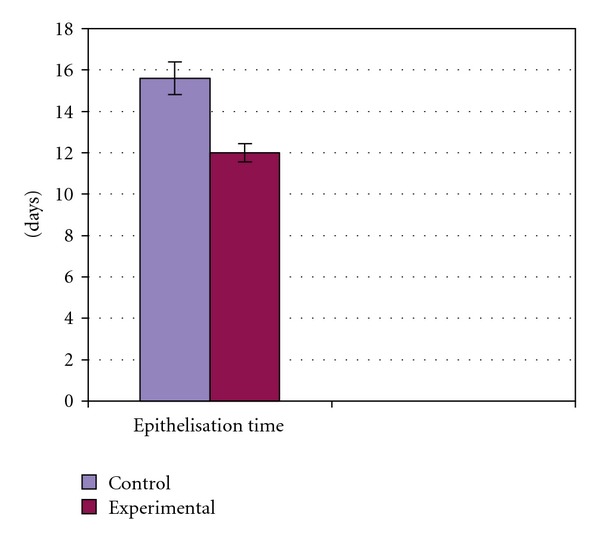
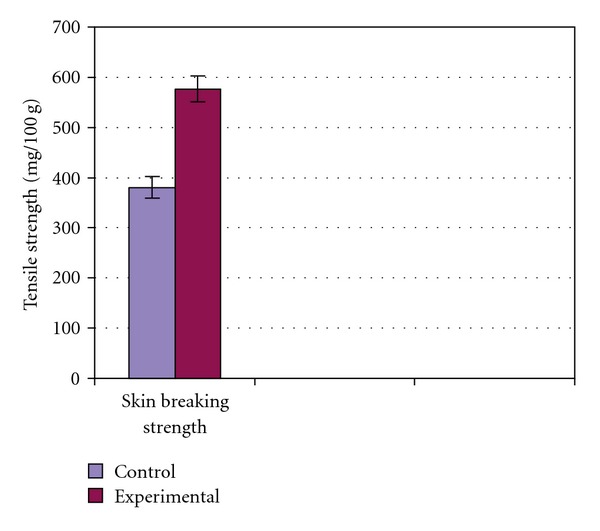
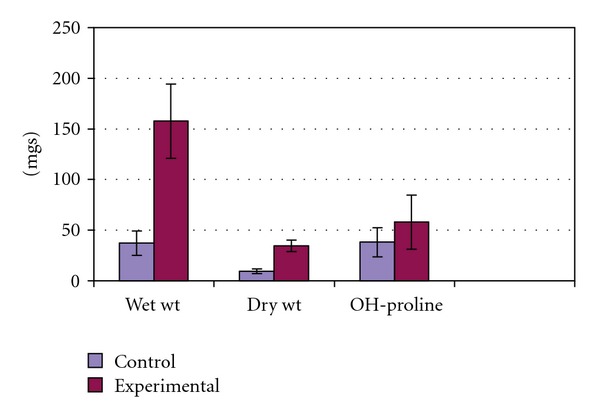
The leaves of Carapa guianensis have been used to treat ulcers, skin parasites, and skin problems. The ethanolic extract of C. guianensis leaf was evaluated for its antibacterial and wound healing activity using excision, incision and dead space wound models in rats. The animals were randomly divided into two groups (n = 6) in all the models. In the excision wound model test group animals were treated topically with the leaf extract (250 mg kg(-1) body weight) whereas, control animals were treated with petroleum jelly. In the incision and dead space wound models, the test group animals were treated with extract (250 mg kg(-1) day(-1)) orally by mixing in drinking water and the control group animals were maintained with plain drinking water. Healing was assessed by the rate of wound contraction, period of epithelialization, skin breaking strength, granulation tissue weight and hydoxyproline content. On Day 15 extract-treated animals exhibited 100% reduction in the wound area when compared to controls (95%) with significant decrease in the epithelialization period. The extract failed to demonstrate antibacterial activity. Skin breaking strength (P < .001), wet (P < .002) and dry (P < .02) granulation tissue and hydroxyproline content (P < .03) were significantly higher in extract treated animals. The increased rate of wound contraction, skin breaking strength and hydroxyproline content supports potential application of C. guianensis in wound healing.
樟科植物的叶子被用于治疗溃疡、皮肤寄生虫和皮肤问题。利用大鼠的切除、切开和死腔伤口模型,评估了樟科植物叶子的乙醇提取物的抗菌和伤口愈合活性。所有模型中的动物均随机分为两组(n = 6)。在切除伤口模型试验组中,动物局部用叶提取物(250 mg kg(-1) 体重)治疗,而对照组动物用凡士林治疗。在切开和死腔伤口模型中,试验组动物通过在饮用水中混合提取物(250 mg kg(-1) 天(-1)) 进行口服治疗,而对照组动物则保持饮用普通水。通过伤口收缩率、上皮化期、皮肤断裂强度、肉芽组织重量和羟脯氨酸含量评估愈合情况。在第 15 天,与对照组(95%)相比,用提取物处理的动物的伤口面积减少了 100%,上皮化期显著缩短。提取物未表现出抗菌活性。皮肤断裂强度(P <.001)、湿重(P <.002)和干重(P <.02)肉芽组织和羟脯氨酸含量(P <.03)在提取物处理的动物中显著更高。伤口收缩率、皮肤断裂强度和羟脯氨酸含量的增加支持樟科植物在伤口愈合中的潜在应用。