School of Chemical and Biomolecular Engineering, Georgia Institute of Technology, Atlanta, GA 30332-0535, USA.
Ann Biomed Eng. 2010 Mar;38(3):841-53. doi: 10.1007/s10439-009-9857-0. Epub 2009 Dec 4.
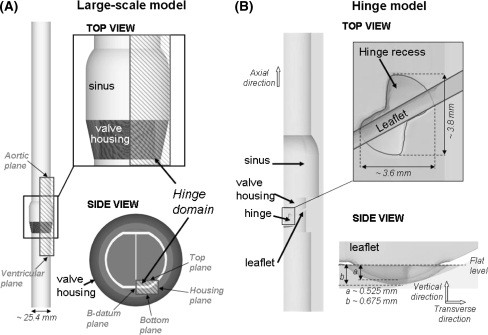
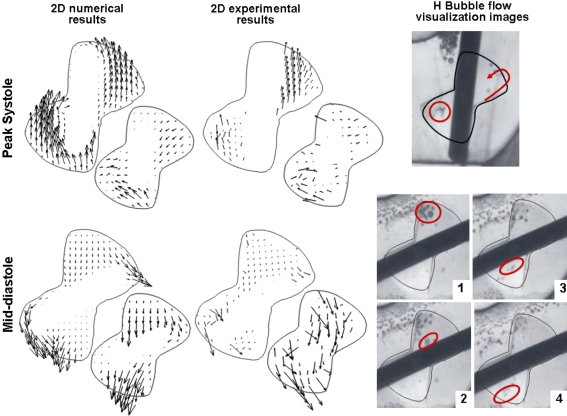
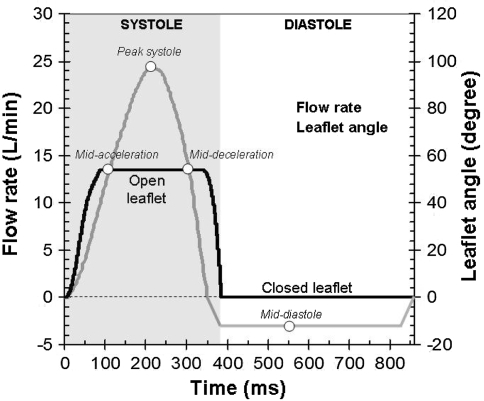
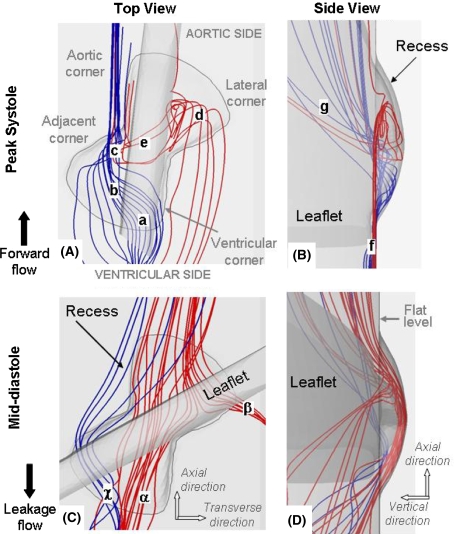
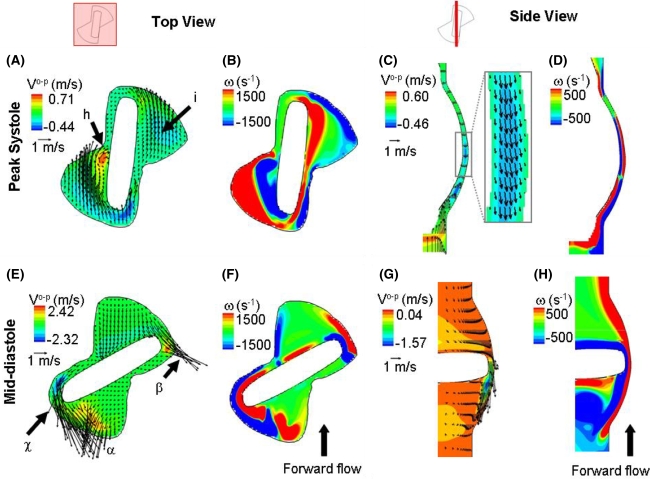
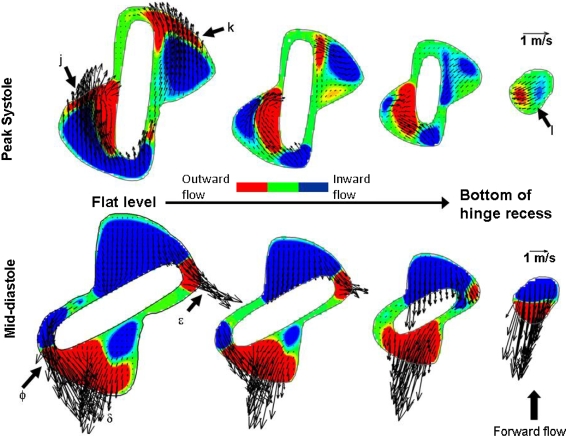
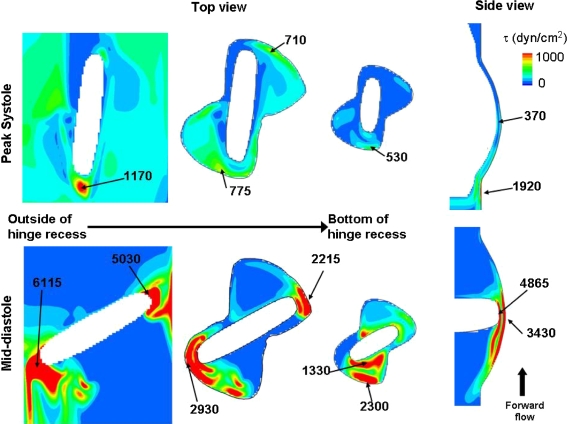
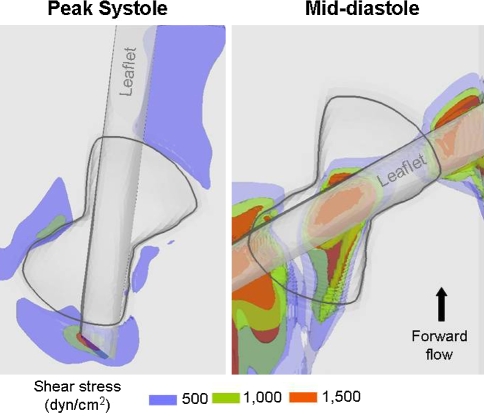
Thromboembolic complications of bileaflet mechanical heart valves (BMHV) are believed to be due to detrimental stresses imposed on blood elements by the hinge flows. Characterization of these flows is thus crucial to identify the underlying causes for complications. In this study, we conduct three-dimensional pulsatile flow simulations through the hinge of a BMHV under aortic conditions. Hinge and leaflet geometries are reconstructed from the Micro-Computed Tomography scans of a BMHV. Simulations are conducted using a Cartesian sharp-interface immersed-boundary methodology combined with a second-order accurate fractional-step method. Physiologic flow boundary conditions and leaflet motion are extracted from the Fluid-Structure Interaction simulations of the bulk of the flow through a BMHV. Calculations reveal the presence, throughout the cardiac cycle, of flow patterns known to be detrimental to blood elements. Flow fields are characterized by: (1) complex systolic flows, with rotating structures and slow reverse flow pattern, and (2) two strong diastolic leakage jets accompanied by fast reverse flow at the hinge bottom. Elevated shear stresses, up to 1920 dyn/cm2 during systole and 6115 dyn/cm2 during diastole, are reported. This study underscores the need to conduct three-dimensional simulations throughout the cardiac cycle to fully characterize the complexity and thromboembolic potential of the hinge flows.
双叶机械心脏瓣膜(BMHV)的血栓栓塞并发症被认为是由于铰链流对血液成分施加的有害应力引起的。因此,对这些流动进行特征描述对于确定并发症的根本原因至关重要。在这项研究中,我们在主动脉条件下通过 BMHV 的铰链进行了三维脉动流模拟。铰链和瓣叶几何形状是从 BMHV 的微计算机断层扫描中重建的。模拟使用笛卡尔网格锐利界面浸入边界方法结合二阶精确分数步方法进行。生理流动边界条件和瓣叶运动是从 BMHV 整体的流固相互作用模拟中提取的。计算结果表明,在整个心动周期内,存在已知对血液成分有害的流动模式。流动场的特征是:(1)复杂的收缩流,具有旋转结构和缓慢的反向流动模式,(2)两个强的舒张渗漏射流伴随着铰链底部的快速反向流动。报告了高达 1920 dyn/cm2 的收缩期和 6115 dyn/cm2 的舒张期的高剪切应力。这项研究强调需要在整个心动周期内进行三维模拟,以充分描述铰链流动的复杂性和血栓栓塞潜力。