Section of epidemiology, National Veterinary Institute, PO Box 750 Sentrum, 0106 Oslo, Norway.
BMC Vet Res. 2010 Feb 7;6:9. doi: 10.1186/1746-6148-6-9.
During the last decade, active surveillance for transmissible spongiform encephalopathies in small ruminants has been intensive in Europe. In many countries this has led to the detection of cases of atypical scrapie which, unlike classical scrapie, might not be contagious. EU legislation requires, that following detection of a scrapie case, control measures including further testing take place in affected flocks, including the culling of genotype susceptible to classical scrapie. This might result in the detection of additional cases. The aim of this study was to investigate the occurrence of additional cases in flocks affected by atypical scrapie using surveillance data collected in Europe in order to ascertain whether atypical scrapie, is contagious.
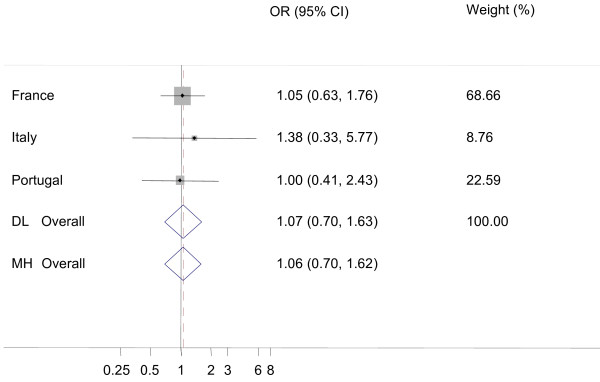
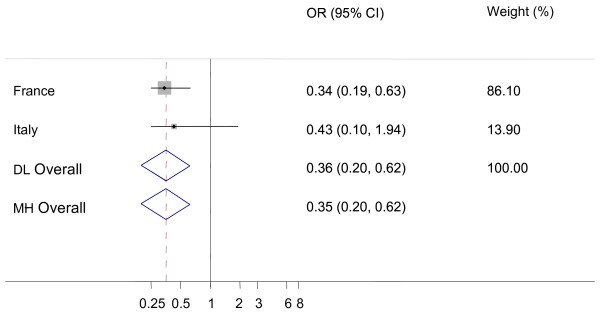
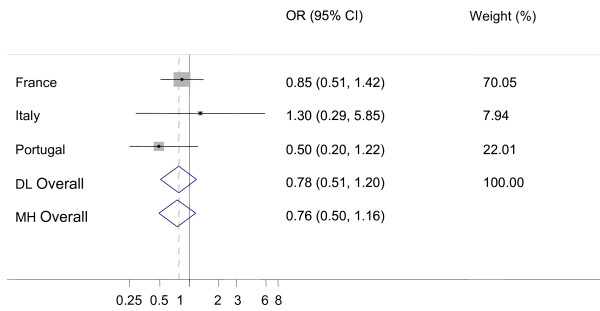
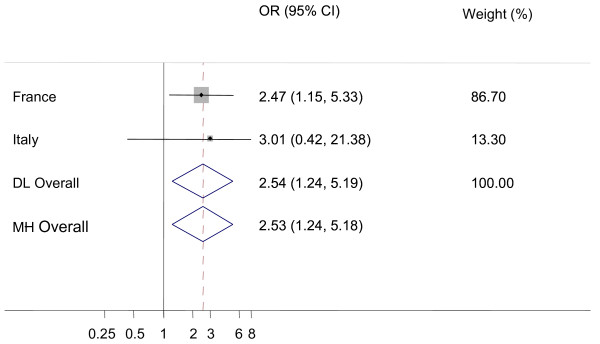
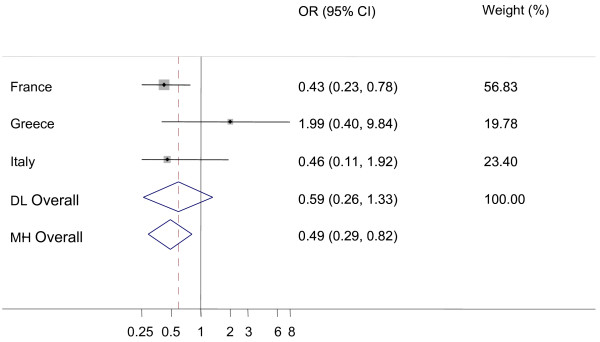
Questionnaires were used to collect, at national level, the results of active surveillance and testing associated with flock outbreaks in 12 European countries. The mean prevalence of atypical scrapie was 5.5 (5.0-6.0) cases per ten thousand in abattoir surveillance and 8.1 (7.3-9.0) cases per ten thousand in fallen stock. By using meta-analysis, on 11 out of the 12 countries, we found that the probability of detecting additional cases of atypical scrapie in positive flocks was similar to the probability observed in animals slaughtered for human consumption (odds ratio, OR = 1.07, CI95%: 0.70-1.63) or among fallen stock (OR = 0.78, CI95%: 0.51-1.2). In contrast, when comparing the two scrapie types, the probability of detecting additional cases in classical scrapie positive flocks was significantly higher than the probability of detecting additional cases in atypical scrapie positive flocks (OR = 32.4, CI95%: 20.7-50.7).
These results suggest that atypical scrapie is not contagious or has a very low transmissibility under natural conditions compared with classical scrapie. Furthermore this study stressed the importance of standardised data collection to make good use of the analyses undertaken by European countries in their efforts to control atypical and classical scrapie.
在过去的十年中,欧洲对小反刍动物传染性海绵状脑病的主动监测力度很大。在许多国家,这导致了非典型痒病病例的检测,与经典痒病不同,这些病例可能不具有传染性。欧盟法规要求,在检测到痒病病例后,受影响的羊群必须采取控制措施,包括进一步检测,包括扑杀对经典痒病敏感的基因型。这可能会导致更多病例的检测。本研究的目的是利用欧洲收集的监测数据,调查受非典型痒病影响的羊群中额外病例的发生情况,以确定非典型痒病是否具有传染性。
使用问卷在 12 个欧洲国家收集了国家一级的主动监测和与羊群暴发相关的检测结果。屠宰场监测中,非典型痒病的平均流行率为每万头 5.5(5.0-6.0)例,屠宰场监测中每万头 8.1(7.3-9.0)例。通过对 12 个国家中的 11 个国家进行荟萃分析,我们发现,在阳性羊群中检测到额外非典型痒病病例的概率与在屠宰供人类食用的动物中观察到的概率相似(比值比,OR = 1.07,95%CI:0.70-1.63)或在死亡动物中(OR = 0.78,95%CI:0.51-1.2)。相比之下,当比较两种痒病类型时,在经典痒病阳性羊群中检测到额外病例的概率明显高于在非典型痒病阳性羊群中检测到额外病例的概率(OR = 32.4,95%CI:20.7-50.7)。
这些结果表明,与经典痒病相比,非典型痒病在自然条件下不具有传染性或传染性很低。此外,本研究强调了标准化数据收集的重要性,以便充分利用欧洲国家在控制非典型和经典痒病方面所做的分析。