Soc Dev. 2009 Aug 1;18(3):511-535. doi: 10.1111/j.1467-9507.2008.00520.x.
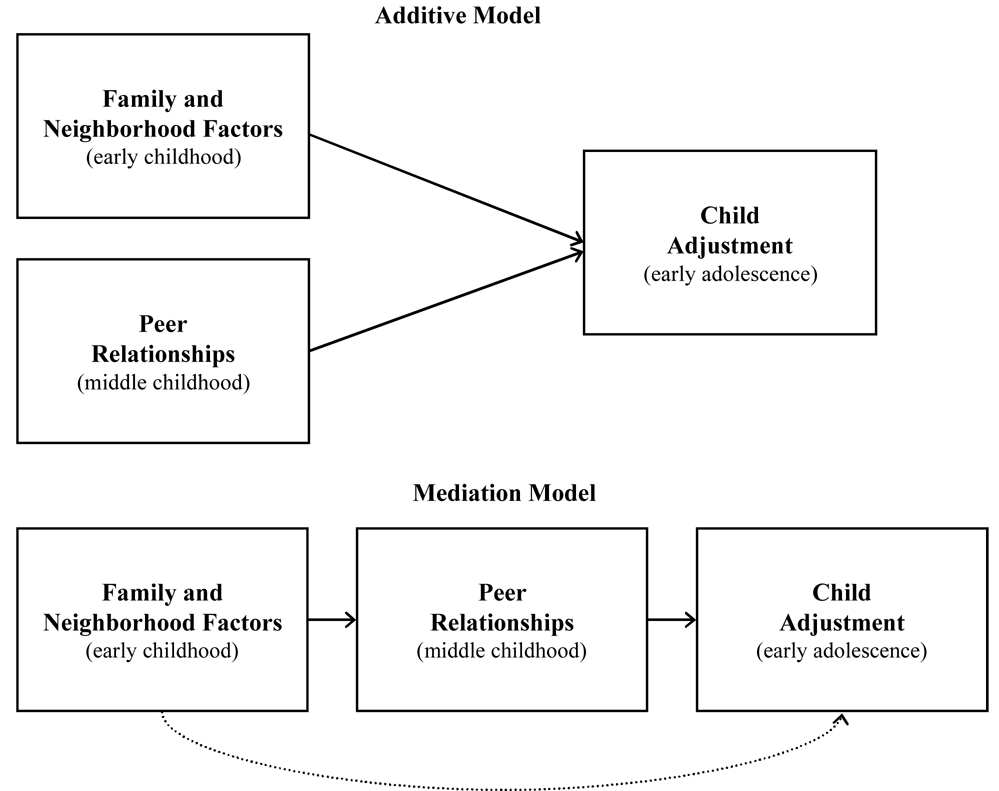
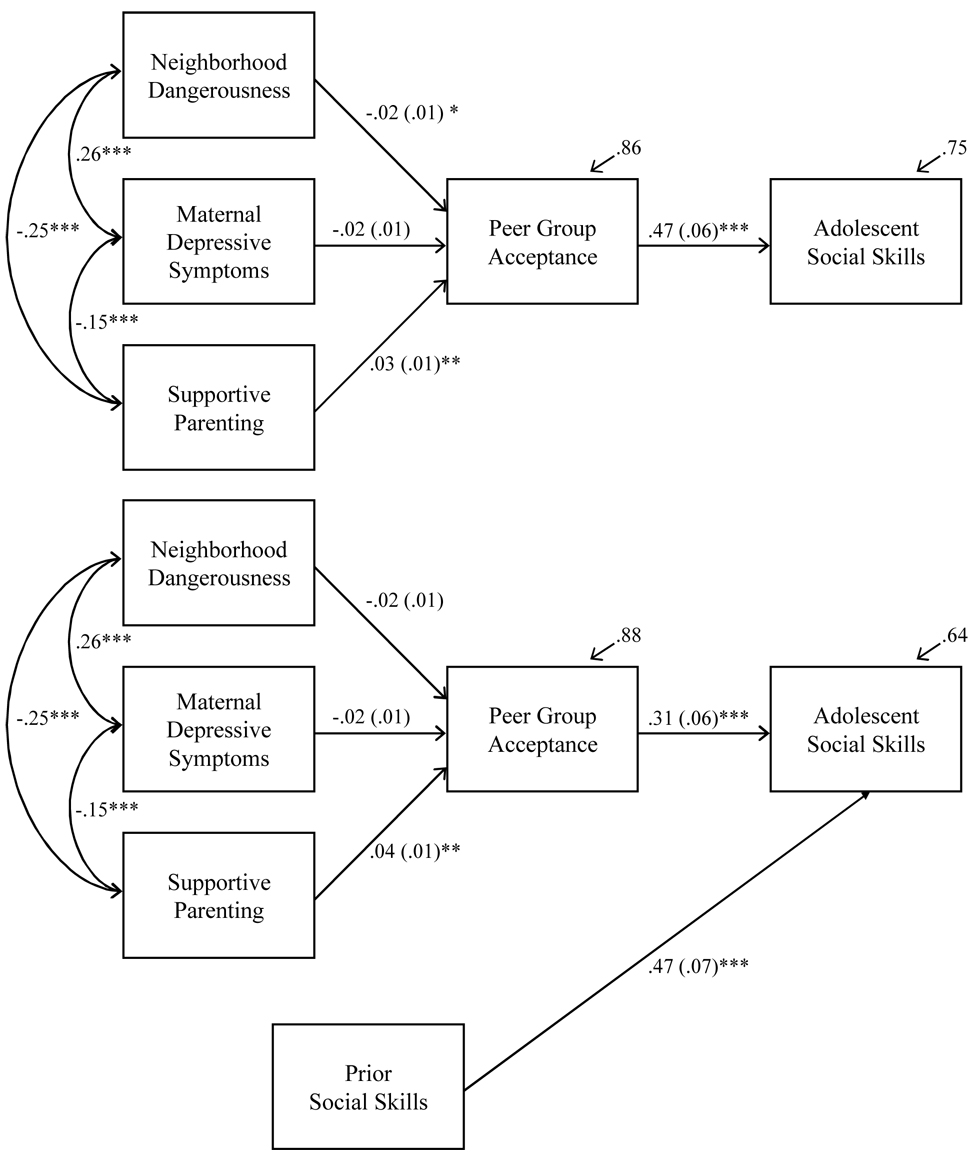
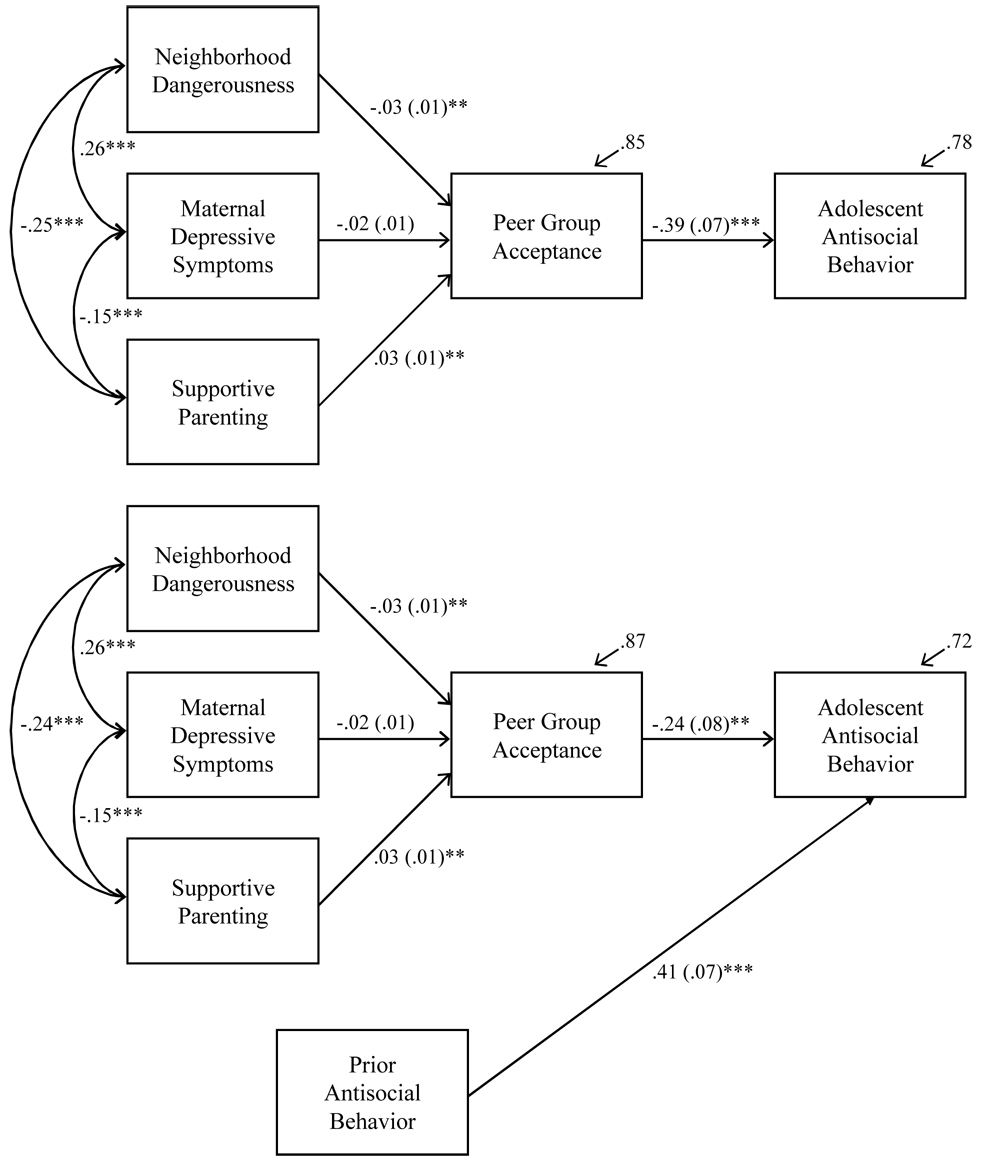
The purpose of this study was to test direct, additive, and mediation models involving family, neighborhood, and peer factors in relation to emerging antisocial behavior and social skills. Neighborhood danger, maternal depressive symptoms, and supportive parenting were assessed in early childhood. Peer group acceptance was measured in middle childhood, and data on antisocial behavior and social skills were collected when boys were 11 and 12 years old. Results were consistent with an additive effects model of child antisocial behavior. In contrast, peer relationships were stronger predictors of social skills than were family factors. Support for mediation was found in models involving neighborhood danger and supportive parenting. However, only peer group acceptance predicted change in antisocial and prosocial behavior. Implications for family and peer relations as socialization contexts are discussed.
本研究的目的是检验涉及家庭、邻里和同伴因素与新出现的反社会行为及社交技能之间关系的直接、累加和中介模型。在儿童早期评估邻里危险、母亲抑郁症状和支持性养育方式。在童年中期测量同伴群体接纳程度,并在男孩11岁和12岁时收集反社会行为及社交技能的数据。结果与儿童反社会行为的累加效应模型一致。相比之下,同伴关系比家庭因素更能预测社交技能。在涉及邻里危险和支持性养育方式的模型中发现了中介效应的证据。然而,只有同伴群体接纳程度能够预测反社会行为和亲社会行为的变化。本文讨论了家庭和同伴关系作为社会化背景的意义。