Institute of Oncology Ljubljana, Zaloska 2, SI-1000 Ljubljana, Slovenia.
Biomed Eng Online. 2010 Feb 23;9:10. doi: 10.1186/1475-925X-9-10.
Electrochemotherapy treats tumors by combining specific chemotherapeutic drugs with an intracellular target and electric pulses, which increases drug uptake into the tumor cells. Electrochemotherapy has been successfully used for treatment of easily accessible superficial tumor nodules. In this paper, we present the first case of deep-seated tumor electrochemotherapy based on numerical treatment planning.
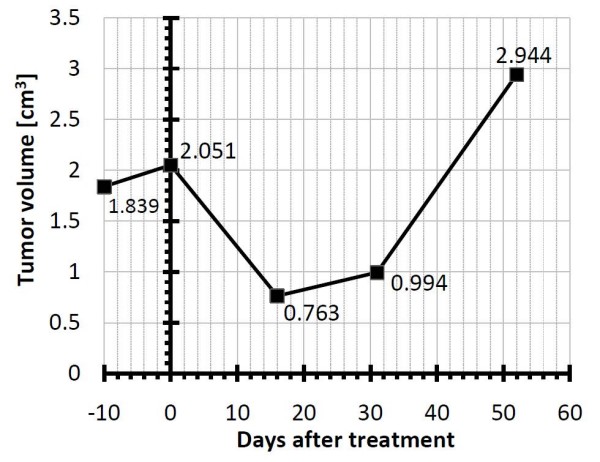
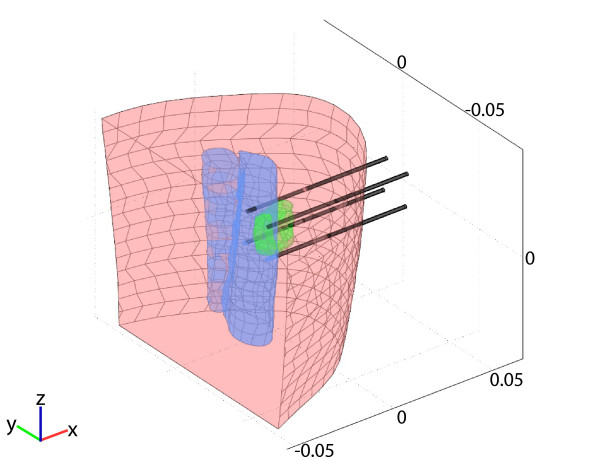
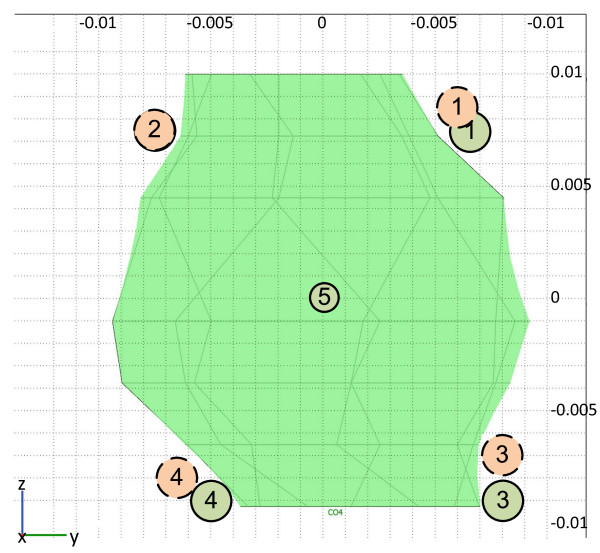
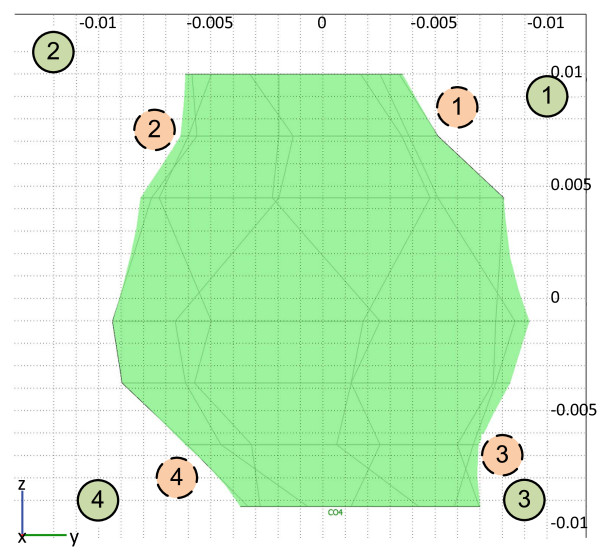
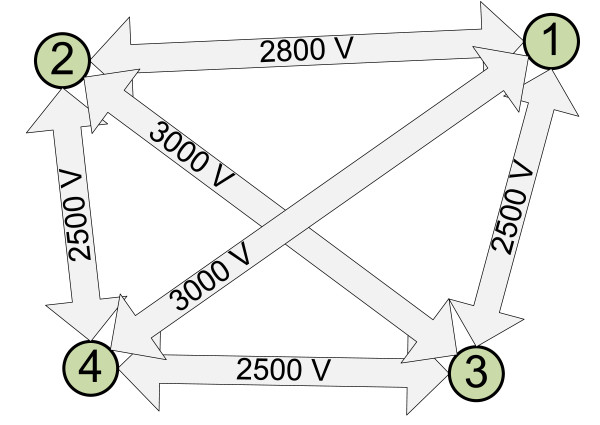
The aim of our study was to treat a melanoma metastasis in the thigh of a patient. Treatment planning for electrode positioning and electrical pulse parameters was performed for two different electrode configurations: one with four and another with five long needle electrodes. During the procedure, the four electrode treatment plan was adopted and the patient was treated accordingly by electrochemotherapy with bleomycin. The response to treatment was clinically and radiographically evaluated. Due to a partial response of the treated tumor, the metastasis was surgically removed after 2 months and pathological analysis was performed.
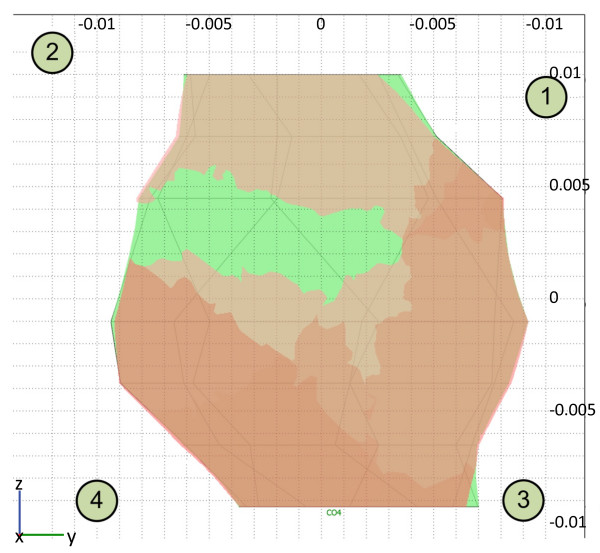
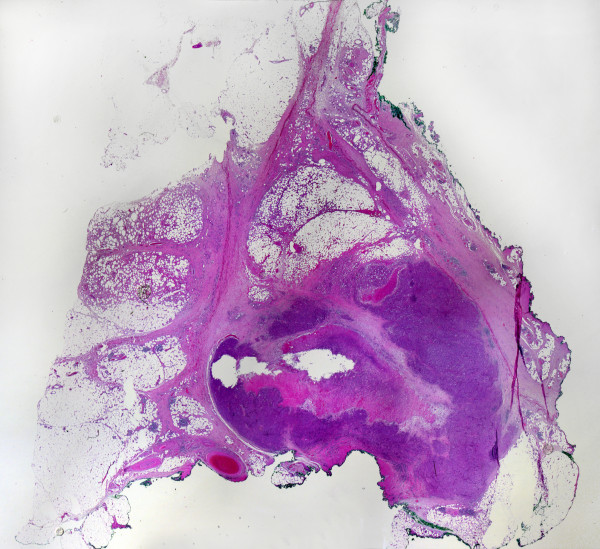
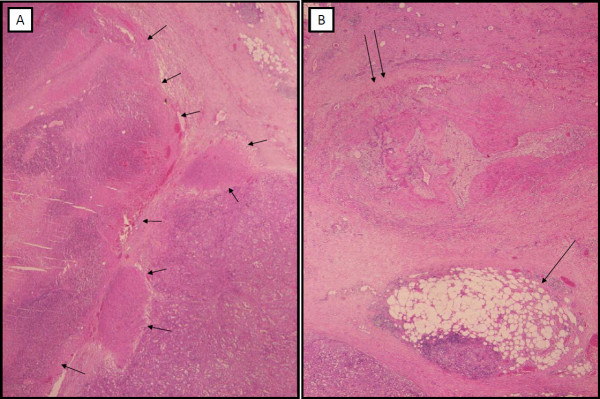
A partial response of the tumor to electrochemotherapy was obtained. Histologically, the metastasis showed partial necrosis due to electrochemotherapy, estimated to represent 40-50% of the tumor. Based on the data obtained, we re-evaluated the electrical treatment parameters in order to correlate the treatment plan with the clinical response. Electrode positions in the numerical model were updated according to the actual positions during treatment. We compared the maximum value of the measured electric current with the current predicted by the model and good agreement was obtained. Finally, tumor coverage with an electric field above the reversible threshold was recalculated and determined to be approximately 94%. Therefore, according to the calculations, a small volume of tumor cells remained viable after electrochemotherapy, and these were sufficient for tumor regrowth.
In this, the first reported clinical case, deep-seated melanoma metastasis in the thigh of the patient was treated by electrochemotherapy, according to a treatment plan obtained by numerical modeling and optimization. Although only a partial response was obtained, the presented work demonstrates that treatment of deep-seated tumor nodules by electrochemotherapy is feasible and sets the ground for numerical treatment planning-based electrochemotherapy.
EudraCT:2008-008290-54.
电化学疗法通过将特定的化疗药物与细胞内靶点和电脉冲结合使用来治疗肿瘤,从而增加药物进入肿瘤细胞的摄取量。电化学疗法已成功用于治疗易于接近的浅表肿瘤结节。在本文中,我们报告了首例基于数值治疗计划的深部肿瘤电化学疗法。
我们的研究目的是治疗患者大腿深部黑色素瘤转移。针对两种不同的电极配置(一种带有四个电极,另一种带有五个长针电极)进行电极定位和电脉冲参数的治疗计划。在手术过程中,采用四电极治疗方案,并用博来霉素对患者进行电化学治疗。通过临床和影像学评估来评估治疗反应。由于治疗肿瘤的部分反应,在 2 个月后对转移灶进行了手术切除,并进行了病理分析。
肿瘤对电化学疗法有部分反应。组织学上,转移灶由于电化学疗法而出现部分坏死,估计占肿瘤的 40-50%。基于所获得的数据,我们重新评估了电治疗参数,以便将治疗计划与临床反应相关联。根据实际治疗期间的电极位置更新数值模型中的电极位置。我们比较了测量电流的最大值与模型预测的电流,结果吻合良好。最后,重新计算了电场覆盖可逆阈值以上的肿瘤体积,并确定约为 94%。因此,根据计算,电化学治疗后仍有一小部分肿瘤细胞存活,足以导致肿瘤复发。
在这个首次报道的临床病例中,根据数值建模和优化获得的治疗计划,对患者大腿深部黑色素瘤转移进行了电化学治疗。尽管仅获得部分反应,但所呈现的工作表明,深部肿瘤结节的电化学治疗是可行的,并为基于数值治疗计划的电化学治疗奠定了基础。
EudraCT:2008-008290-54。