IBM T. J. Watson Research Center, Yorktown Heights, New York, United States of America.
PLoS One. 2010 Feb 23;5(2):e9202. doi: 10.1371/journal.pone.0009202.
Systems biology has embraced computational modeling in response to the quantitative nature and increasing scale of contemporary data sets. The onslaught of data is accelerating as molecular profiling technology evolves. The Dialogue for Reverse Engineering Assessments and Methods (DREAM) is a community effort to catalyze discussion about the design, application, and assessment of systems biology models through annual reverse-engineering challenges.
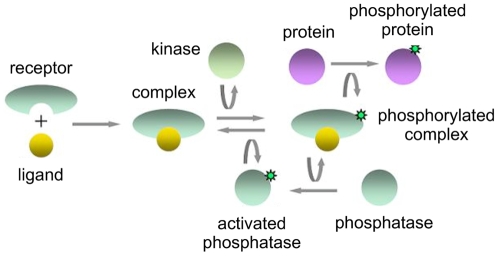
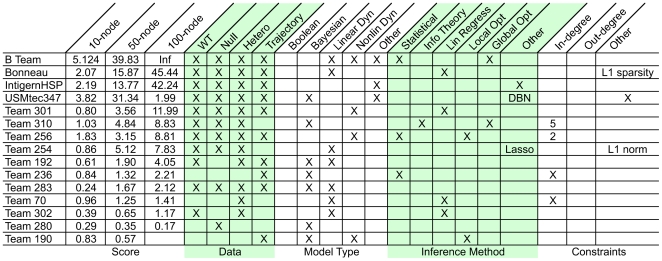
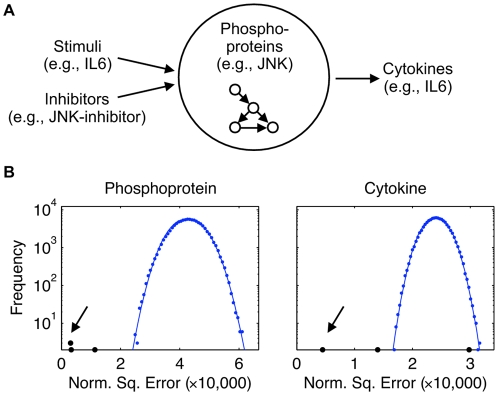
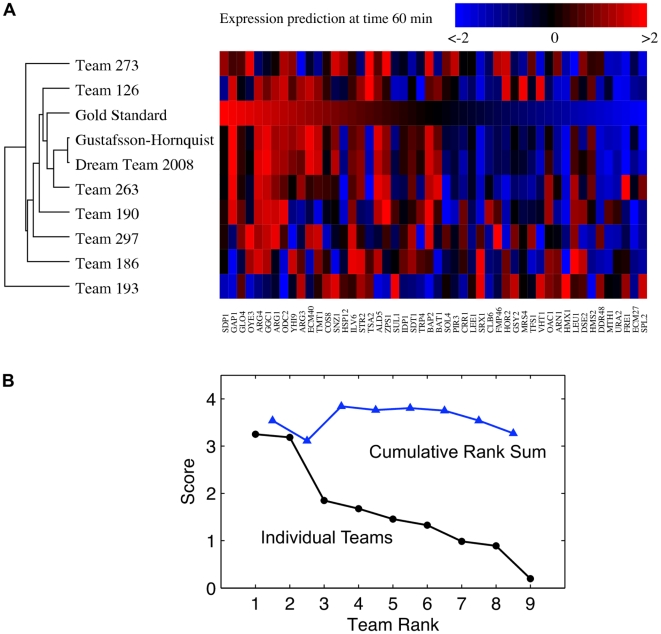
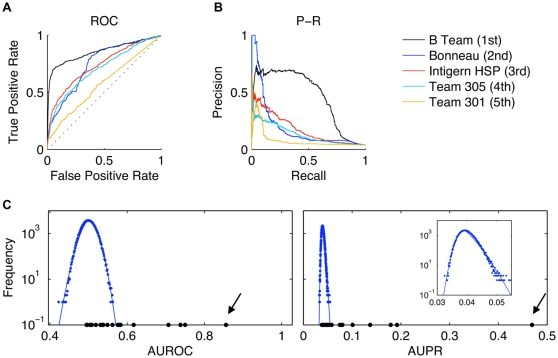
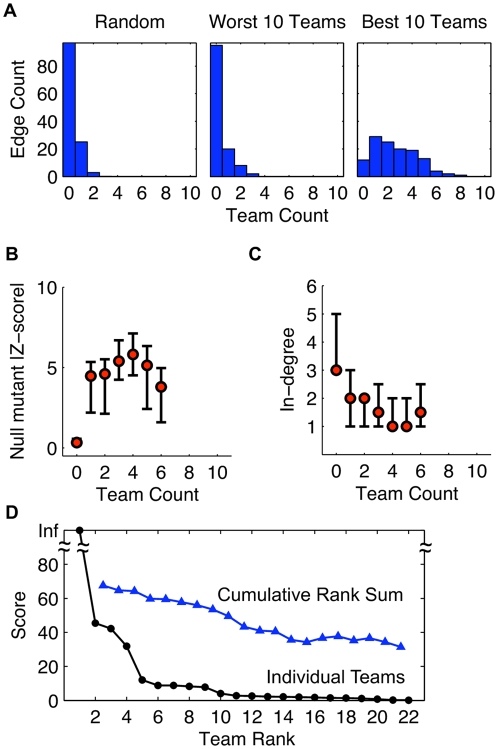
We describe our assessments of the four challenges associated with the third DREAM conference which came to be known as the DREAM3 challenges: signaling cascade identification, signaling response prediction, gene expression prediction, and the DREAM3 in silico network challenge. The challenges, based on anonymized data sets, tested participants in network inference and prediction of measurements. Forty teams submitted 413 predicted networks and measurement test sets. Overall, a handful of best-performer teams were identified, while a majority of teams made predictions that were equivalent to random. Counterintuitively, combining the predictions of multiple teams (including the weaker teams) can in some cases improve predictive power beyond that of any single method.
DREAM provides valuable feedback to practitioners of systems biology modeling. Lessons learned from the predictions of the community provide much-needed context for interpreting claims of efficacy of algorithms described in the scientific literature.
系统生物学为了应对当代数据集的定量性质和不断增加的规模,已经接受了计算建模。随着分子分析技术的发展,数据的涌入正在加速。反向工程评估和方法的对话(DREAM)是一项社区努力,通过年度反向工程挑战来促进关于系统生物学模型的设计、应用和评估的讨论。
我们描述了对与第三次 DREAM 会议相关的四个挑战的评估,这些挑战后来被称为 DREAM3 挑战:信号级联识别、信号响应预测、基因表达预测以及 DREAM3 计算机网络挑战。这些基于匿名数据集的挑战测试了参与者在网络推断和测量预测方面的能力。共有 40 个团队提交了 413 个预测网络和测量测试集。总的来说,确定了少数几个表现最好的团队,而大多数团队的预测结果与随机预测相当。具有反直觉的是,在某些情况下,将多个团队(包括较弱的团队)的预测结合起来,可以提高预测能力,超过任何单一方法的能力。
DREAM 为系统生物学建模的从业者提供了有价值的反馈。从社区的预测中吸取的经验教训为解释科学文献中描述的算法的有效性提供了急需的背景。