Department of Psychology, University of Alabama at Birmingham, Birmingham, Alabama 35294-1170, USA.
Int J Eat Disord. 2011 Apr;44(3):203-11. doi: 10.1002/eat.20808.
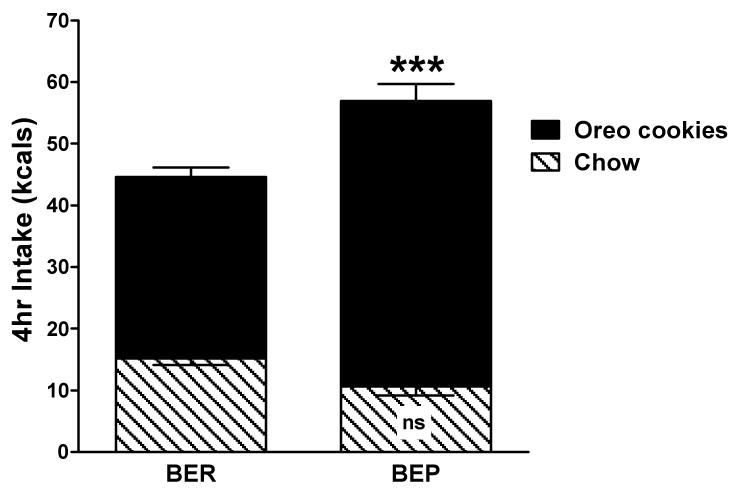
Binge eating involves an abnormal motivation for highly palatable food in that these foods are repeatedly consumed despite their binge-triggering effects and life-affecting consequences associated with binge eating. We determined if rats identified as binge-eating prone (BEP) similarly display abnormal motivation for palatable food.
Food-sated BEP and binge-eating resistant (BER) rats were given voluntary access to palatable food paired with increasing intensity of footshock. Later, they were exposed to a period of cyclic caloric restriction-refeeding.
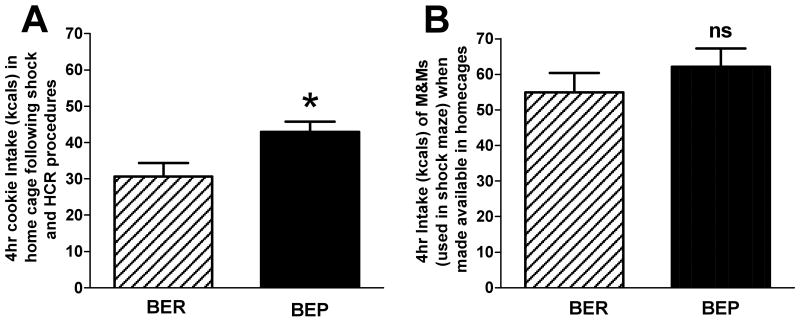
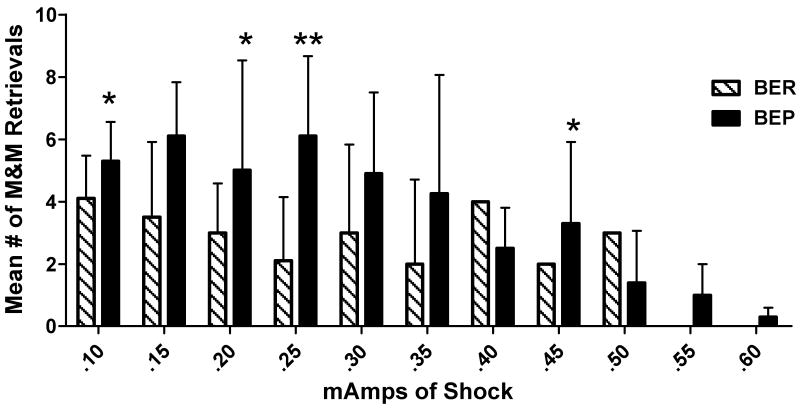
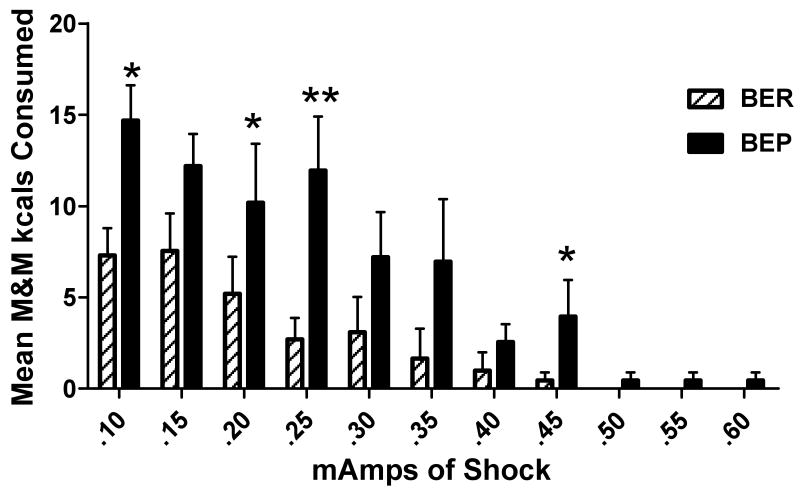
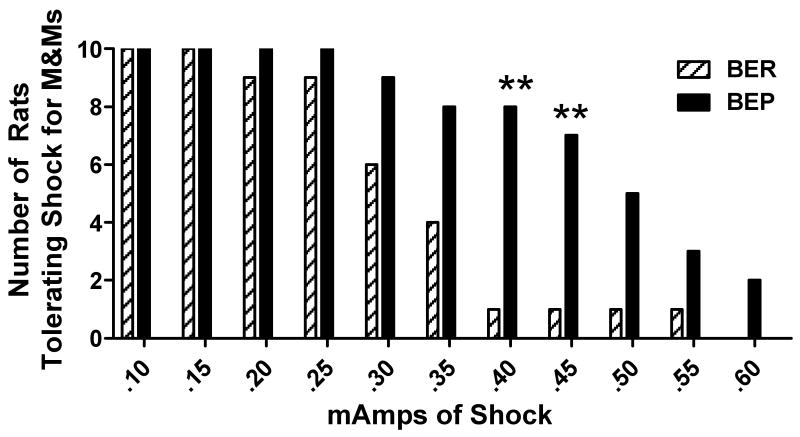
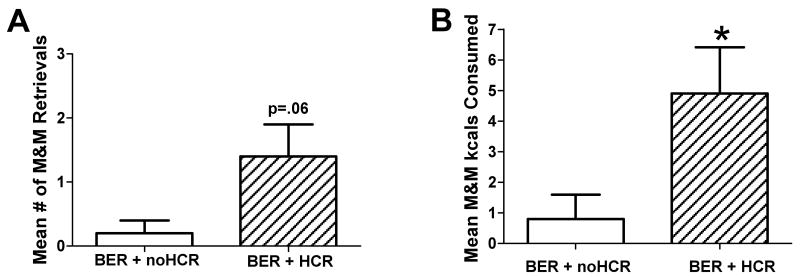
BEPs consumed significantly more and tolerated higher levels of footshock for palatable food than BERs. Cyclic restriction-refeeding increased BERs' tolerance of shock for palatable food.
Previously observed parallels of the rat BEP model to human binge eating can now be extended to include an abnormal motivation for palatable food. This model should prove useful in identifying specific genes that interact with the nutritional environment to mediate binge eating and may point to novel physiological targets to treat compulsive overeating.
暴食涉及对高美味食物的异常动机,因为这些食物尽管具有引发暴食的作用和与暴食相关的影响生活的后果,但仍会被反复食用。我们确定了是否易发生暴食的大鼠(BEP)对美味食物也表现出异常的动机。
给予饱食的 BEP 和不易发生暴食的大鼠(BER)自由选择美味食物的机会,并同时增加脚部电击的强度。之后,它们被暴露在周期性的热量限制-再喂养中。
BEP 比 BER 消耗的食物更多,并且能耐受更高水平的美味食物电击。周期性限制-再喂养增加了 BER 对美味食物电击的耐受能力。
以前观察到的大鼠 BEP 模型与人类暴食之间的相似之处现在可以扩展到包括对美味食物的异常动机。该模型应该有助于确定与营养环境相互作用的特定基因,以介导暴食行为,并可能为治疗强迫性过度进食指明新的生理靶点。