Daniels C A, Kleinerman E S, Snyderman R
Am J Pathol. 1978 Apr;91(1):119-36.
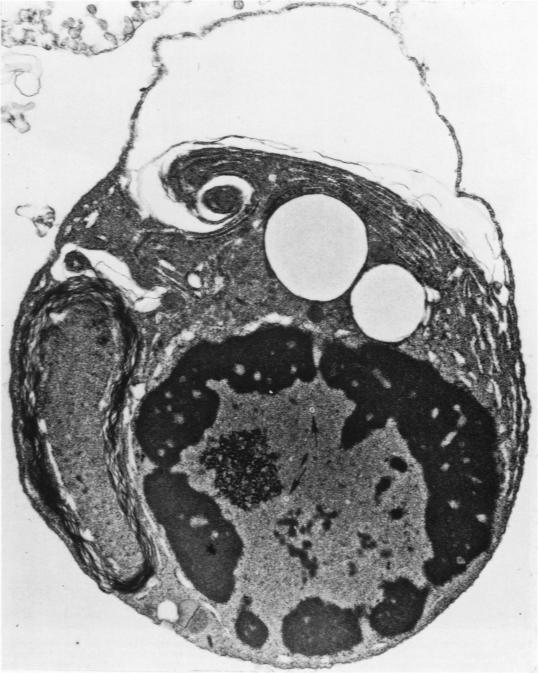
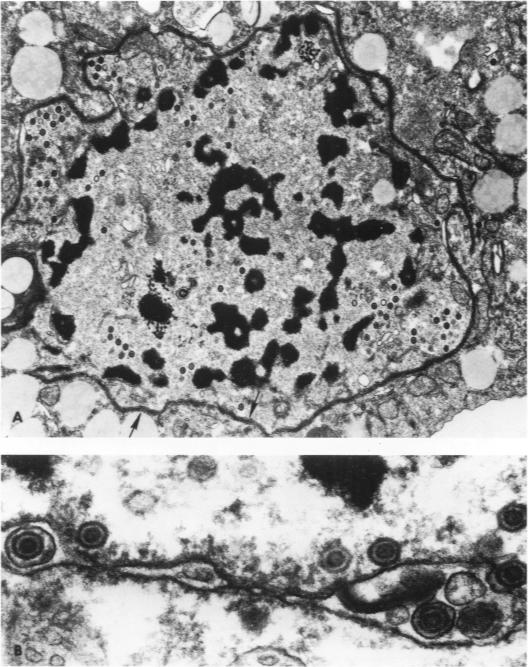
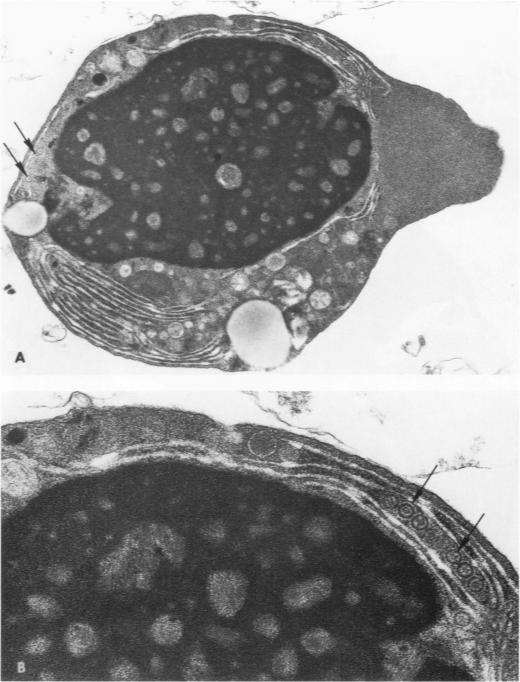
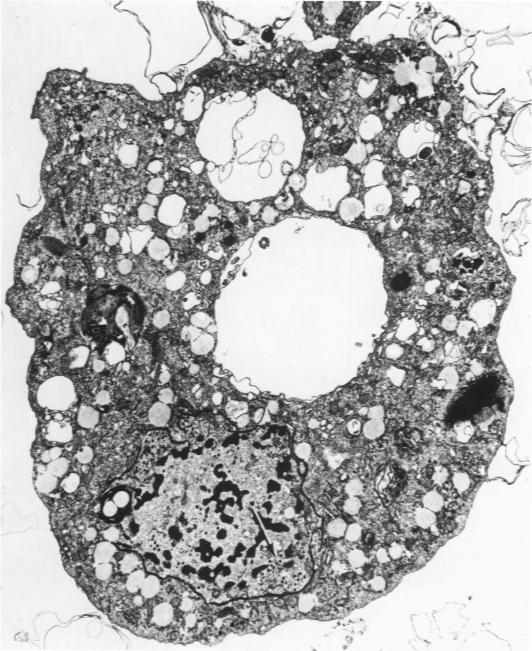
The ability of Type I herpes simplex (HSV) to replicate in normal human monouclear phagocytes was investigated. Mononuclear leukocytes were obtained from the peripheral blood of patients by Ficoll-Hypaque gradient centrifugation, and the monocytes were isolated by allowing the cells to adhere to tissue culture dishes. The monocytes (10(5.0) cells) were infected (10(7.0) PFU HSV) either immediately after isolation or were cultured in vitro for varying numbers of days and were then infected. Inoculation of freshly isolated monocytes resulted primarily in an abortive infection. HSV antigens were produced by the cells, as determined by a indirect fluorescent antibody technique, and empty herpes capsid structures were detected by electron microscopy of the inoculated monocytes; however, no increase in virus titer was noted in the cultures. Inoculation of viable cells that had been maintained for 7 days in culture resulted in a productive infection. An increase in titer was noted 24 hours after inoculation, and normal virus maturation was documented by ultrastructural study of the infected cells. The experiments show that the interaction of HSV with human mononuclear phagocytes is complex, and the data suggest that whether or not the cell replicates infectious virus may depend on the functional activity of the cell.
研究了I型单纯疱疹病毒(HSV)在正常人单核吞噬细胞中复制的能力。通过Ficoll-Hypaque梯度离心从患者外周血中获取单核白细胞,通过使细胞粘附于组织培养皿分离出单核细胞。单核细胞(10⁵.⁰个细胞)在分离后立即感染(10⁷.⁰PFU HSV),或者在体外培养不同天数后再进行感染。对接种新鲜分离的单核细胞主要导致流产感染。通过间接荧光抗体技术测定,细胞产生了HSV抗原,对接种的单核细胞进行电子显微镜检查检测到空的疱疹衣壳结构;然而,培养物中未观察到病毒滴度增加。对接种在培养物中维持7天的活细胞导致了生产性感染。接种后24小时观察到滴度增加,通过对感染细胞的超微结构研究记录了正常的病毒成熟过程。实验表明HSV与人类单核吞噬细胞的相互作用是复杂的,数据表明细胞是否复制感染性病毒可能取决于细胞的功能活性。