University of Iowa, Department of Psychology, Iowa City, IA 52242-1407, USA.
J Exp Psychol Hum Percept Perform. 2010 Dec;36(6):1406-18. doi: 10.1037/a0019257.
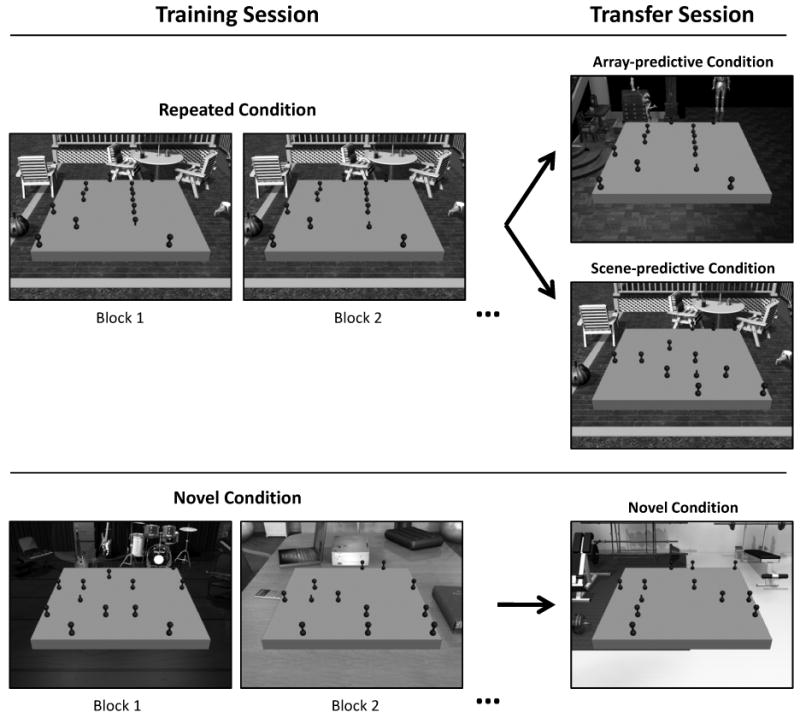
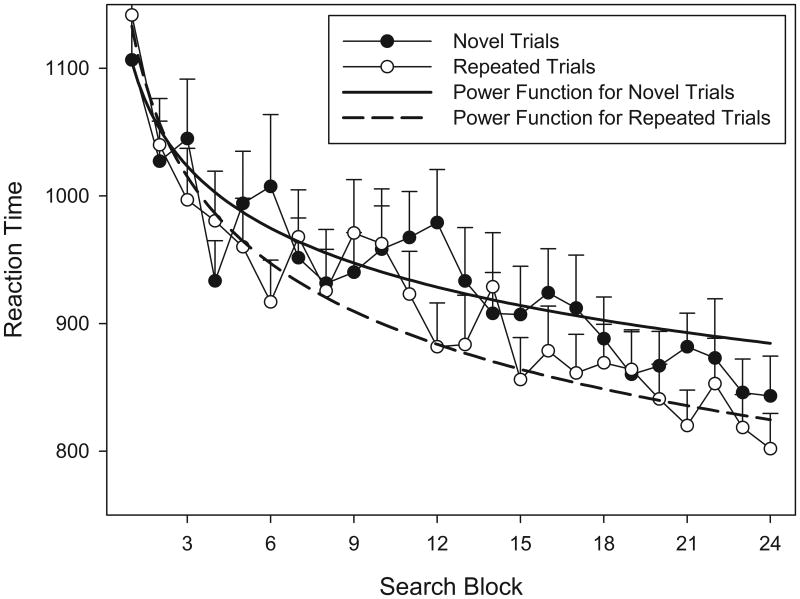
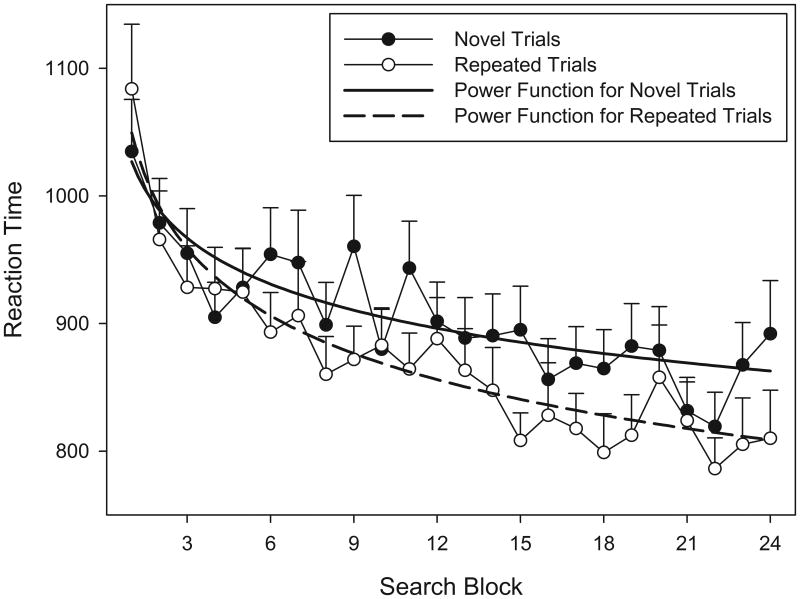
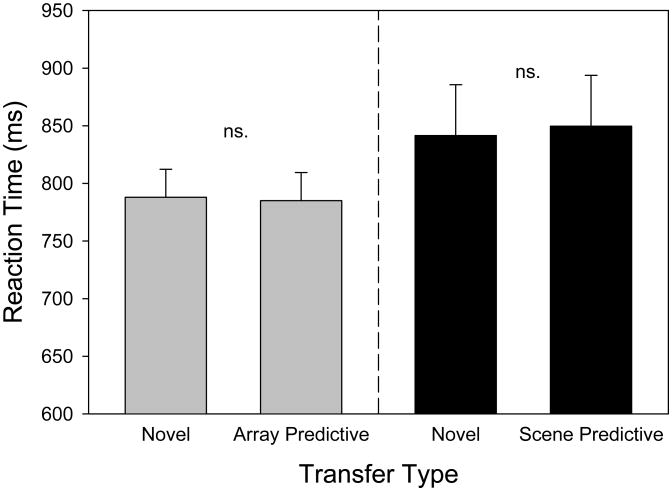
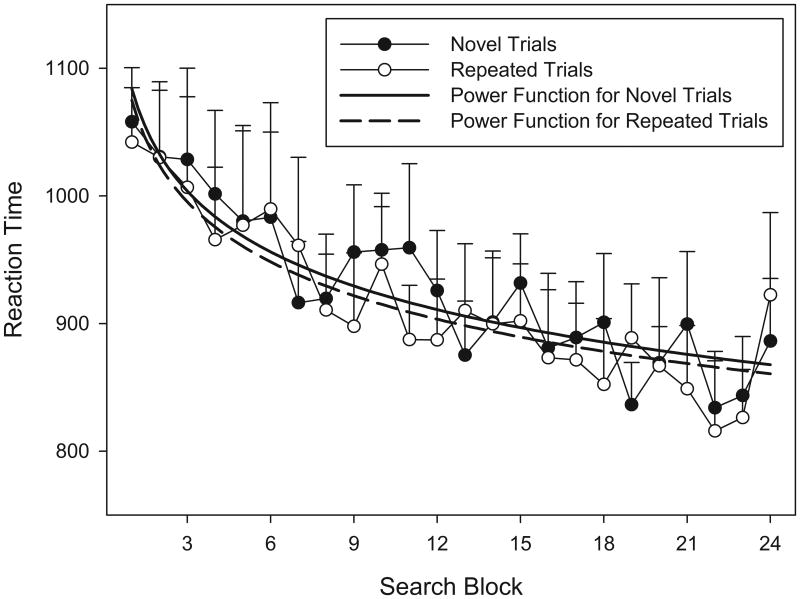
In a contextual cuing paradigm, we examined how memory for the spatial structure of a natural scene guides visual search. Participants searched through arrays of objects that were embedded within depictions of real-world scenes. If a repeated search array was associated with a single scene during study, then array repetition produced significant contextual cuing. However, expression of that learning was dependent on instantiating the original scene in which the learning occurred: Contextual cuing was disrupted when the repeated array was transferred to a different scene. Such scene-specific learning was not absolute, however. Under conditions of high scene variability, repeated search array were learned independently of the scene background. These data suggest that when a consistent environmental structure is available, spatial representations supporting visual search are organized hierarchically, with memory for functional subregions of an environment nested within a representation of the larger scene.
在语境提示范式中,我们研究了对自然场景空间结构的记忆如何引导视觉搜索。参与者在描绘真实世界场景的图像中搜索对象的排列。如果在学习过程中,重复的搜索排列与单个场景相关联,则排列重复会产生显著的语境提示。然而,这种学习的表达取决于实例化学习发生的原始场景:当重复的排列转移到不同的场景时,语境提示会受到干扰。然而,这种特定于场景的学习并不是绝对的。在场景变化较大的情况下,重复的搜索排列会独立于场景背景而被学习。这些数据表明,当存在一致的环境结构时,支持视觉搜索的空间表示是分层组织的,对环境功能子区域的记忆嵌套在较大场景的表示中。