Department of Kinesiology and Nutrition, University of Illinois at Chicago, IL, USA.
Nutr J. 2010 Sep 3;9:35. doi: 10.1186/1475-2891-9-35.
Alternate day modified fasting (ADMF) is an effective strategy for weight loss in obese adults.
The objective of this study was to examine the dietary and physical activity adaptations that occur during short-term ADMF, and to determine how these modulations affect rate of weight loss.
Sixteen obese subjects (12 women/4 men) completed a 10-week trial consisting of 3 phases: 1) 2-week control phase, 2) 4-week ADMF controlled feeding phase, and 3) 4-week ADMF self-selected feeding phase.
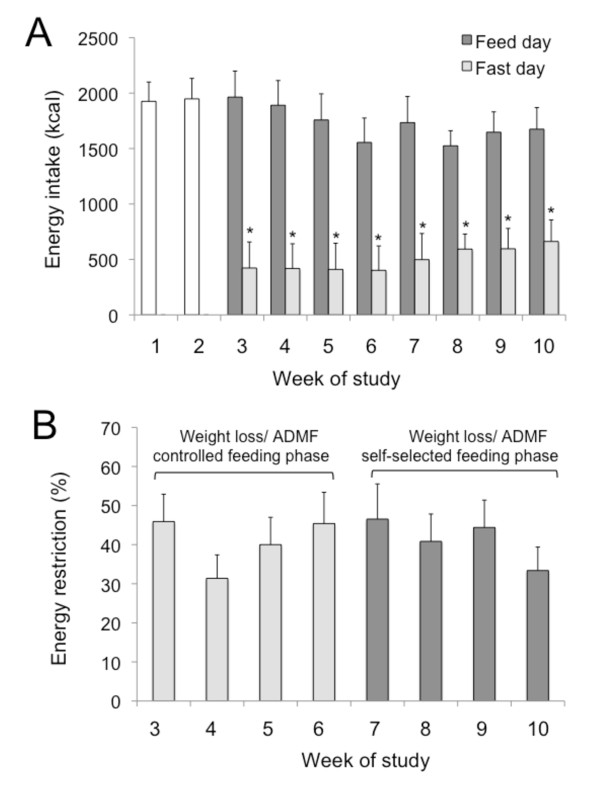
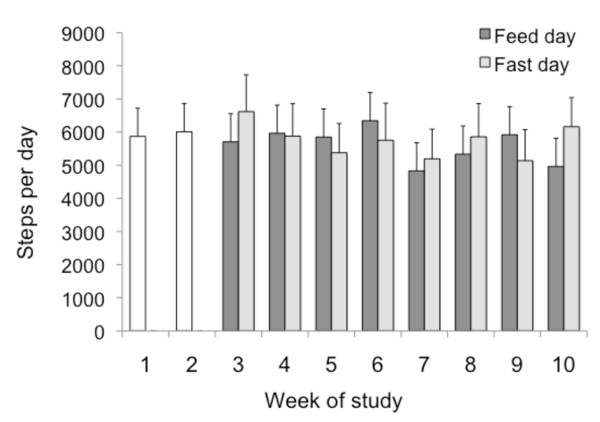
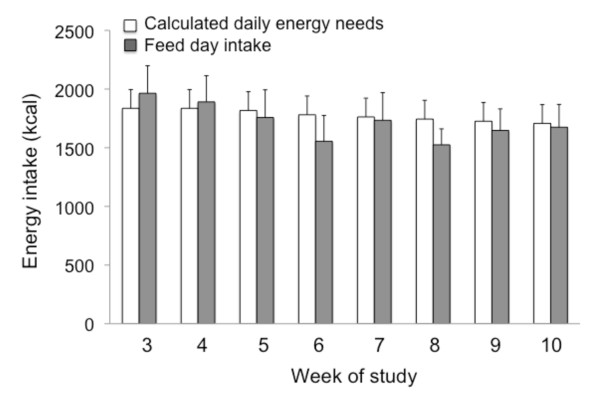
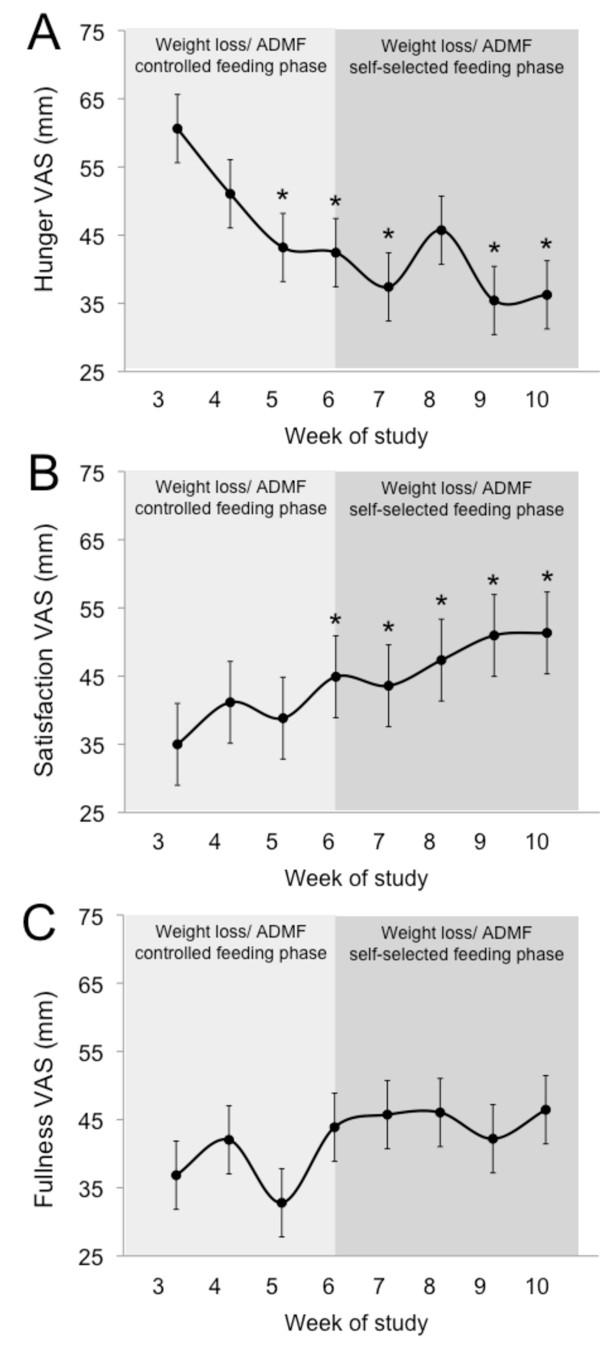
Body weight decreased (P < 0.001) by 5.6 ± 1.0 kg post-treatment. Energy intake on the fast day was 26 ± 3% of baseline needs (501 ± 28 kcal/d). No hyperphagic response occurred on the feed day (95 ± 6% of baseline needs consumed, 1801 ± 226 kcal/d). Daily energy restriction (37 ± 7%) was correlated to rate of weight loss (r = 0.42, P = 0.01). Dietary fat intake decreased (36% to 33% of kcal, P < 0.05) with dietary counseling, and was related to rate of weight loss (r = 0.38, P = 0.03). Hunger on the fast day decreased (P < 0.05) by week 2, and remained low. Habitual physical activity was maintained throughout the study (fast day: 6416 ± 851 steps/d; feed day: 6569 ± 910 steps/d).
These findings indicate that obese subjects quickly adapt to ADMF, and that changes in energy/macronutrient intake, hunger, and maintenance of physical activity play a role in influencing rate of weight loss by ADMF.
隔日限时进食(ADMF)是肥胖成年人减肥的有效策略。
本研究旨在探讨短期 ADMF 期间发生的饮食和身体活动适应性变化,并确定这些调节如何影响减肥速度。
16 名肥胖受试者(12 名女性/4 名男性)完成了一项为期 10 周的试验,分为 3 个阶段:1)2 周对照期,2)4 周 ADMF 控制喂养期,和 3)4 周 ADMF 自我选择喂养期。
治疗后体重下降(P < 0.001)5.6 ± 1.0 kg。禁食日的能量摄入为基础需求的 26 ± 3%(501 ± 28 kcal/d)。在进食日没有出现过度进食反应(消耗基础需求的 95 ± 6%,1801 ± 226 kcal/d)。每日能量限制(37 ± 7%)与减肥速度相关(r = 0.42,P = 0.01)。通过饮食咨询,膳食脂肪摄入量减少(从 36%降至 33%的卡路里,P < 0.05),与减肥速度相关(r = 0.38,P = 0.03)。禁食日的饥饿感(P < 0.05)在第 2 周下降,并保持在较低水平。习惯性身体活动在整个研究期间保持不变(禁食日:6416 ± 851 步/d;进食日:6569 ± 910 步/d)。
这些发现表明肥胖受试者能迅速适应 ADMF,能量/宏量营养素摄入、饥饿感和身体活动的维持变化在 ADMF 减肥速度中起着重要作用。