Department of Chemistry, Emory University, 1515 Dickey Drive, Atlanta, GA 30322, USA.
Curr Opin Biotechnol. 2010 Dec;21(6):734-43. doi: 10.1016/j.copbio.2010.08.011. Epub 2010 Sep 24.
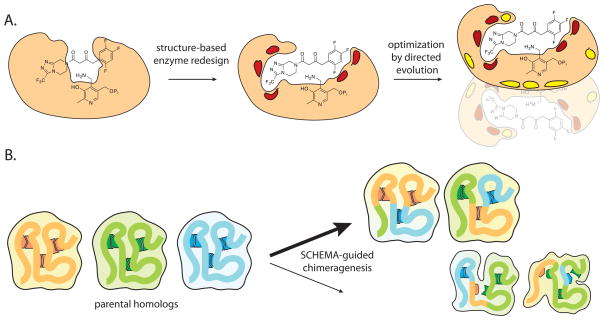
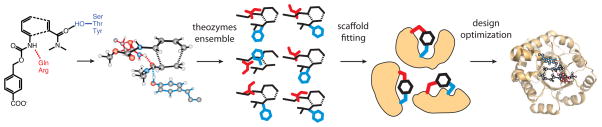
Over the past two decades, directed evolution has transformed the field of protein engineering. The advances in understanding protein structure and function, in no insignificant part a result of directed evolution studies, are increasingly empowering scientists and engineers to device more effective methods for manipulating and tailoring biocatalysts. Abandoning large combinatorial libraries, the focus has shifted to small, functionally rich libraries and rational design. A critical component to the success of these emerging engineering strategies are computational tools for the evaluation of protein sequence datasets and the analysis of conformational variations of amino acids in proteins. Highlighting the opportunities and limitations of such approaches, this review focuses on recent engineering and design examples that require screening or selection of small libraries.
在过去的二十年中,定向进化已经改变了蛋白质工程领域。对蛋白质结构和功能的理解的进步,在很大程度上是定向进化研究的结果,这使得科学家和工程师能够设计出更有效的方法来操纵和定制生物催化剂。人们不再依赖于大型组合文库,而是将重点转移到小的、功能丰富的文库和合理设计上。这些新兴工程策略成功的一个关键组成部分是用于评估蛋白质序列数据集和分析蛋白质中氨基酸构象变化的计算工具。本文重点介绍了需要筛选或选择小文库的最新工程和设计实例,强调了这些方法的机遇和局限性。