Drozdovitch Vladimir, Schonfeld Sara, Akimzhanov Kuat, Aldyngurov Daulet, Land Charles E, Luckyanov Nickolas, Mabuchi Kiyohiko, Potischman Nancy, Schwerin Michael J, Semenova Yulia, Tokaeva Alma, Zhumadilov Zhaxybay, Bouville André, Simon Steven L
Division of Cancer Epidemiology and Genetics, National Cancer Institute, NIH, DHHS, 6120 Executive Boulevard, Bethesda, MD, 20892-7238, USA.
Radiat Environ Biophys. 2011 Mar;50(1):91-103. doi: 10.1007/s00411-010-0334-9. Epub 2010 Oct 12.
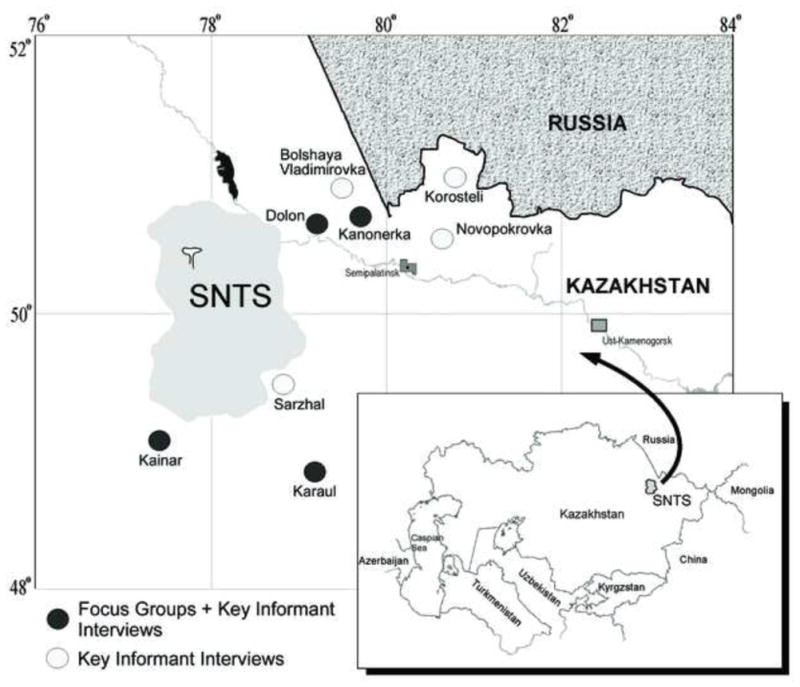
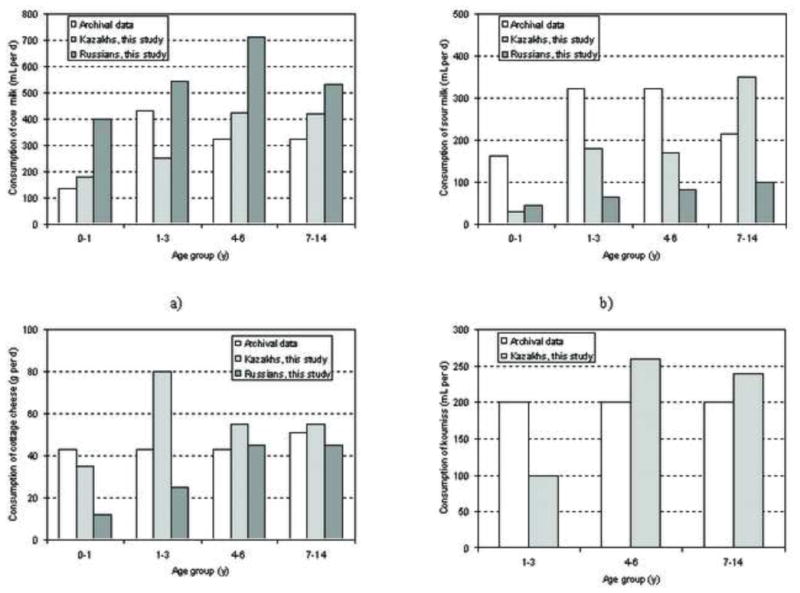
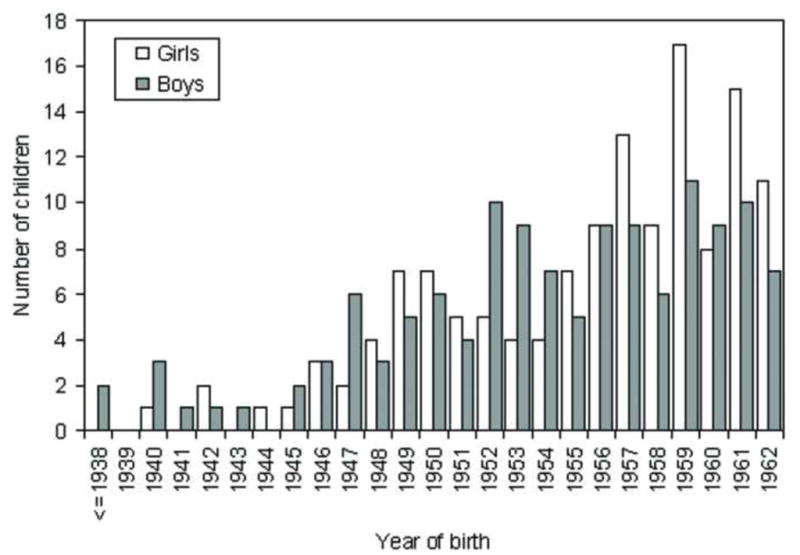
The relationship between radiation exposure from nuclear weapons testing fallout and thyroid disease in a group of 2,994 subjects has been the subject of study by the US National Cancer Institute. In that study, radiation doses to the thyroid were estimated for residents of villages in Kazakhstan possibly exposed to deposition of radioactive fallout from nuclear testing conducted by the Soviet Union at the Semipalatinsk Nuclear Test Site in Kazakhstan between 1949 and 1962. The study subjects included individuals of both Kazakh and Russian origin who were exposed during childhood and adolescence. An initial dose reconstruction used for the risk analysis of Land et al. (Radiat Res 169:373-383, 2008) was based on individual information collected from basic questionnaires administered to the study population in 1998. However, because data on several key questions for accurately estimating doses were not obtained from the 1998 questionnaires, it was decided to conduct a second data collection campaign in 2007. Due to the many years elapsed since exposure, a well-developed strategy was necessary to encourage accurate memory recall. In our recent study, a focus group interview data collection methodology was used to collect historical behavioral and food consumption data. The data collection in 2007 involved interviews conducted within four-eight-person focus groups (three groups of women and one group of men) in each of four exposed villages where thyroid disease screening was conducted in 1998. Population-based data on relevant childhood behaviors including time spent in- and outdoors and consumption rates of milk and other dairy products were collected from women's groups. The data were collected for five age groups of children and adolescents ranging from less than 1 year of age to 21 years of age. Dairy products considered included fresh milk and other products from cows, goats, mares, and sheep. Men's focus group interviews pertained to construction materials of houses and schools, and animal grazing patterns and feeding practices. The response data collected are useful for improving estimates of thyroid radiation dose estimates for the subjects of an ongoing epidemiological study.
美国国家癌症研究所对2994名受试者进行了一项研究,探究核武器试验沉降物的辐射暴露与甲状腺疾病之间的关系。在该研究中,对哈萨克斯坦一些村庄的居民甲状腺所受辐射剂量进行了估算,这些居民可能在1949年至1962年期间受到了苏联在哈萨克斯坦塞米巴拉金斯克核试验场进行核试验产生的放射性沉降物的影响。研究对象包括哈萨克族和俄罗斯族的个体,他们在儿童期和青春期受到了辐射暴露。Land等人(《辐射研究》169:373 - 383, 2008年)用于风险分析的初始剂量重建是基于1998年向研究人群发放的基本调查问卷所收集的个人信息。然而,由于1998年的调查问卷未获取到准确估算剂量所需的几个关键问题的数据,因此决定在2007年开展第二次数据收集活动。由于自辐射暴露以来已经过去了许多年,所以需要一个完善的策略来鼓励准确的记忆回忆。在我们最近的研究中,采用了焦点小组访谈数据收集方法来收集历史行为和食物消费数据。2007年的数据收集工作包括在1998年进行过甲状腺疾病筛查的四个受辐射村庄中,对每组四人至八人的焦点小组(三组女性和一组男性)进行访谈。从女性小组收集了基于人群的相关儿童期行为数据,包括在室内外的时间以及牛奶和其他乳制品的消费率。收集了五个年龄组儿童和青少年的数据,年龄范围从不到1岁到21岁。所考虑的乳制品包括新鲜牛奶以及来自奶牛、山羊、母马和绵羊的其他产品。男性焦点小组访谈涉及房屋和学校的建筑材料,以及动物放牧模式和饲养方式。所收集的应答数据有助于改进正在进行的流行病学研究中受试者的甲状腺辐射剂量估算。