Department of Medicine, Division of Nephrology, Indiana University School of Medicine, Indianapolis, Indiana 46202–5188, USA.
J Microsc. 2011 May;242(2):148-56. doi: 10.1111/j.1365-2818.2010.03448.x. Epub 2010 Sep 27.
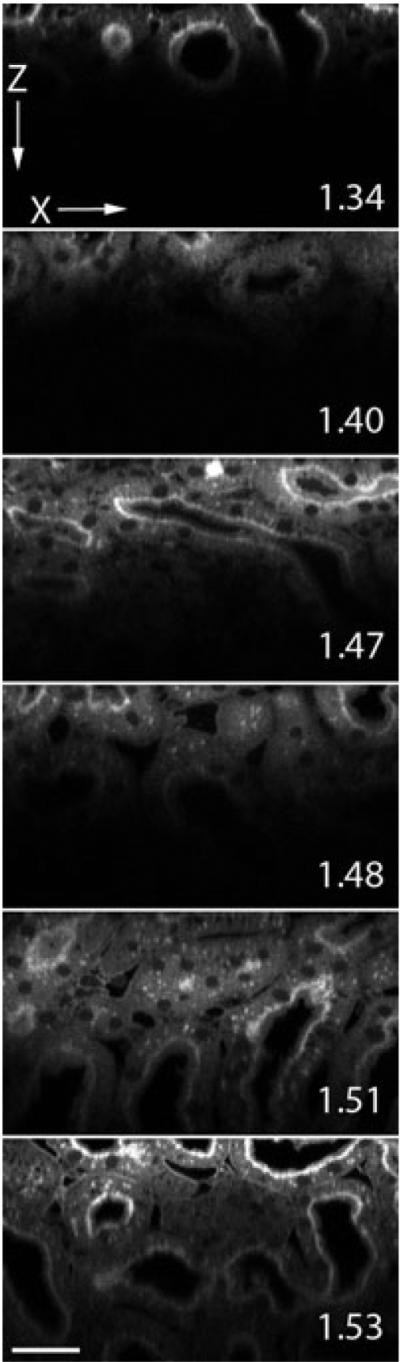
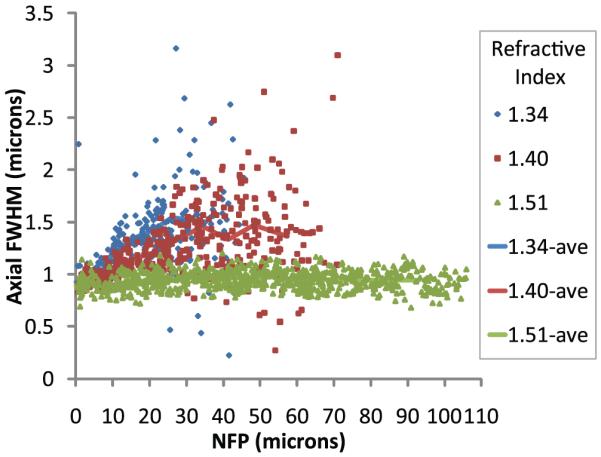
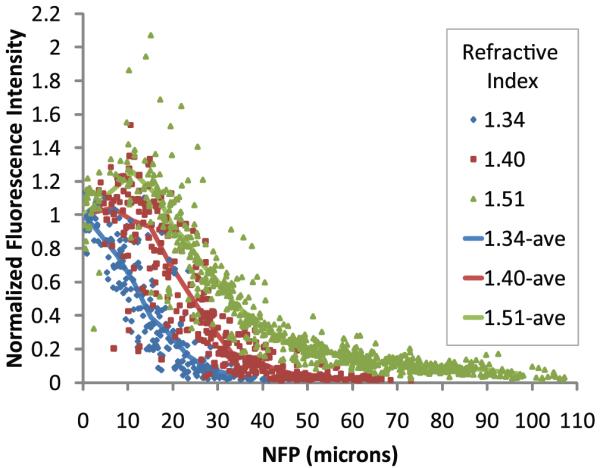
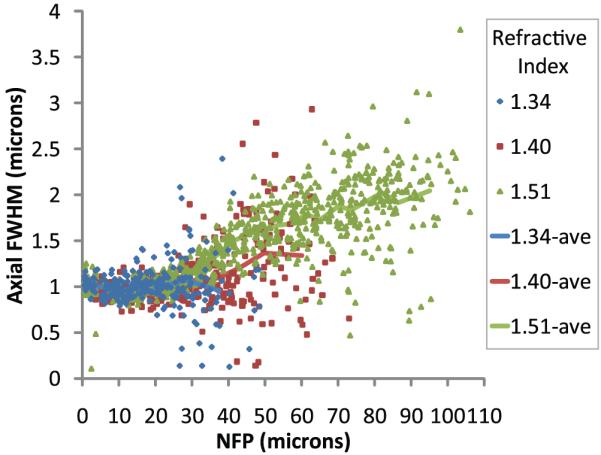
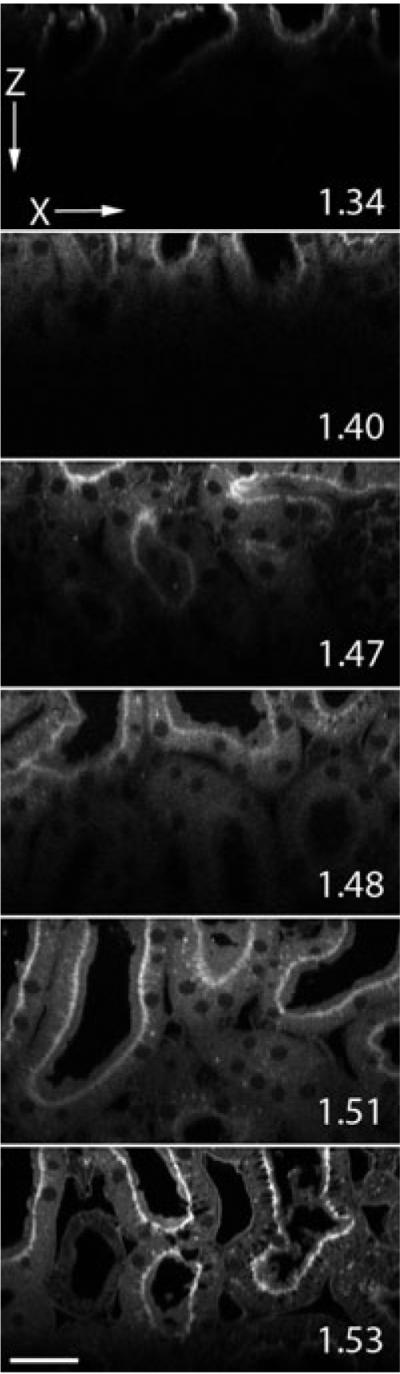
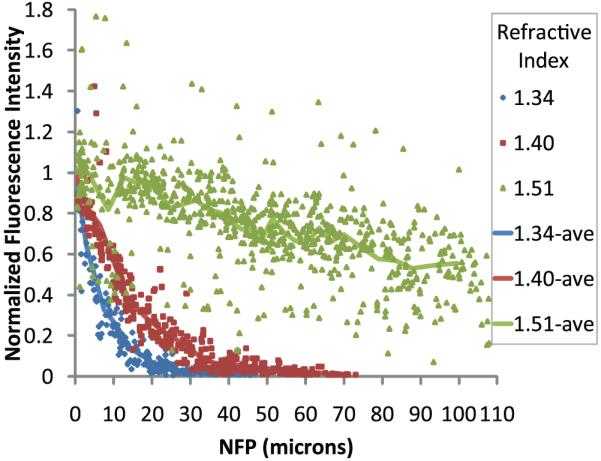
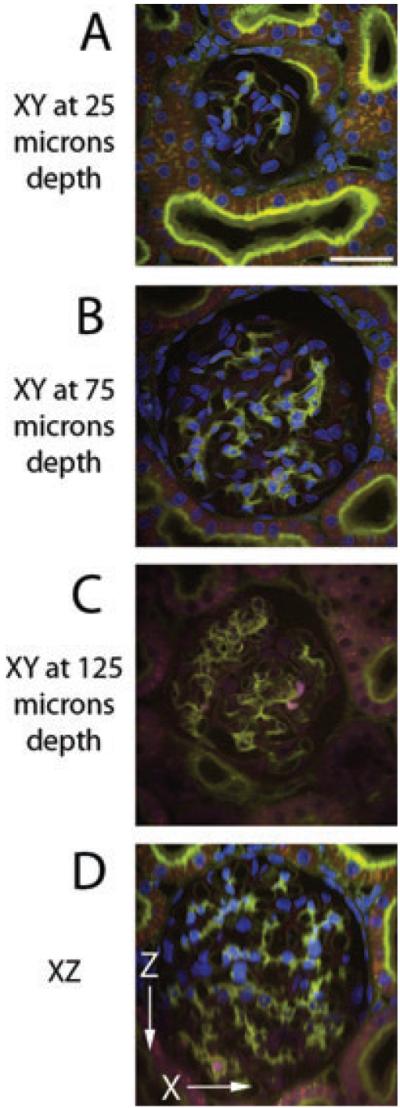
Although multiphoton fluorescence excitation microscopy has improved the depth at which useful fluorescence images can be collected in biological tissues, the reach of multiphoton fluorescence excitation microscopy is nonetheless limited by tissue scattering and spherical aberration. Scattering can be reduced in fixed samples by mounting in a medium whose refractive index closely matches that of the fixed material. Using optical 'clearing', the effects of refractive index heterogeneity on signal attenuation with depth are investigated. Quantitative measurements show that by mounting kidney tissue in a high refractive index medium, less than 50% of signal attenuates in 100 μm of depth.
尽管多光子荧光激发显微镜提高了在生物组织中收集有用荧光图像的深度,但多光子荧光激发显微镜的探测深度仍然受到组织散射和球差的限制。在固定样本中,可以通过在折射率与固定材料非常接近的介质中进行安装来减少散射。使用光学“透明化”技术,研究了折射率异质性对信号随深度衰减的影响。定量测量表明,通过将肾脏组织安装在高折射率介质中,在 100μm 的深度内,信号衰减不到 50%。