Department of Infectious and Tropical Diseases, London School of Hygiene and Tropical Medicine, Keppel St., London WC1E 7HT, UK.
Malar J. 2010 Dec 13;9 Suppl 3(Suppl 3):S2. doi: 10.1186/1475-2875-9-S3-S2.
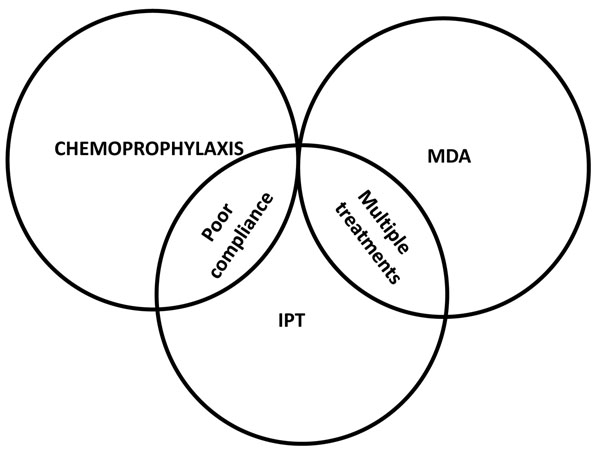
Anti-malarial drugs can make a significant contribution to the control of malaria in endemic areas when used for prevention as well as for treatment. Chemoprophylaxis is effective in preventing deaths and morbidity from malaria, but it is difficult to sustain for prolonged periods, may interfere with the development of naturally acquired immunity and will facilitate the emergence and spread of drug resistant strains if applied to a whole community. However, chemoprophylaxis targeted to groups at high risk, such as pregnant women, or to periods of the year when the risk from malaria is greatest, can be an effective and cost effective malaria control tool and has fewer drawbacks. Intermittent preventive treatment, which involves administration of anti-malarials at fixed time points, usually when a subject is already in contact with the health services, for example attendance at an antenatal or vaccination clinic, is less demanding of resources than chemoprophylaxis and is now recommended for the prevention of malaria in pregnant women and infants resident in areas with medium or high levels of malaria transmission. Intermittent preventive treatment in older children, probably equivalent to targeted chemoprophylaxis, is also highly effective but requires the establishment of a specific delivery system. Recent studies have shown that community volunteers can effectively fill this role. Mass drug administration probably has little role to play in control of mortality and morbidity from malaria but may have an important role in the final stages of an elimination campaign.
抗疟药物在流行地区不仅可用于治疗,还可用于预防,从而为疟疾控制做出重大贡献。化学预防可有效预防疟疾导致的死亡和发病,但难以长期维持,可能会干扰自然获得性免疫的发展,如果在整个社区中应用,还会促进耐药株的出现和传播。但是,针对高危人群(如孕妇)或疟疾风险最大的时期(如每年的某个时期)的化学预防,是一种有效的、具有成本效益的疟疾控制工具,且缺点较少。间歇性预防治疗包括在固定时间点给予抗疟药物,通常是在接受医疗服务的对象(如产前或接种疫苗诊所就诊)已经接触到疟疾时进行,该方法比化学预防要求的资源更少,现已被推荐用于预防中、高疟疾传播地区的孕妇和婴儿疟疾。间歇性预防治疗在年龄较大的儿童中的效果可能与有针对性的化学预防相当,但需要建立一个专门的提供系统。最近的研究表明,社区志愿者可以有效地发挥这一作用。大规模药物治疗可能在控制疟疾死亡率和发病率方面作用不大,但在消除运动的最后阶段可能发挥重要作用。