Division of Infectious Diseases, Department of Internal Medicine, Chung-Ang University Yongsan Hospital, Chung-Ang University College of Medicine, 102 Heukseok-ro, Dongjak-gu, Seoul 156-755, Republic of Korea.
J Infect. 2011 Oct;63(4):267-73. doi: 10.1016/j.jinf.2011.04.009. Epub 2011 May 1.
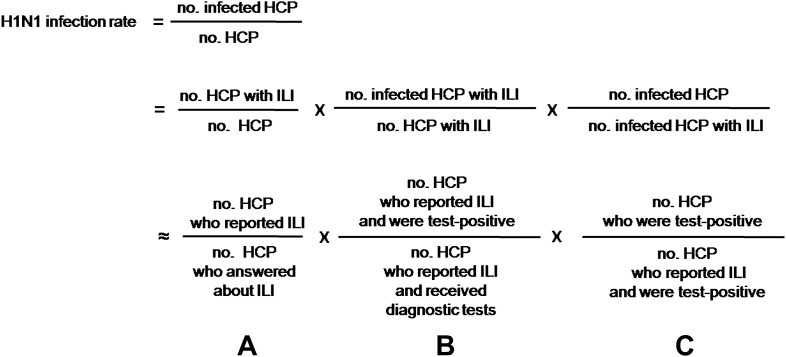
To characterize an outbreak of pandemic H1N1 2009 among healthcare personnel (HCP), we conducted a cross-sectional survey of HCP who had worked in four general hospitals during the outbreak. More than one-quarter of responding HCP (27.6%) had influenza-like illness (ILI) during the outbreak. The estimated infection rate of pandemic H1N1 2009 was 9.1% in the study of HCP. Independent risk factors for ILI were female gender, <40 years of age, the presence of chronic diseases associated with influenza complications, having family members with ILI or pandemic H1N1 2009, and working in influenza outpatient, influenza inpatient, non-influenza outpatient or emergency departments. During the outbreak of pandemic H1N1 2009, HCP frequently had ILI or the influenza infection. The development of the influenza infection in HCP was associated with some of their baseline characteristics, occupational risk factors, and non-occupational ones during the outbreak.
为了描述大流行 H1N1 2009 在医护人员(HCP)中的爆发情况,我们对在疫情期间在四家综合医院工作的 HCP 进行了横断面调查。超过四分之一的有回应的 HCP(27.6%)在疫情爆发期间出现了流感样疾病(ILI)。在对 HCP 的研究中,大流行 H1N1 2009 的估计感染率为 9.1%。ILI 的独立危险因素是女性、<40 岁、存在与流感并发症相关的慢性疾病、有 ILI 或大流行 H1N1 2009 的家庭成员,以及在流感门诊、流感住院、非流感门诊或急诊部门工作。在大流行 H1N1 2009 爆发期间,HCP 经常出现 ILI 或流感感染。HCP 中流感感染的发生与他们在疫情期间的一些基线特征、职业危险因素和非职业危险因素有关。